Luchik Belau-Lorberg

From IHOP

By LUCHIK BELAU-LORBERG

Photo courtesy of the author.


Shrewsbury, MA.

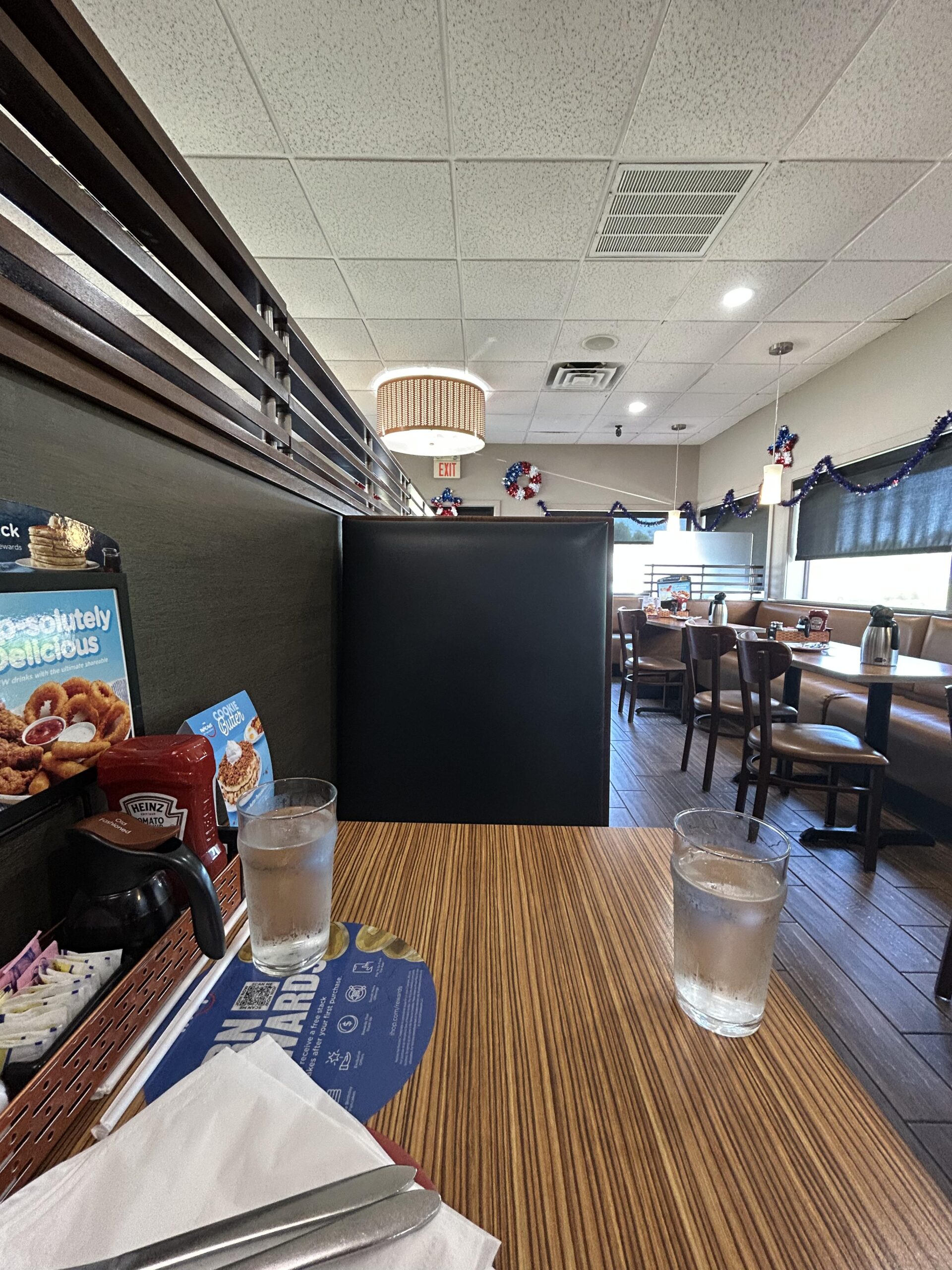
There’s a family seated at a window booth across the aisle from us; the youngest daughter keeps attempting to pronounce “syrup.” I wonder what she’ll remember of this breakfast in five years’ time. Maybe today she reminds you of me. 

My earliest memories of an IHOP are sticky: the yellow walls seeping into the faux-leather booth seats; a stain on the carpet. All this beneath a crumpled-looking roof in a parking lot below the I-90 on the outskirts of Boston. Still, I could order as many blueberry-chocolate chip pancakes topped with creamy-fruity smiley faces as I wanted. The point wasn’t that I particularly liked eating the smiley faces, but that there simply were and could be smiley faces. And, in the meantime, before my hot cocoa (also with whipped cream) arrived, a crate of Smucker’s jam packets to stack and suck on awaited on the tabletop. This Ur-IHOP was sweeter than home, overtly abundant, happy, and these qualifiers felt, at the time, somehow synonymous. At home, mornings typically consisted of milky buckwheat porridge and cheese curds. Here, breakfast came with a set of primary-colored crayons. 
From IHOP
Read more...

The Reading Life: You’re Going to Hear the Pages Turn

By WILLIE PERDOMO

The Reading Life is a special 15th-anniversary essay series reflecting on close reading and re-reading, written by The Common’s Editorial Board.


In the grade school days of Hooked on Phonics, I tested at a 6th grade level when I was in 3rd grade. But I didn’t really learn how to read until I was forty years old. 

As a young person, I cherished books for their escape value. They provided portals to places where I could forget the bullies on the block, my pre-teen insecurities around image and masculinity, and travel to fantastical underworlds, or follow bookish kids who saved a neighborhood from a villain’s corruptive grasp. My favorite time of the school year was the announcement of the Scholastic Book Fair. I couldn’t wait to get home and check off my selections on the order form. My mother limited my order to two books, sometimes three when she hit a number. I don’t remember what criteria I used, but a title with the word “adventure” was usually a selling point.

The Reading Life: You’re Going to Hear the Pages Turn
Read more...

Patricia

By ISSA QUINCY

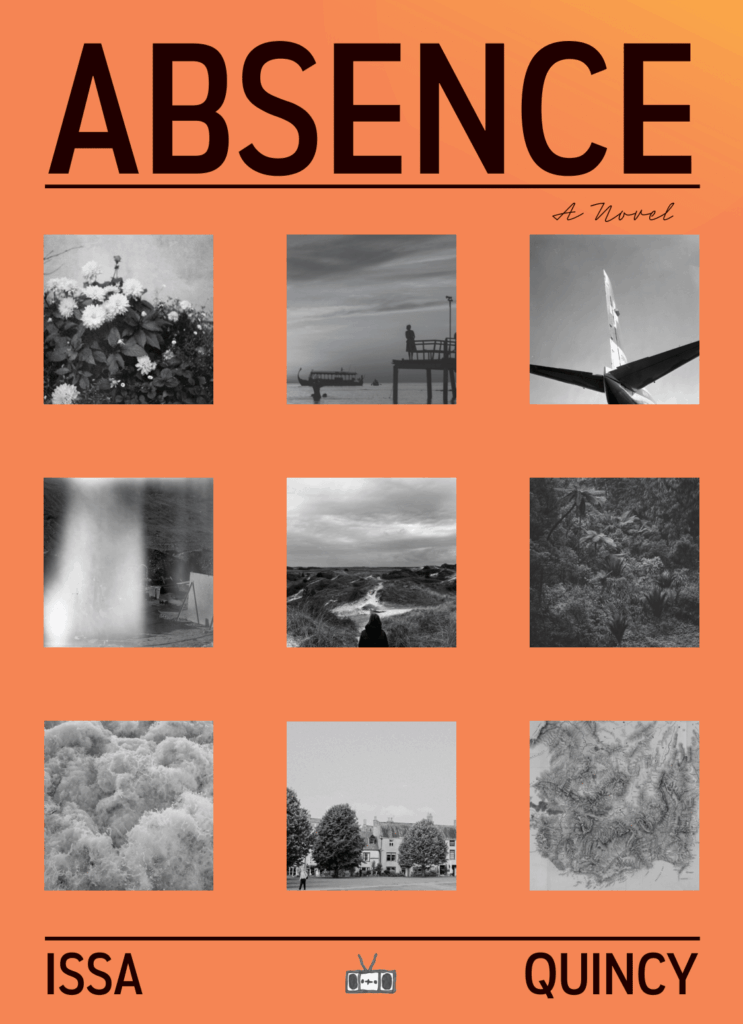
This piece is excerpted from Absence, out now from Granta (UK), and forthcoming from Two Dollar Radio (US) on July 15, 2025. "Absence" cover image

In the Rijksmuseum in Amsterdam, there is a painting by Hendrick Avercamp, the mute of Kampen, hung on a deadening grey felt and squeezed in amid other Dutch masters. One’s initial glance at the painting will see it reveal little more than a benign winter scene. However, when you look at Avercamp’s painting closely you begin to notice the close detailing of the variance of life. There in the painting exists death, pleasure, ecstasy, frivolity, poverty and secrecy, closely exacted alongside other states of being and non-being all perceived by Avercamp from a heightened position, a vantage point for an incorporeal observer; a drifting onlooker that watches and takes in the immediate while the rest of the yellow-grey land and sky disperse outwards into misty incomprehensibility. What is presented is the sight of the intangible spectator that sees what is in front of him, recognizes everything and curtails his judgement of anything.

Patricia
Read more...

The Swan

By MARZIA GRILLO

Translated by LOURDES CONTRERAS AND JULIA PELOSI-THORPE

Piece appears below in English and the original Italian.


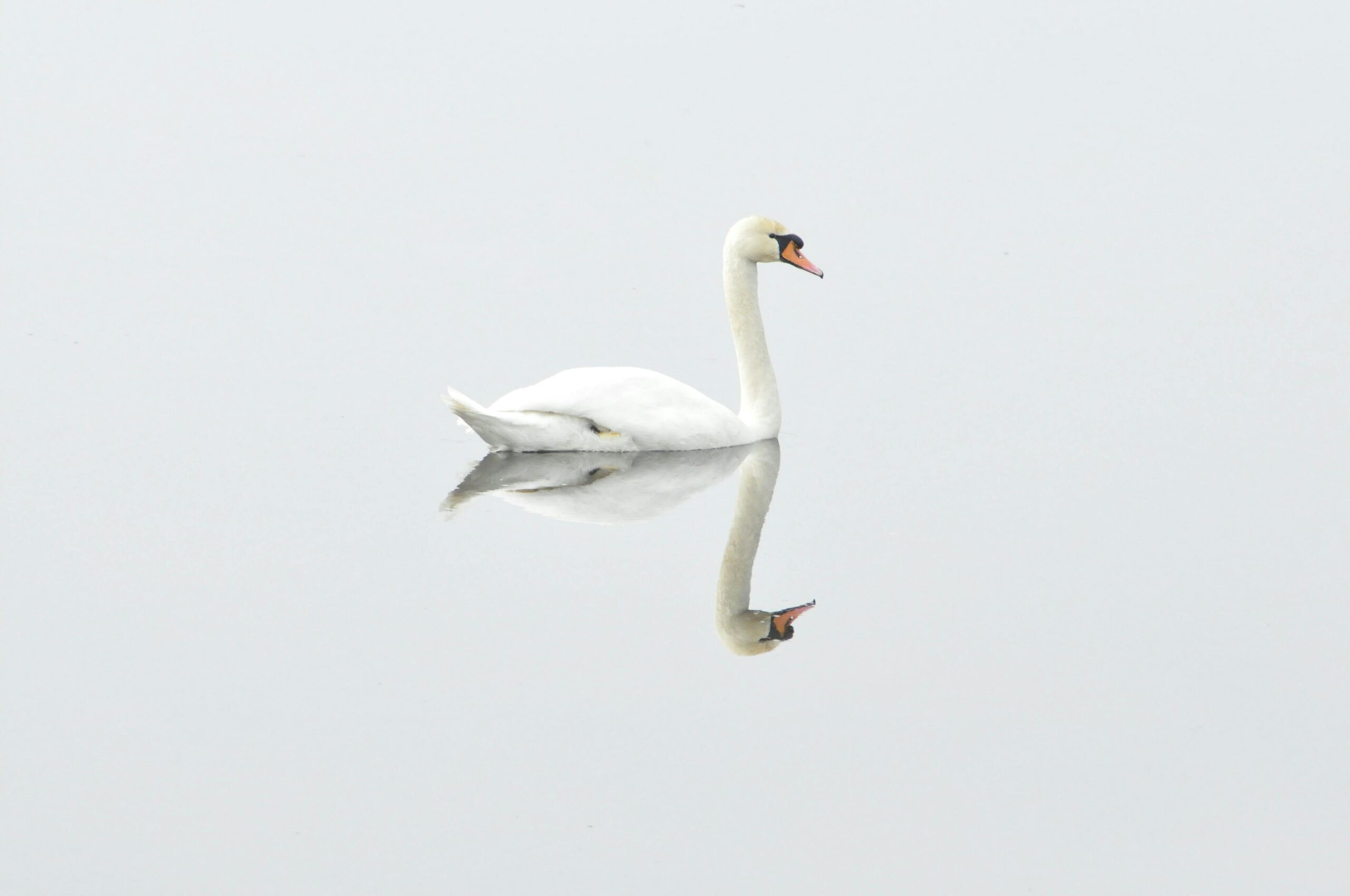
Co-translating Marzia Grillo’s captivating short fiction “The Swan” (“Il cigno”) into English from Italian was an experimental process in which drafts ricocheted between the two of us over many months. This is in some ways typical for our collaboration… but, as we transform each piece, our approach morphs in fun directions, contingent on the fabric of our lives in a given moment. With “The Swan,” Julia fell in love with Grillo’s debut short story collection, The Sun’s Point of View (Il punto di vista del sole) in a Venetian bookstore and mocked up first and second versions on several high-velocity Italian trains in early 2022. Then, the project lapsed. Later that year, she and Lourdes met, were enchanted by one another, decided to co-translate, and Lourdes revived Julia’s draft. “The Swan” takes the reader into the middle of a lake in Lazio one afternoon, where, on a pedalo, a man proposes marriage for the nineteenth time to his unwilling girlfriend. The story is the first of the thirteen works of creative autofiction that make up the loving, disturbing world of The Sun’s Point of View. In a nexus of scenes across Grillo’s Rome, her immersive prose vivifies tormented characters who are moved deeply to desire (and destroy) themselves and others. As real and imagined figures fight for secure understandings of a reality that is suffused by a constant fog of instability, we the translators relish the challenge to locate in English what we can of the dark sparkle of Grillo’s dialogue, twisted narrative arcs, the emotional impetus of their intrigues, and their web of thematic resonances.

— Lourdes Contreras and Julia Pelosi-Thorpe

The Swan
Read more...

Farewell to Pictou County, N.S.

By COURTNEY BUDER

Pictou County, Nova Scotia, Canada

Lint blue thunder flavors the memory. The waves are enormous, curling up high and mighty like Caribou antlers. In hindsight: Why are we at the beach during a thunderstorm? But back then, in all of my five year old wisdom: The water is so warm and excited to see me.  

The power went out for three days during one hurricane or another. My niece was only a baby, my mom and sister murmuring about warming the milk. Everybody crowded together onto a bed, every blanket in the house employed. I thought it was wonderful. I remember standing in the middle of the street, the wind tearing straight through me. I watched my red hat get sucked up and away into the grey, watched trees flail, calm as a clam, as a strange and lonely little girl transfixed, like watching a snow globe from the inside. The Ship Hector crept up onto Caladh Avenue and my mother finally burned the candle. Life went on.

Farewell to Pictou County, N.S.
Read more...