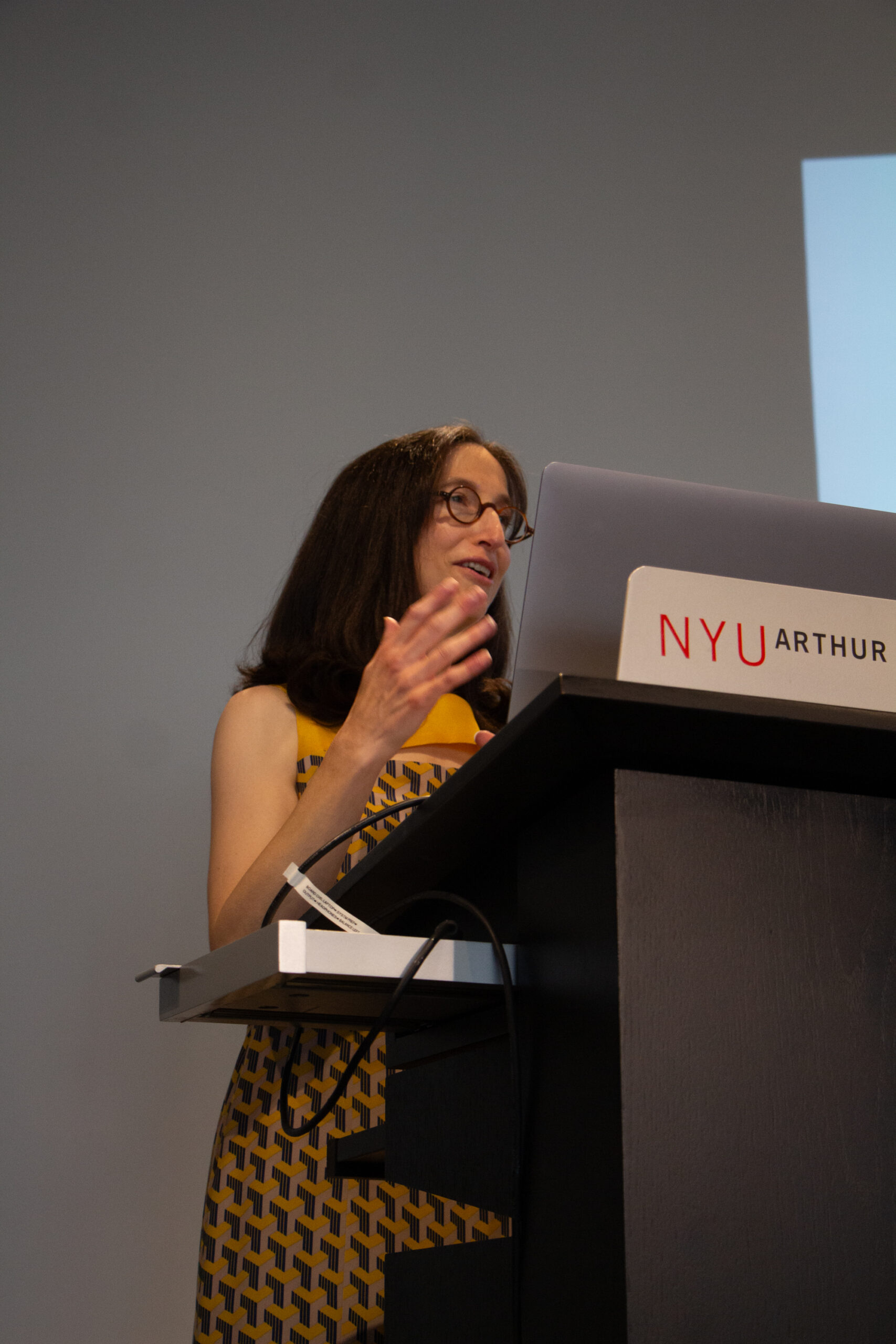


Clara Chiu

The Reading Life: There is No “Purpose” (and Perhaps No “Progress”) in Nature: On Reading Oliver Sacks’ Letters


The Reading Life is a special 15th-anniversary essay series reflecting on close reading and re-reading, written by The Common’s Editorial Board.


“Always do what you are afraid to do.”
―Ralph Waldo Emerson

In a letter of February 20, 1997, to a humorist, Oliver Sacks says that one of his favorite words is APOCOPE. “I love its sound, its explosiveness (as do some of my Tourettic friends—for whom it becomes a 4-syllable verbal tic which can be impacted or imploded into a tenth of a second) and the fact that it compresses 4 vowels and 4 syllables into a mere seven letters.” This is the type of response I adore: succinct, passionate, informed, all around a single, transient word. The quote appears in Dr. Sacks’ Letters (Knopf, 2024, 726 pages), edited by his long-time assistant and researcher Kate Edgar. Notice the length of the volume: it is massive, even though, as Edgar mentions, it only comprises about a tenth of all of the letters Dr. Sacks wrote; he was an inveterate, compulsive logophile who wrote nonstop on napkins, pads, notebooks, and anything else within reach. (W. H. Auden, an early champion and long-time friend of Sacks, addressed him in print with the honorific “Dr.”; I gladly follow it here.)


The Reading Life: There is No “Purpose” (and Perhaps No “Progress”) in Nature: On Reading Oliver Sacks’ Letters
Read more...

River Landscape

By DANIELA ALCÍVAR BELLOLIO

Translated from the Spanish by JACK ROCKWELL

Piece appears below in English and the original Spanish.


Translator’s Note

Translating several of Bellolio’s stories, but especially this one, I’ve found that the hardest part has been the beginning. By the time the text hits its stride, somewhere in the second or third pages, it has swept me along with it, and it feels almost effortless—nearly as much so as Bellolio’s painstaking craft makes her own writing seem—to bob and weave with her sentences, to bunch up and then uncoil with the tense spools of her thought. But once I wrap back around to the beginning, I read the first few sentences I’ve translated and am shocked to find what feels like a jerky, uneven mess.

Bellolio rigorously calibrates the motions of her prose, and the elegance of her language applies some serious heft to the felt necessity of her narrator’s thought. This thought, and the careful patterning that structures it, are absolutely essential to this digressive, contemplative story. In the first long paragraph of “River Landscape,” a compassionate investigation of the interior life of a murderer fleeing his crime, a series of repetitions in the text mimics the destructive return of his victim’s face to his mind’s eye. While these repetitions spread out as the story progresses, in the beginning they are stacked thickly on top of one another. Finding the right rock and sway to carry the reader through this dense opening passage took some obsessive tinkering. I’m still not completely satisfied with it, but it’ll have to do for now. There was much going back and forth between alternatives, and much friendly (and incredibly patient) advice given by friends and colleagues, such as Jan Steyn, Emily Graham, Miharu Yano, and Dabin Jeong. I’m very grateful to all of them, and especially to Dabin, who introduced me to Bellolio’s work.

—Jack Rockwell

River Landscape
Read more...

A Tour of America

By MORIEL ROTHMAN-ZECHER

A bearded man stands in front of a black background, looking toward the left.

Photo courtesy of Jules Weitz.

America

This afternoon I am well, thank you.

Walking down Main Street in Danville, KY.

The heavy wind so sensuous.

Last night I fell-

ated four different men back in

Philadelphia season lush and slippery

with time and leaves.

Keep your eyes to yourself, yid.

As a kid, I pledged only to engage

in onanism on special holidays.

Luckily, America.

A Tour of America
Read more...

Four Ways of Setting the Table

By CLARA CHIU

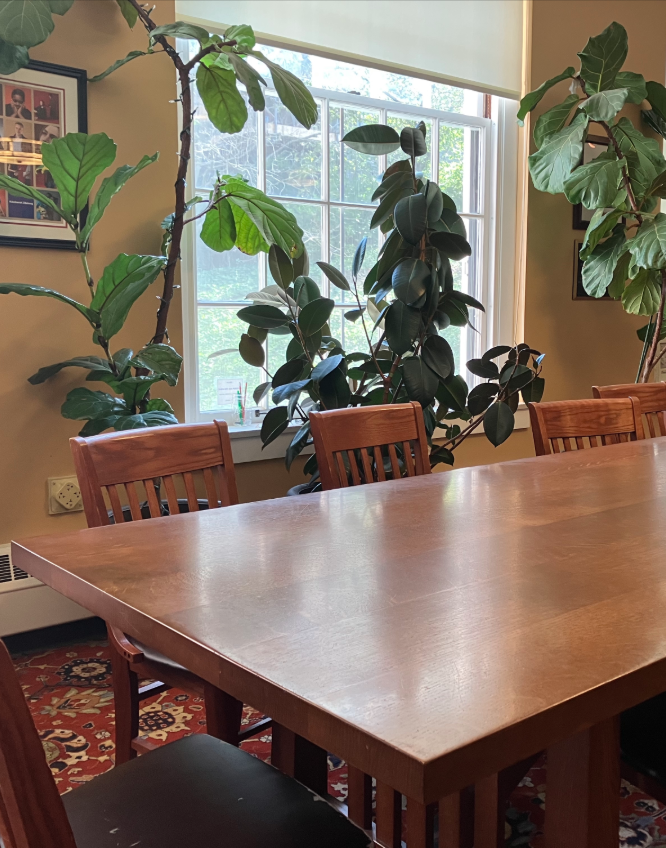
Photo of a long wooden table with chairs. Plants in the background

Photo courtesy of author.

Amherst, Massachusetts

I. Tablecloth Winter

We are holding the edges of the fabric,
throwing the center into the air.
& even in dusk this cloth
billowing over our heads 
makes a souvenir of home:
mother & child in snowglobe.
Yet we are warm here, beneath
this dome, & what light slips through
drapes the dining room white.

Four Ways of Setting the Table
Read more...

Main Character Syndrome: A Review of Stranger Than Fiction

By JULIA LICHTBLAU

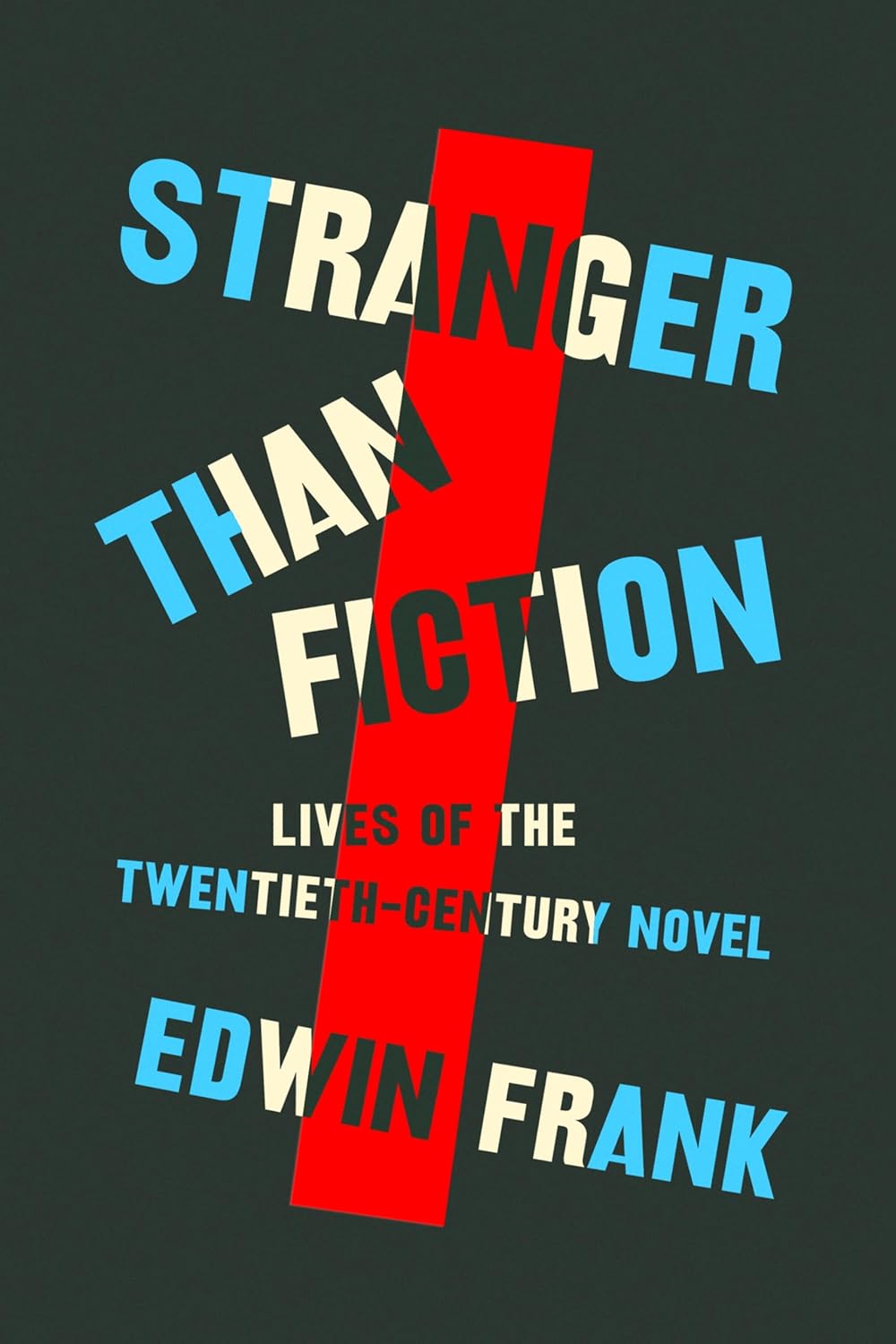
Book cover of Stranger than fiction by Edwin Frank

I picked up Stranger Than Fiction, Edwin Frank’s relay race through the twentieth century novel, immediately after rereading Madame Bovary, only to encounter Emma Bovary, who came into the literary world in 1856, in the first chapter.

Frank isn’t simply paying obligatory homage to Flaubert’s importance to the nineteenth-century novel. He’s pointing out the cinematic modernity of the famous agricultural fair scene which splices the full-of-himself aristocrat Rodolphe seducing Emma, the country doctor’s bored wife, with pompous local officials making speeches. He’s also showing that the nineteenth century novel, with its formidable, reality-affirming scenic machinery, was still in full flower when Fyodor Dostoevsky’s radical and baffling Notes from Underground, which Frank pegs as the first twentieth century novel, emerged barely a decade later. If the nineteenth-century novel “attempts to maintain a dynamic balance between the self and society,” the exterior world barely seems to exist for Dostoevsky’s narrator, whose mind churns through semantic and philosophical problems for much of the text. Yet, the book was anchored in reality—the political and social problems of Russia and the personal torment of its writer—in a new way.

Main Character Syndrome: A Review of Stranger Than Fiction
Read more...

Florida Poems

By EDWARD SAMBRANO III

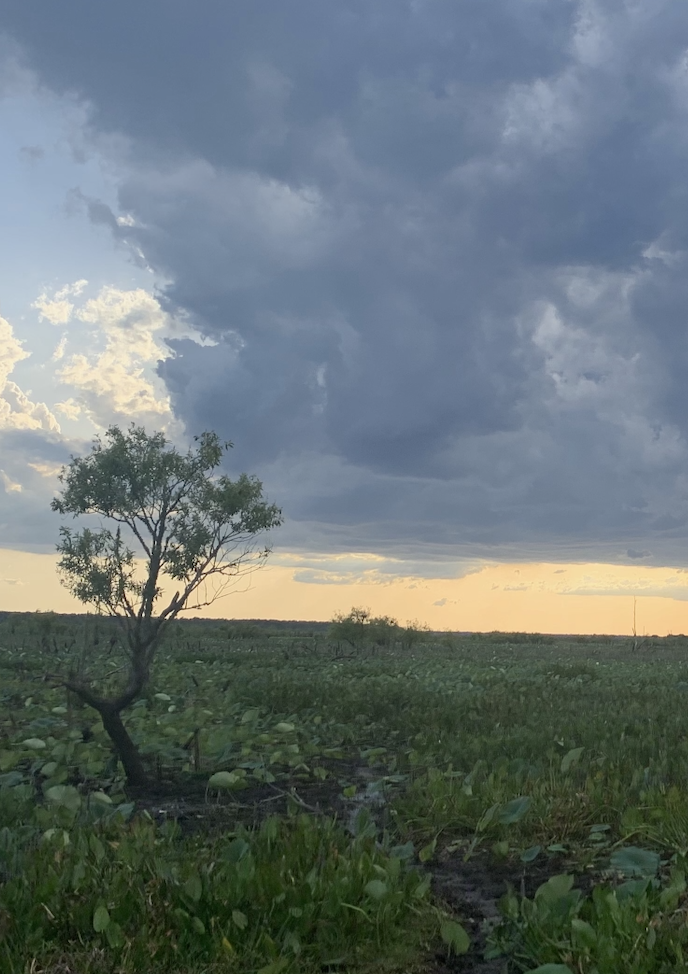
Trees surround a pond

Photos courtesy of author.

Florida

After the Storm
(after Donald Justice)

I will die in Portland on an overcast day,
The Willamette River mirroring clouds’
Bleak forecast and strangers not forgetting—
Not this time—designer raincoats in their closets.
They will leave for work barely in time
To catch their railcars. It will happen

On a day like today. Florida’s winter
Brings the satisfaction of sunlit goosebumps
As I read on the veranda wondering whether
To retrieve a sweater. I’m learning
Of life’s many versions of triviality,
Which merely manage to repeat themselves.

Florida Poems
Read more...

NYC Anniversary Party: Celebrating 15 Years of The Common

On June 12, contributors, readers, and friends of The Common gathered in New York to celebrate the magazine’s 15th anniversary. The vibrant reception was a testament to The Common’s decade-and-a-half growth into a global literary community.

Scroll on for a gallery of selected images from the event!

NYC Anniversary Party: Celebrating 15 Years of The Common
Read more...

Review: The South by Tash Aw

By TASH AW
Reviewed by BRITTA STROMEYER

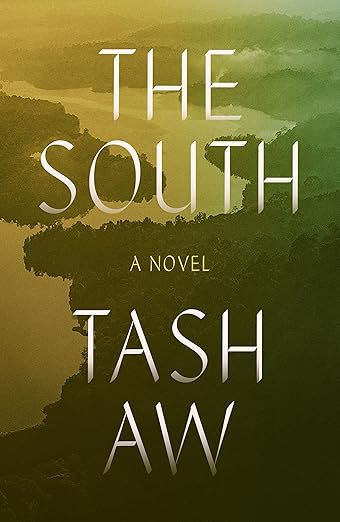
Book Cover: "The South a novel by Tash Aw" over a river landscape.
 

Readers familiar with Tash Aw know that the power of Aw’s writing lies in the intricate layering of complex themes, brought to life through nuanced characters. His latest novel, The South, the first of a four-part saga, is no exception. It is an ambitious portrayal of a family navigating profound transformation and the complexities of identity and belonging within Malaysia’s rich and challenging political context of the late 1990s.

Following his grandfather’s passing, sixteen-year-old Jay journeys southward with his family to inspect their inherited failing farm. Blighted trees and drought-stricken fields greet them upon arrival. Told in rotating third- and first-person perspectives over a few weeks, the novel introduces Jay, his mother Sui, and farm manager Fong as they grapple with identity and belonging within fractured family dynamics. The novel, both broad in its scope and delicate in its intimacy, explores the repercussions when personal lives intersect with wider societal currents. It unfolds with a quiet yet remarkable sense of pacing, each moment carefully weighted, drawing the reader deeper into the rich inner lives of its characters.

Review: The South by Tash Aw
Read more...