All posts tagged: Jenny Qi

Mother is a Kind of Holding: Jenny Qi interviews Preeti Vangani

PREETI VANGANI and JENNY QI first met as inaugural Rooted and Written Fellows at the San Francisco Writers Grotto in 2019, the same year that Preeti published her debut poetry collection, Mother Tongue Apologize. Their shared experience of writing through grief after mother-loss as young women bonded them, and they became close friends. Both were subsequently awarded a Brown Handler Residency and a McCormack Writing Center Fellowship (formerly Tin House)

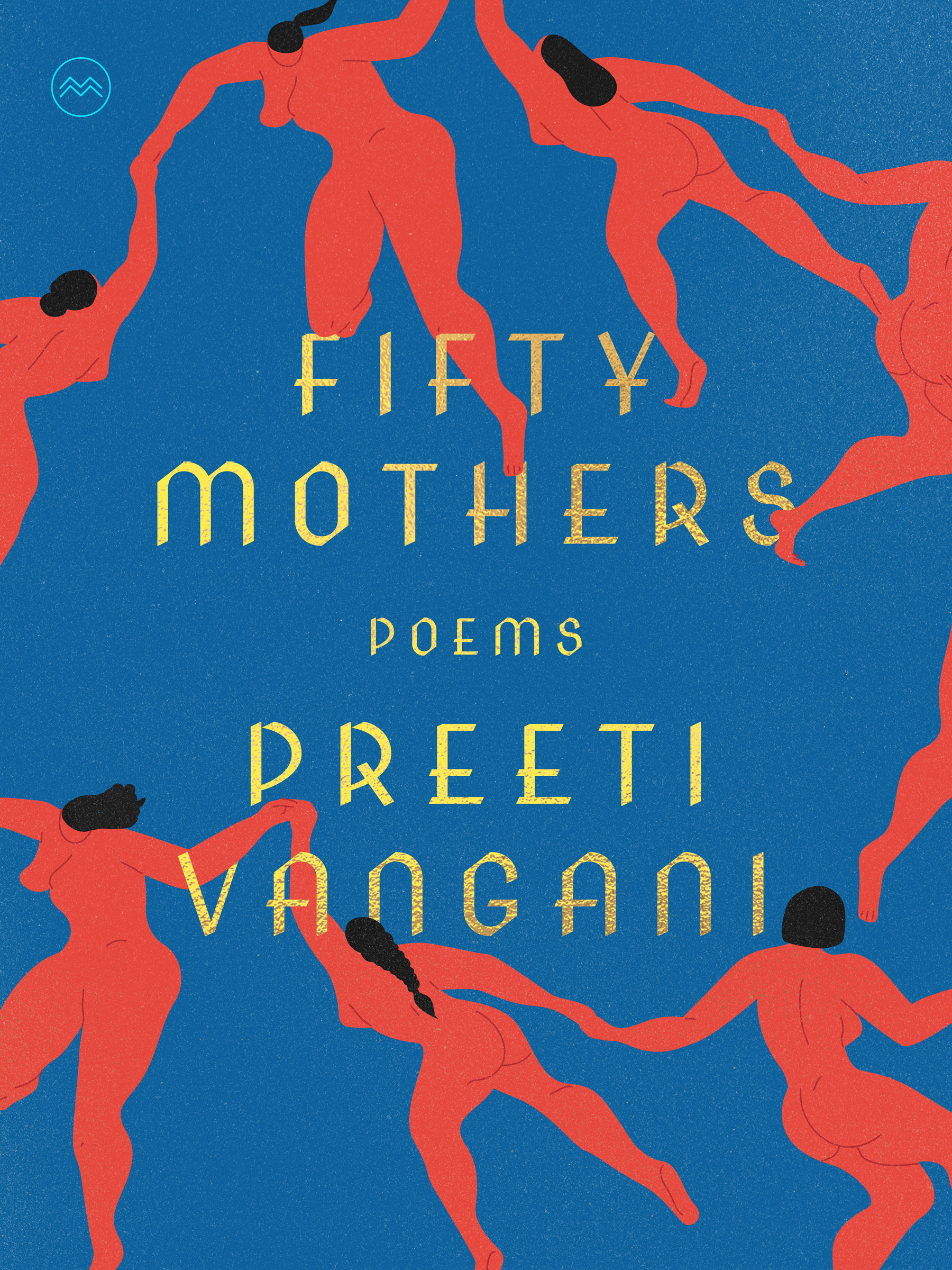
This conversation took place in the weeks before Preeti launched her second collection, Fifty Mothers. Unflinching in its self-awareness and emotional honesty, this collection allows grief and rage and shame and humor and joy to coexist with a clear-eyed vibrancy. By witnessing them wholly and truthfully, Vangani offers freedom to the speakers and subjects of her poems, including the deceased “gone mother.” Bringing to mind Sylvia Plath’s Ariel and its Shakespearean sprite namesake, the final poem ends with a memory of the mother “fling[ing a cockroach] right outside the window / with a go be free, as if that freeness were hers.” 

Book cover of Fifty Mothers Preeti Vangani's headshot


Jenny Qi (JQ): I’ve heard some of these poems before, but seeing them together in this book, I marvel at the way your writing about such a profound loss has evolved to make room for forgiveness and acceptance and joy. Can you share how your relationship with writing about grief has changed since your first collection?

Preeti Vangani (PV): It is such an honor and gift to have my work be read sequentially and in its entirety, by a poet nonetheless—thank you for being that friend for me! I wrote Mother Tongue Apologize roughly eight years after my mother passed. I’d come into poetry rather suddenly, abandoning a corporate job in Mumbai and moving to America, so I took to poems like a zealot. It was almost as if I was reexperiencing her death for the first time. The poems were raw, tender, hot to touch. They felt atrociously liberating to write, like early crushes. 

Since that project, graduating from my MFA program and simultaneously publishing my first book, I continued studying poetry in the US. The rebellious part of me that revelled in leaving home gradually thawed, and the distance from my family no longer carried that punk quality of escape. It became the status quo, the quiet rhythm of everyday life. Losing that urgency made room for love in the writing of grief. That passage of time birthed the room to start thinking of my father as an individual, a friend, and not my parent. I was very drawn to Ross Gay’s Catalog of Unabashed Gratitude, certain poems by Gabrielle Calvocoressi, and, always, Sharon Olds. They inspired me to look beyond the site of catastrophe, beyond the wound. They showed me the joys of rendering people in their whole humanity, never losing track of the joys of living while elegizing our gone. 

JQ: I love that and really relate. Structurally, I think the title and concept of Fifty Mothers work really well to evoke both fragmentation and abundance. I’m curious about how you decided on this title, which is shared by five of the poems in the collection. How did you decide on the placement of these poems within the book? Were there other “Fifty Mothers” poems that you retitled or that didn’t make the cut? 

PV: “Fifty Mothers” was one of the very last pieces I wrote towards this book. When I drafted it, I was so sure I was writing a short story. When I finished the draft, it read more like a lyric essay. AGNI published it as an essay, too. For a while, it hung around as prose in the middle of the manuscript. Much later, I worked with the brilliant poet and editor Diana Arterian, who suggested fragmenting it into vignettes, and I screamed, Yes! With vignettes, I could plumb its narrative arc to become a force propelling the book forward. It also felt haunting yet warm that the mothers kept reappearing throughout the life of this grief. That repetition created a chorus of voices that angers and despairs, yet cradles the speaker. A couple of paragraphs didn’t make it in; they were dynamic bridging scenes but felt flat as standalone vignettes. I still include them when I perform the piece from memory. 

JQ: I’d love to hear about how you structured this collection in general—how did you decide on the sequence of poems? Why is the book divided into these two parts, and what have you learned about putting a book together since your first collection?

PV: I once heard someone say that every part of a poetry book should carry all parts of the book. And that stuck with me. For this collection, once I laid the poems on the floor, I saw three strands emerging: the father and daughter relationship, the speaker’s relationship to grief, and her relationship to her own body. When I attended the Community of Writers Workshop in 2022, Ada Limón gave a craft talk about how to assemble a poetry book and introduced the idea of ‘anchor’ poems—poems you feel attached to, without which the manuscript simply cannot exist. She captures some of those thoughts in this brilliant essay. So within my three threads, I identified anchors and built the other poems around them. I love stacking poems with diverse formal strategies, sonic disruptions, and narrative impulses next to each other. That freshness helps reduce page-turning fatigue for me as a reader. I was drawn to two sections, one clear split, to record the physical journey of this speaker from home (India/US) and the emotional journey with the father (Acceptance/Freedom). The father’s and the daughter’s lives, within the narrative frame of this book, revolve around grief as their lives change, progress, and evolve. The daughter leaves. The father remarries. The one thing I learned about ordering my first collection was where to place the funnier poems, and the purpose they served. It was all about understanding at what point in the journey I can trust the reader with the irreverent voice, and in what light the lightness being offered.

JQ: The “Gone Mother” poems give voice (and lightness!) to the mother who is physically “gone” and who, even in life, often did not have a voice as a woman. In multiple poems, it’s repeated that all the mother wants is for her daughter to be independent, with the subtext of “unlike the mother.” What was it like to write these poems in the voice of the mother? 

PV: It was frankly the most fun! I was tired of thinking that elegy could only be a container for sorrow and grief’s ceaseless complexity. That kind of elegy did no justice to my mother’s levity, to the joys she’d birthed for herself and us, to the lightness in my life after her. Although she was very strict and a hard disciplinarian about my studies, my friends maintained that my mother was funnier than me. It angered me, but it is true. So I tried to channel some of her silliness, her flair, her airiness. The spirit that haunted me said I’d do her a disservice if I kept moping on and off the page. But it was hard to push away the impulse to have the ‘gone mother’ voice talk as a victim, to talk about her illness and death. It was hard to hush the daughter-speaker who always wants answers. So, it became a portal to remember her: the books she read, the lists she kept to recreate her personhood and her desires. And a portal to imagine what this daughter wanted to hear if the gone mother could magically speak to her. It showed me a less lonely way to write about grief.  

JQ: Something else that gives voice to your mother is the archival documents bookending your poems. Can you speak to the process of going through your mother’s diary and selecting these particular pages? 

“In the human realm, I feel a mother in everyone who’s been a co-bearer of my sorrow. Mother is a kind of holding, even at a distance, even if we’ve never met.”

PV: The diary pages are perhaps the only physical object I have containing my mother’s handwriting. Once she married, she didn’t have any notebooks. I only saw her handwriting in the telephone book or when doing household accounts to pay bills. It’s likely from her college days when she studied Home Science, because a chunk of it is recipes written in longhand. There are a few pages of notes on spirituality, as if she were transcribing a lecture. Strange mish-mash. And then my father’s free scribbles start showing up: song couplets in Hindi on the last page, games like tic-tac-toe with their initials in their winning slots. From the very first page, the details of my mother’s maiden life (name, address, bank account number etc.) have been crossed out in jest by my dad, and her married identity replaces it in my dad’s handwriting. It’s very striking. That single page set three relations in motion: the woman, the wife, the couple. It felt like a telegraphic image to show an arranged marriage. In big lettering, my mother scribbled diagonally, You must fall in love with yourself with pure soul you possess.  A mantra? A reminder? An affirmation? Those words are so starkly free.  Free of man, of child, of world. Closing the book with it felt like a union with her spiritual quest and a distillation of the independence she so wanted me to have. 

JQ: Fifty Mothers explores so many aspects of motherhood and mothering. A poem that struck me and spoke to the complexity of “Mother” was “I Will Be Your Mother, He Said, After the Funeral,” about the speaker’s uncle. What does “Mother” mean to you? 

PV: That’s a beautiful question. The one origin of “mother” I am always amused by is the Latin one, ma-ter. Some linguists say ‘ma’ is a nonsense babbling sound that infants make, annexed with the kinship suffix ‘tr.’ Babble-kinship! I think of “mother” as an offer of tenderness. Not just from people, but as an ideology. Having lived with rheumatoid arthritis, I’ve realized there are myriad small mothers to be had if I lean into the tenderness provided by things, surfaces, textures that make me more mobile. Of course, this kind of thinking has shown itself as a result of losing my mother, but it comes with such reckless abundance. One of the best gifts I ever received is a broad-gripped nailcutter—the ease it provides serves as a gentle mother to my thumb that’s lost cartilage over years and springs with pain if I use a normal nailcutter.

In the human realm, I feel a mother in everyone who’s been a co-bearer of my sorrow. Mother is a kind of holding, even at a distance, even if we’ve never met.”

JQ: As a former stand-up comedian, you are very funny, both in person and in poems. How do you access humor when writing about something otherwise sad and serious, and what is the function of humor to you—in a poem, in this book, in grief generally?

PV: I used to joke that I abandoned comedy for poetry because poets don’t get heckled. But the truth is, I regret not pursuing comedy with the seriousness it demanded at a time when that life felt possible. I’ve always been attracted to performing, and humor is one way to bring that performance onto the page. Humor is also a part of the larger idea of keeping joy alive in poems amid the pain. I love tapping into comic moments to build multiple entertaining voices and a sense of drama. Sometimes the joke is a nest to hold the tragedy that’s coming. I love what Phoebe Waller-Bridge once said: “Disarm the audience with comedy, then punch them in the gut with drama when they least expect it.” There’s a volta, right there. I am also in complete awe of Natalie Shapero—I adore her poems, they stun and shock and jaw-drop with their humor. For this book, more than a premise-punchline structure, which is hard for me, I leaned into dialogue, exasperation, and exaggeration as sources of comedy. In the case of what became the poem “Fifty Mothers,” I started it as a short story. So my self-limiting belief that a poem must be wedded to truth was shushed. And inspired by K-Ming Chang’s short stories, I wrote these audaciously funny accounts of all my aunties. I guess the trick to writing a funny poem is to tell yourself you’re writing fiction.

JQ: Speaking of fiction, I admire your fluidity across genres. Can you talk about the difference in your processes when you write poetry versus fiction?

PV: A poem, as I once heard Alina Stefanescu say on a podcast, is a gust. I may summon one every morning, but it arrives rather unexpectedly, and then it’s about whether I was present to catch it. Often, it arrives when I am reading other books of poetry in a non-agenda, non-judgmental mindset. Sometimes it arrives almost fully formed, other times I stride through revisions. It’s always a struggle to remind myself to leave ample time between making and revising. I also discard way more poems than I keep. Because I write short stories with a poet’s toolkit, my obsession with sentences often means the plot lags. To honor my urge to write well-crafted sentences and make any progress on plot, I am stuck writing fiction only when I have four or five days of uninterrupted time. I am teaching myself to break away from that pattern, though. To write just a little prose every day and trust the backrooms of the mind and the body that the story is taking birth, even if it takes longer. With either genre, though, finished or unfinished, I love having written. I feel invincible, I feel like cooking a feast for twenty. Though mostly I am just sipping tea and troubling our dog. 

JQ: You identify as an Indian poet, hailing from Bombay, and most of your writing—both poetry and prose—is so richly rooted in that place. But you now live and write mostly in San Francisco, and I’m curious about your experience of writing so evocatively about a place when you are far away from it. Did you write poems when you lived there, or do you write there when you visit? How does that experience differ?

PV: I rarely write poems when I am back home, definitely not any good ones. I lived in Mumbai for the first thirty years of my life, and for 95% of that time in the same house. So the sights and scents are ingrained in my psyche. Coupled with nostalgia and the weight of grief, it feels urgent and most accessible to enter that landscape and soundscape. Sometimes I think, why will I write America into a poem—I haven’t lost anything (as monumental) here. When I find it hard to conjure the place or feeling it slip away from my hands, I put on Hindi songs from my childhood, and suddenly I am at the theatre where I watched the movie, inside my father’s hurry to buy us popcorn and my mother’s chore-free-realm smile. Sound really resurrects the place for me. I feel at ease inside a Mumbai poem, despite the city’s mind-numbing cacophony. Though each time I return, Mumbai has changed, the shops in our lane have changed thrice in ten years. Four more high-rises at our window. Now, when the place enters or will enter the work, it is through the lens of a visitor, of someone alarmed by change, not a child of those roads. I’ve been in San Francisco for ten years, and I still struggle to render this city in poems. I suppose my body takes a long time to process a place and its emotional footprint into language.

Preeti Vangani is a poet & writer from Bombay and the author of Mother Tongue Apologize and Fifty Mothers. Her debut short story won the 2021 Pen/Dau Emerging Writers Prize. She holds an MFA from and teaches at the University of San Francisco.

Jenny Qi is a cross-genre writer with a PhD in Biomedical Science. Her debut collection, Focal Point, won the 2020 Steel Toe Books Poetry Award, and her work appears in The New York Times, The Atlantic, The Rumpus, and elsewhere. She is working on a hybrid collection and a memoir.

Mother is a Kind of Holding: Jenny Qi interviews Preeti Vangani
Read more...