Issues

Podcast: Lauren Delapenha on “Supermarketing”

Apple Podcasts logo

Listen on Apple Podcasts.

Spotify Logo Green

Listen on Spotify.

Transcript: Lauren Delapenha Podcast 

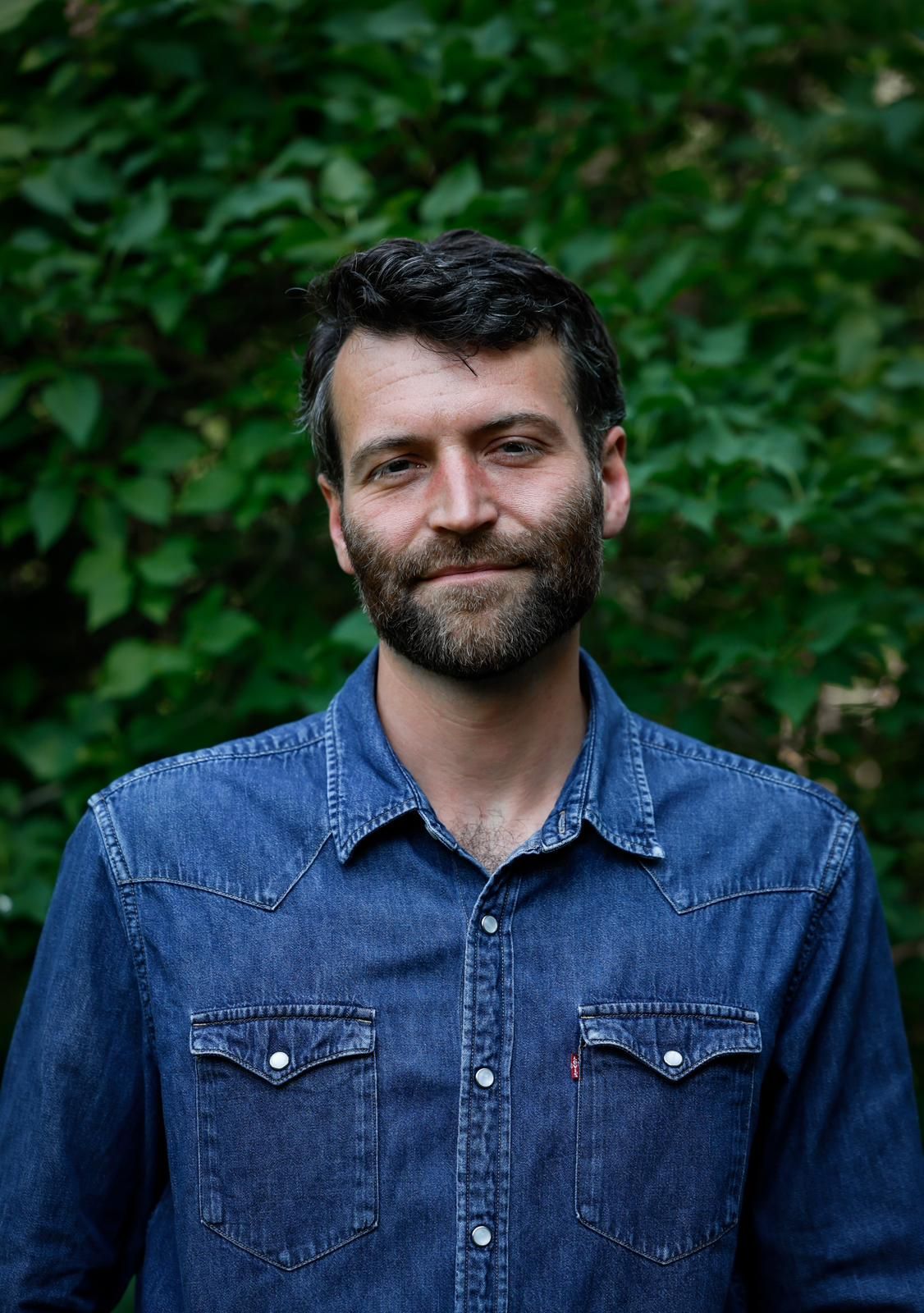
Headshot and Issue 31 cover

LAUREN DELAPENHA speaks to EMILY EVERETT about her poems “Supermarketing” and “If You Are Learning English,” which appear in The Common’s spring issue. Lauren also discusses her process and revision methods, her time at the Disquiet Literary Program in Lisbon, and how balancing both teaching and writing challenges her.

Lauren is a Jamaican poet and English teacher. She earned her master’s in creative writing from the University of Oxford, and her work has received an Oxbelly Fellowship, a Helen Zell and Jamaica Poet Laureate’s Young Writers Prize for Poetry, a Grindstone International Poetry Prize, and two Pushcart nominations. She currently lives and teaches in Connecticut.

­­Read Lauren’s poems in The Common at thecommononline.org/tag/Lauren-Delapenha.

Learn more about her work at laurendelapenha.com.


The Common is a print and online literary magazine publishing stories, essays, and poems that deepen our collective sense of place. On our podcast and in our pages, The Common features established and emerging writers from around the world. Read more and subscribe to the magazine at thecommononline.org, and follow us on Instagram, Bluesky, and Facebook.

Emily Everett is managing editor of the magazine and host of the podcast. In 2025 her debut novel All That Life Can Afford was a Reese’s Book Club pick, and her work appeared in The New York Times Modern Love column. Previous publications include the Kenyon Review, Electric Literature, Tin House, and Mississippi Review. She was a 2022 Massachusetts Cultural Council Fellow in Fiction.


Podcast: Lauren Delapenha on “Supermarketing”
Read more...

Podcast: Juliet McShannon on “Rescue”

Apple Podcasts logo

Listen on Apple Podcasts.

Spotify Logo Green

Listen on Spotify.

Transcript: Juliet McShannon Podcast.

Juliet McShannon headshot with Issue 31

Juliet McShannon speaks to Emily Everett about her story “Rescue,” which appears in The Common’s spring issue. The story follows a woman on her search for a lost dog through a neighborhood very different from her own, and explores ideas of loss, class, community, and healing. Juliet also discusses how her childhood in Apartheid South Africa, and young adulthood practicing law during the time of transition that followed, has shaped her writing.

Podcast: Juliet McShannon on “Rescue”
Read more...

Podcast: A. J. Bermudez on “The Sixteenth Brother”

Apple Podcasts logo

Listen on Apple Podcasts.

Spotify Logo Green

Listen on Spotify.

Transcript: A. J. Bermudez

A. J. BERMUDEZ speaks to EMILY EVERETT about her story “The Sixteenth Brother,” which appears in The Common’s fall issue. With a fable-like feel, the story explores the dynamics of family and gender roles in Morocco, as fifteen brothers scheme to convince their youngest sibling to allow the sale of the family’s ancient and opulent riyad. A. J. discusses the story’s framing device—a storyteller relaying it, almost like gossip—and how it creates both intimacy and distance. She also talks about her work in film, and the interplay between writing for the page and for the screen.

A. J. Bermudez is an award-winning writer and director who divides her time between Los Angeles and New York. She is the author of Stories No One Hopes Are About Them, winner of the Iowa Short Fiction Award and a Lambda Literary Award finalist. She is a recipient of the PAGE Award, the Diverse Voices Award, the Alpine Fellowship Writing Prize, the Pushcart Prize, and the Steinbeck Fellowship. In addition to writing and filmmaking, she is also a former boxer and EMT, and her work gravitates toward contemporary intersections of power, privilege, and place.

headshot of aj bermudez next to the cover of issue 30
Podcast: A. J. Bermudez on “The Sixteenth Brother”
Read more...

Working In

By ANDREW STEINER

The first time I saw Lake I was sitting on the bench between sets, waiting for the burn in my chest to subside. She walked past me to the big cage and slung her duffel to the floor. I watched with idle interest as she wrapped her wrists with soft black straps and wrangled her hair into a high loop. Her rose-colored Alphaletes came up well above her hips, and she wore a long-sleeved crop top that announced in block letters   

NO TIME FOR RATS. 

NO TIME FOR SNAKES. 

Working In
Read more...

The Grave Fox

By DANIEL TOBIN

Like a dog truant among the tended plots
it turns back toward us a considerate eye
as though sensing the disquiet of our being

lost here among all the unfamiliar graves
that would be landmarks proving the right way
if this were the way we’d believed it to be.

The Grave Fox
Read more...

Jesus’ Body Found Outside Ice Cream Parlor in Black Suburb 

By STEFAN BINDLEY-TAYLOR

His left wrist dangled out the half-wound-down glass of a boxy brown Cadillac with red felt seats. Flies drifted in and out. He had a dip top cone in his hand. The place was famous for them. You’d think it would be melting in the heat, but the molten chocolate shell held the ice cream within firm and cold. The air reeked of gasoline. No one had thought to turn the engine off. 

Jesus’ Body Found Outside Ice Cream Parlor in Black Suburb 
Read more...

Dead Man’s Association

By SINDYA BHANOO

Dead Man’s Association meets every Wednesday evening at Padiyappa’s Tea Stall & Smoke Shop. I am the president and the primary focus of the club. There is only one table at Padiyappa’s, but at 6:00 p.m. on Wednesdays, no local would dare take my spot. It’s been this way for the past fifteen years. The tea stall boy, a new chap, hands us stainless steel tumblers of piping hot tea and then hangs around to stare at me.

“Po da,” I say to him, eyeing his hairless chest, visible because his top two buttons are not fastened. “This is not a circus. Let me be.”

Dead Man’s Association
Read more...