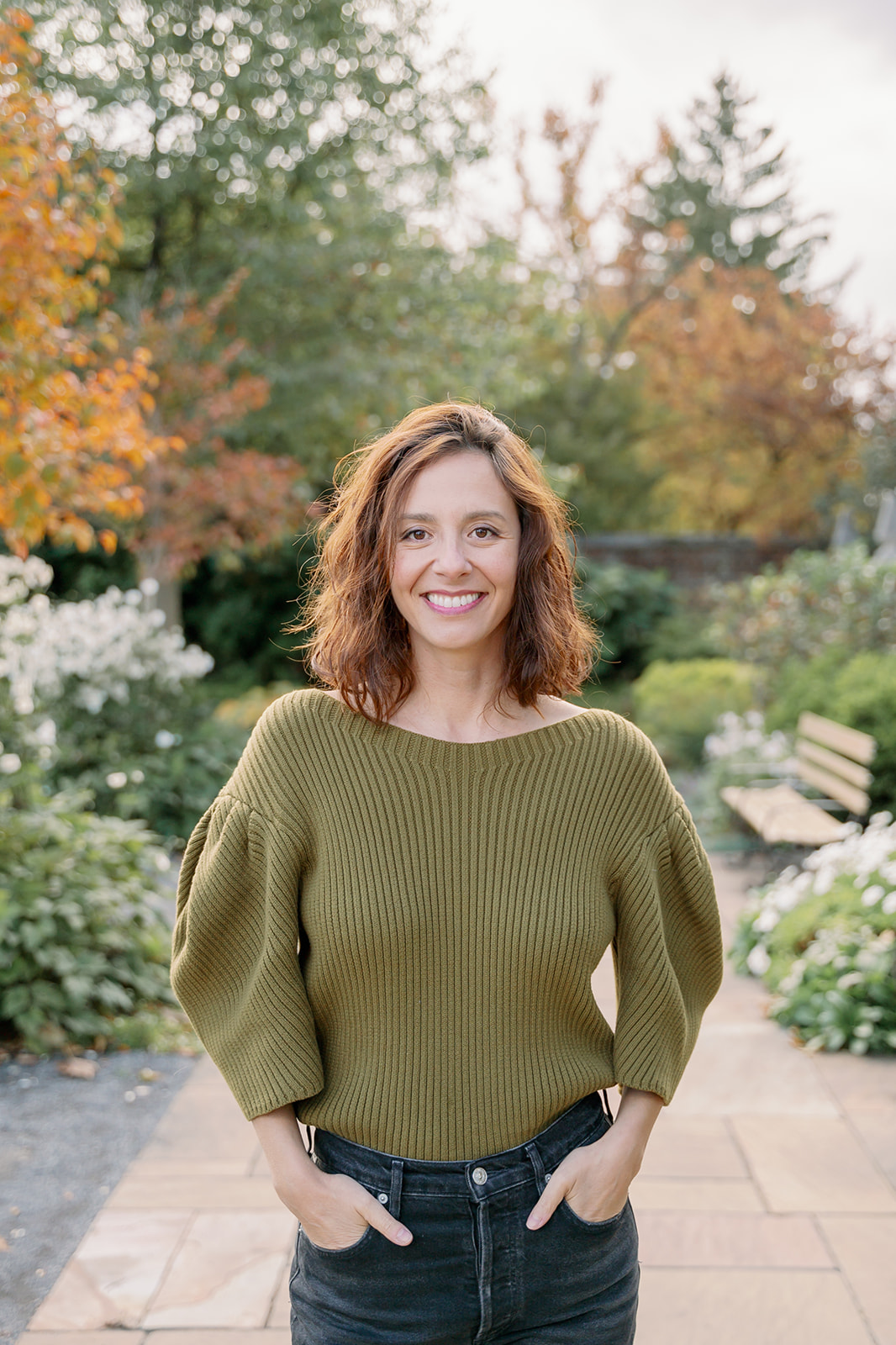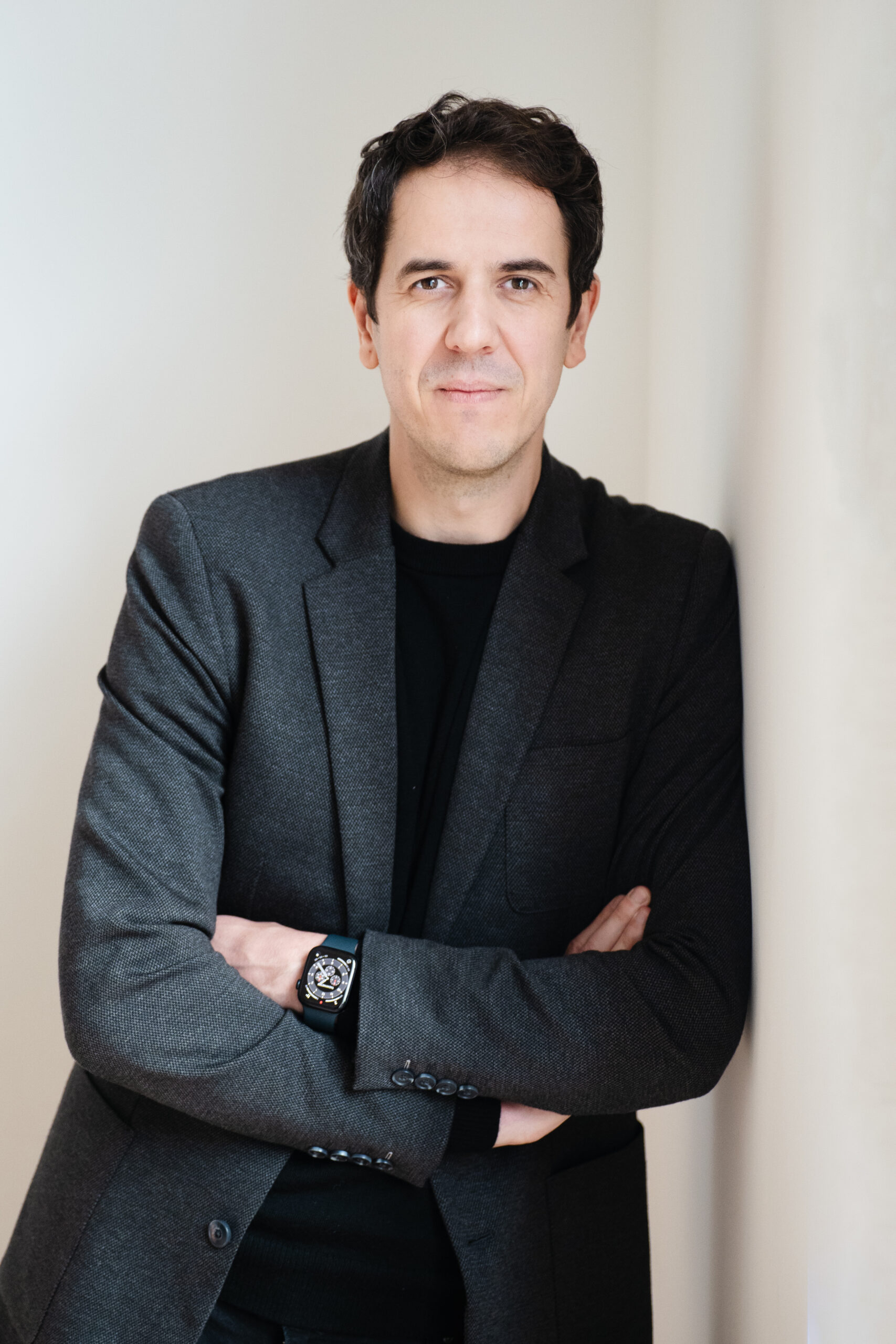
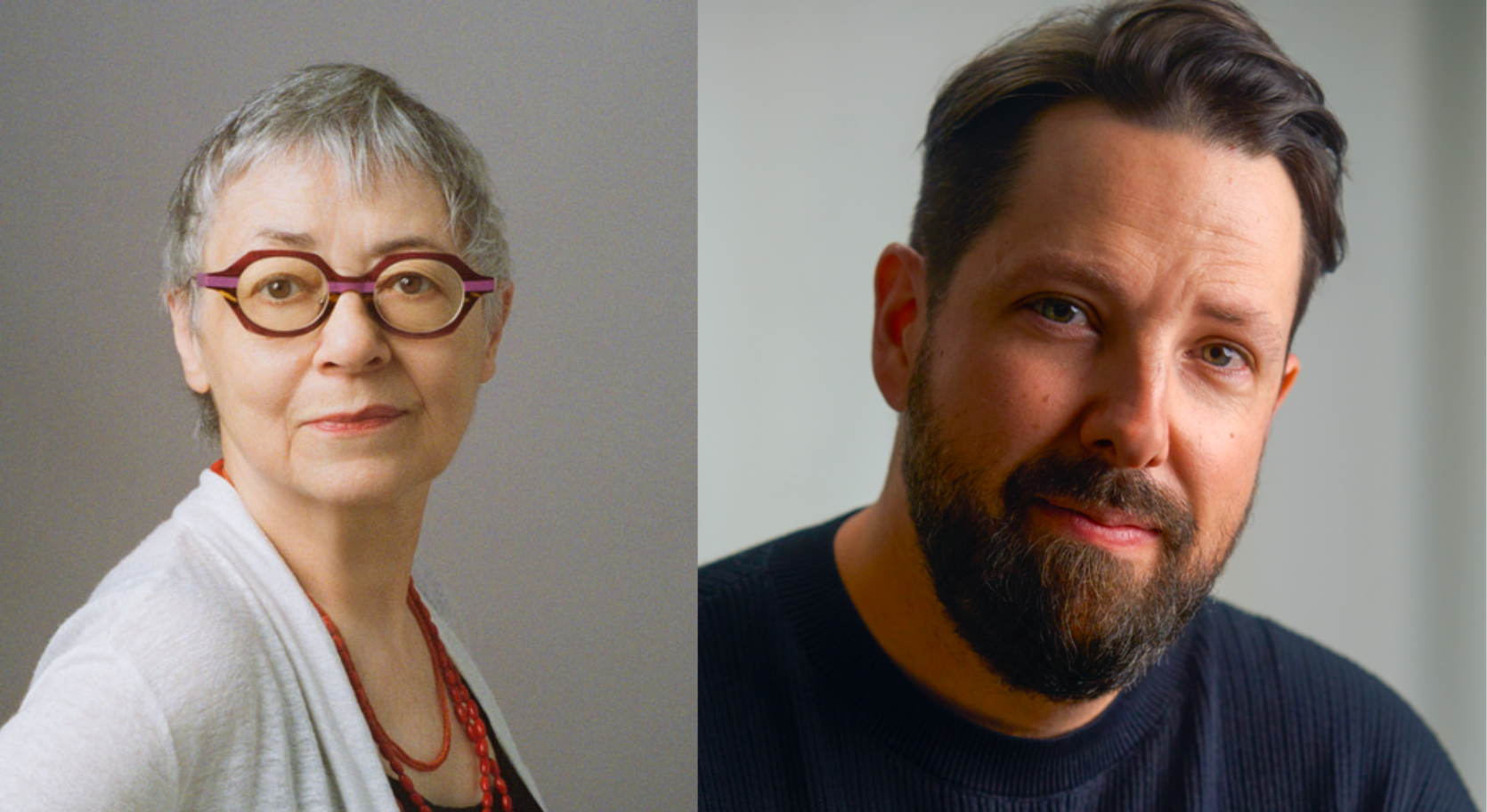
Sigrid Nunez (left) and Michael Costaris (right). Photos courtesy of the authors.
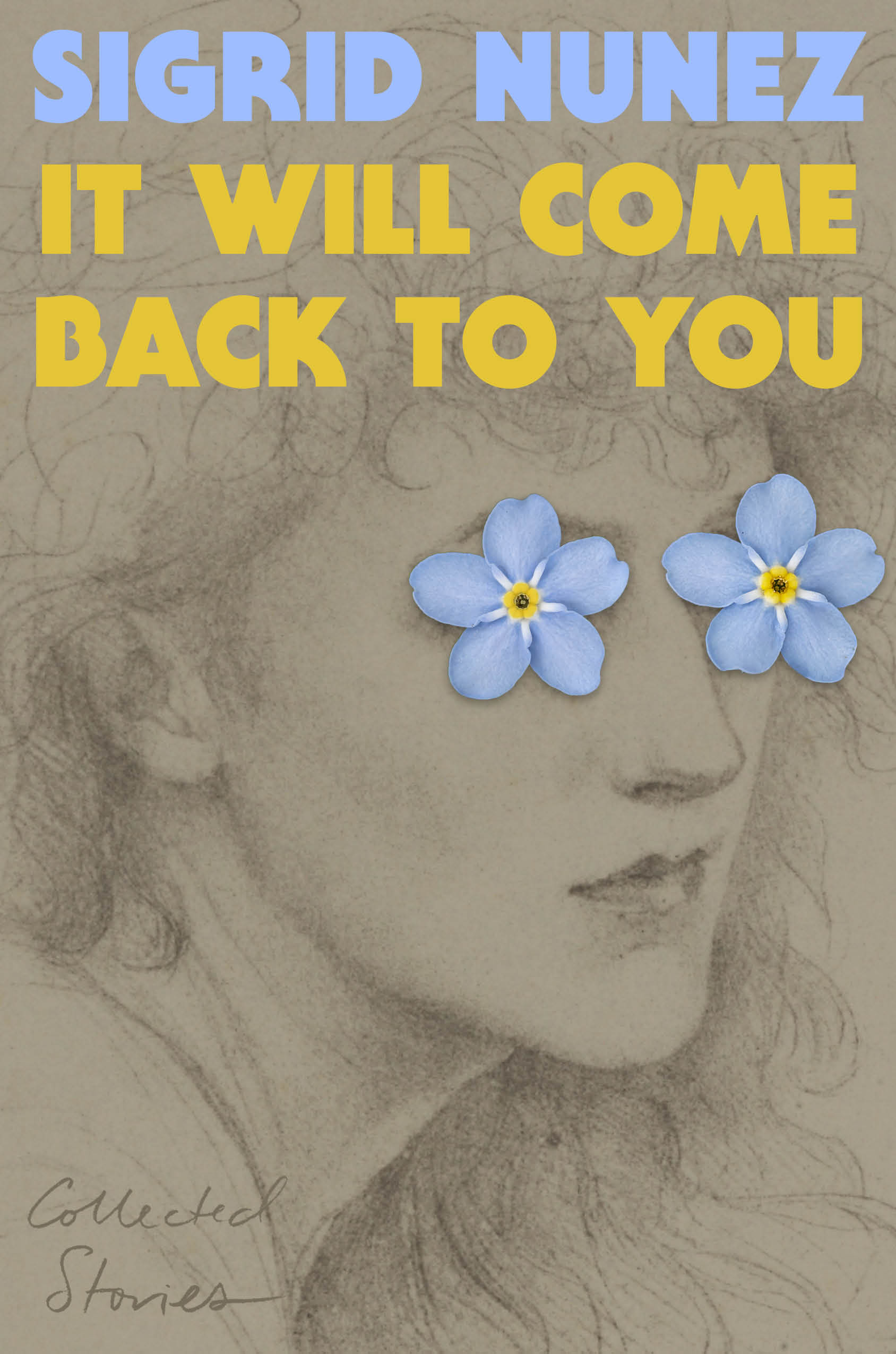
In this interview, SIGRID NUNEZ and MICHAEL COSTARIS unearth the decades of writing behind Nunez’s first story collection, It Will Come Back to You. They spoke for over two hours on Zoom, Nunez in her New York apartment and Costaris from his Toronto home. Nunez is an acclaimed novelist turning to short fiction for the first time in her illustrious career, while Costaris is a short story writer who recently completed his first novel. Together, they discuss the demands of each form, the challenges facing short fiction in a changing marketplace, and The New Yorker’s enduring pull. Through craft, Nunez interrogates the instinctive nature of writing and the function of humor in both life and literature.
Michael Costaris (MC): The stories in this collection span more than three decades of writing. What was your process around forming the collection?
SN: The idea of publishing a collection was always a possibility, but it took a while for me to feel ready to do that. Over the years, whenever I published a new story, my agent would say, “Well, maybe it’s time for a collection.” And I always thought, “No. Maybe it’s not.”
[both laugh]
But while I was still working on my last novel, The Vulnerables, I wrote “It Will Come Back to You.” Then, after finishing that novel, instead of starting another one, I found myself writing “Greensleeves.” And right after that came “Mother-Daughter Story,” and then, again right away, “The Rabbit’s Foot.” But coming up with one story after another like that was new for me.
Having those stories made the idea of a collection more appealing. I wouldn’t have been enthusiastic about a collection made up entirely of older work, but I knew some of the older stories would pair well with the recent ones. So I went back, and I read everything. I tried to keep the process simple. If I read a story and thought, “Oh, that one doesn’t seem as good to me as it did at the time,” there was no way I was going to include it. I chose the thirteen stories that I thought were the best.
MC: That process, diving back through your history, must have been interesting. The short fiction market has changed so much. Some of the magazines in which these originally appeared are no longer in print.
SN: Like Open City, which first published “Curiosity.”
MC: It made me wonder how you feel about the place of short fiction today. Do you think it has changed significantly since you began?
SN: Back in 1975, when I got my MFA, I remember short fiction was a more popular genre than it is now. The New Yorker, for example, used to publish two or more stories in each issue, and when someone like John Cheever or Edna O’Brien published a new collection, it was a literary event.
“You should focus on stories, instead of wasting five years of your life on what will most likely be a failure.”
Then there was a shift. When I was teaching in various writing programs, I remember agents and editors who came to talk with students and told them that they should only be working on novels, because, as they put it bluntly, book publishers were not going to want their short stories—certainly not for a debut. And I think this probably discouraged many young writers who were stronger short fiction writers than novelists.
MC: I spent the last few years writing short stories before turning seriously to a novel, partly because I believed stories provided a form where you really learned craft, and partly because there was this idea in my head that serious writers begin with stories. I realize now that is more of an old-school mindset, but I’m grateful I did it that way. It made me a much stronger writer.
SN: I remember Ian McEwan saying something similar when he was asked for his advice to beginning writers: you should focus on stories, instead of wasting five years of your life on what will most likely be a failure. Master short fiction first, he said, and for your next step maybe take one of your strongest stories and see if you can expand that into a novella.
I do think the dismissive attitude toward short fiction may be changing, though. I keep seeing references to a short-story boom, or a new “golden age of stories.” And Lauren Groff’s collection, Brawler, made the New York Times bestseller list. Maybe I’m noticing it because I have a collection myself, but there do seem to be a lot of collections coming out this year. A lot of good collections.
Still, a book of stories is going to be a hard sell. A lot of readers who are happy to read a story once a week in The New Yorker or elsewhere don’t want to sit down and read a whole book of stories the way they’d read a novel.
MC: I did notice that—even in my own reading habits—it is quite hard to read a collection with momentum because, after reading a story, I felt the need to sit with it and digest it. They demand you read methodically — not necessarily good for a book club or a beach read.
SN: Yes, that’s a good point. Book clubs, I think, would shy away from collections because they’re unlikely to generate the same kind of discussion that a novel or work of nonfiction would. And also with interviews—it’s harder to talk about a book of stories unless it has one coherent theme.
MC: Yes. I spent a lot of time thinking about how to approach this conversation, and I kept coming back to certain themes—not only craft elements but also the stories themselves—that I wanted to get your take on. One thing I noticed is that in many of the stories, but especially “Philosophers” and “Mother-Daughter Story,” existing works—from writers like Kierkegaard and Kafka—frame the story.
SN: Well, that’s interesting. I hadn’t actually noticed that.
[both laugh]
MC: That’s funny—as a reader, I always look for greater connections, whereas as a writer, I understand things are much more fluid.
SN: I suppose, in those particular stories, it feels like I used a frame because I started with an idea that I returned to at the end. But as I say, it’s not a technique I plan for or commonly resort to. Like most fiction writers, I write mostly by instinct.
MC: Does that instinctiveness extend to the writing process as a whole? Are you usually sitting down with no plan and letting the story reveal itself?
SN: When I’m working on a novel, that’s exactly what happens. I begin with a sentence, a thought, a memory, an anecdote, whatever, and I go from there. I write linearly, just putting one foot in front of the other, as it were, allowing myself as much freedom to develop the narrative as possible. And if I want to digress, I digress.
A story is different. It’s a much stricter form. I need to have a pretty good sense of what I want the story to be about. And the ending has to work in a way that isn’t always necessary with a novel. A bad ending can easily turn a good story into a bad one. Usually, with a novel, you have options for conclusions that don’t exist for a story. So, with a shorter form, rather than just starting anywhere, I don’t begin writing unless I have an idea for the story as a whole.

MC: And in some of these stories, the origin of the idea feels clear—“Airport Story,” as an example. We all have those horrible experiences on planes. I can imagine where that came from—
SN: In the case of that story, it did come from an experience of mine. I know the term PTSD shouldn’t be casually thrown around, but it came out of what really did feel like PTSD following an ordeal I had at O’Hare Airport coming home from Lincoln, Nebraska. It’s not strictly autobiographical, but the most horrific details are fact.
MC: Then there are the stories like “Imagination,” which is much quieter and contained—a young girl at odds with her parents. It’s a fantastic story, but the idea is far more muted.
SN: There are always several different elements that come together for me when I’m working on a story. With “Imagination,” I was interested in writing about an adolescent girl whose imagination keeps running wild, and her relationship with her parents—her mother in particular. I also knew that I wanted to include a party scene. So I just started writing about this family and their guests at their vacation house on this particular summer day, and about the vivid, often exaggerated way the girl Elsie sees everything and everyone. I had no idea how the story would end until I arrived at that final scene.
With “The Plan”—to turn to a very different example—I wanted to get inside the mind of this hateful, homicidal, misogynistic man. Of course, given this character, murder was inevitable, and that’s what drove the plot.
And I realize, as I say this, that I’m actually contradicting myself [laughs], because I just said that to write a story I have to have an idea, but that’s not quite true. It’s more often that I begin a story because I have a character.
MC: Your characters are so rich and human. They immediately feel like real people. Where does character usually begin for you?
SN: In some of my first-person novels, the narrator is a lot like me: my gender, my age, New York-born and bred, a writer and a teacher of writing and literature. But my short stories, even those written in the first person—none of them set out to be autobiographical. With the stories, I’m usually interested in writing about someone dissimilar from me.
The characters in these stories are mostly ordinary people, often in situations both ordinary and extraordinary, by which I mean people who are going through things that happen to everyone—the loss of a loved one, family conflict, romantic heartbreak—but that are nevertheless, for each individual, a very big deal. There’s always some kind of suffering to be endured.
As I write and revise, I keep adding details to develop the characters and make their stories more believable. In fiction, details are everything, and they can come from anywhere: real life, general knowledge, pure imagination.
MC: The collection is so full of them. One I tagged was the Brad Pitt impersonator with the childish, high-pitched voice—that dissonance between this gorgeous man and this silly voice is so human, so realistic. The “John” in “Curiosity” saying “Come to Daddy.” It made me realize, which I did not expect at first, that this is one of the funniest books I’ve read in a while.
SN: That’s good. I always want there to be humor in my books.
In fiction, details are everything, and they can come from anywhere: real life, general knowledge, pure imagination.
MC: Humor is such a part of my life, but in fiction, I often find myself needing to trim it back, for the sake of realism. I wanted to ask how you tread that line: keeping something undeniably funny while still serving the emotional reality of the scene.
SN: I’m also someone who finds humor everywhere, even in the most dismal circumstances. I’ve been reprimanded for laughing at my own jokes. I know some people can find that unpleasant, but if something strikes me as funny, I can’t help it. And when I’m writing, that part of my personality comes out on the page.
But you can’t plan humor in fiction. I never think, “Oh, when such-and-such happens, I’m going to put in that funny thing that someone once said.” It has to happen naturally—spontaneously— so that it doesn’t sound forced, which can be deadly.
MC: Humor, too, can be easier in the first person, where it’s not necessarily the writer being funny, but the narrator. This collection moves between first and third person. How do you know which perspective a story wants?
SN: I don’t remember ever thinking beforehand, should this story be in first person or third person? I know that from the start. For example, when it’s a case of a story in memoir form—in other words, a narrator who’s looking back at something that once happened to them, or at an earlier period of their life—it’s going to be much easier to sound convincing if it’s in first person.
MC: The memoir quality runs throughout so much of the collection. I noticed “Philosophers,” “Curiosity,” “The Balloon,” “The Rabbit’s Foot,” “Worried Sisters,” and “The Naked Juror”—seem to begin with memory, and specifically, with the protagonists recounting or remembering another person. Was that a conscious structure, and what do you think it offers you?
SN: It’s not a particular model or strategy that I’m aware of when I write, but at some point in reading and thinking about short stories, I came to understand that this was a promising way to begin: “Here’s something that once happened to me,” or, “Here’s someone I once knew.” If a story, or part of a story, is set in the character’s past, memory always plays a major role.
MC: “Greensleeves” is a story I wanted to talk about on its own. For short story writers, The New Yorker still has this almost mythic status — as if you haven’t quite arrived until you’ve published there. This was your first fiction there.
SN: My only fiction in The New Yorker.
MC: Your only fiction. How did that feel?
SN: It felt very good. I’d submitted stories there before, and over the years I’d been invited by different editors to submit work, but though I’d sometimes be told that a story had come “close,” “Greensleeves” was the first to be accepted. So that was very, very nice. It’s true that writers want to be published in The New Yorker, and for me it meant a lot.
MC: Did you have any sense while writing it that it might be a New Yorker story, whatever that is?
SN: Not at all. Although I’ve often heard people say that stories in The New Yorker all sound the same, nothing could be less true. The variety of stories in The New Yorker is vast. I don’t think there’s any such thing as a New Yorker story. Maybe years ago, back in the ’50s, there was a certain kind of story identified as a “New Yorker story”—more often than not, slice-of-life stories more concerned with the inner lives of middle-class white people than with plot. There was a time when calling something a “New Yorker story” could be a put-down, meaning the story was too narrow and conventional. But that hasn’t been true since I started reading the magazine, in the ’70s.
MC: You mentioned earlier that short fiction can be harder to sell. Do you think it’s also harder to write?
SN: I’ve always believed that short fiction is the more difficult form. Randall Jarrell famously defined a novel as a long prose narrative that has something wrong with it. In a novel, weaknesses and imperfections are permissible. An underdeveloped minor character, an awkward sentence here and there, an ending that isn’t entirely satisfying—readers under the spell of a good novel will forgive all that. But in a short story, flaws are not permissible. Slackness at any point is out of the question. Everything the writer puts into a story has to be essential to it. Everything has to work, and whatever ending there is, it should strike the reader as inevitable.
So yes, it is harder to write short fiction. Of course, plenty of writers are capable of producing at least one beauty. But the kind of writer who can produce one fine story after another—that’s definitely a rarer breed than your usual good novelist.
MC: Well, thank you! This has been so much fun.
SN: And we laughed, and we laughed.
Michael Costaris is a fiction editor at The Adroit Journal. His work has appeared or is forthcoming in The Kenyon Review, The Missouri Review, The Baffler, The Rumpus, and many more. He is seeking representation for his novel.
Sigrid Nunez has published nine novels, including A Feather on the Breath of God, The Friend, What Are You Going Through, and, most recently, The Vulnerables. She is also the author of It Will Come Back to You: Collected Stories and Sempre Susan: A Memoir of Susan Sontag. The Friend, a New York Times bestseller, won the 2018 National Book Award and was a finalist for the 2020 International Dublin Literary Award. Nunez’s other honors include a Berlin Prize Fellowship, the Rome Prize in Literature, a Guggenheim Fellowship, and a Windham-Campbell Literature Prize. Her work has been translated into thirty-five languages. She lives in New York City.