By NALINI JONES
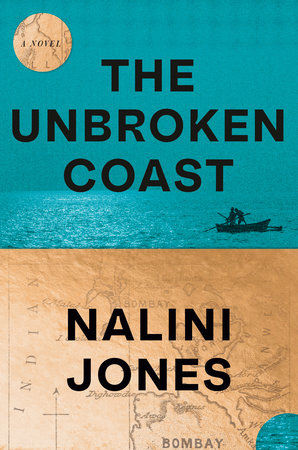
This piece is excerpted from the novel The Unbroken Coast by Nalini Jones, a guest at Amherst College’s eleventh annual literary festival. Register and see the full list of LitFest 2026 events here.
The morning’s freshness had passed; the day taking shape beneath a thick rind of heat, birdcalls, road fumes, car horns, and street chatter from which occasionally a single voice rose. The banana man made his way down St. Hilary Road, stopping at one gate, then the next, his back so bent beneath the bunches of fruit that he gave the impression of a tiny crooked tree. The great carnival din of children making their way to the school next door had modulated to a thrum of voices from classrooms and shrill yips from the games court. Cleaners and kitchen girls had long been at work. Housewives had gone to market, students were in their lecture halls, the city-bound had caught their trains, and Essie had finally set off for Linking Road when Francis decided it was time. He could not turn up too early, but if he waited too long he risked missing her altogether.
Essie paused in the doorway to the bathroom on her way out, her handbag already on her shoulder. “Where are you off to?”
He scraped the razor over his jawline. “Albert is in town.”
“There are cutlets for lunch,” she said, slightly aggrieved, meaning Albert could come—there would be enough—but a pity about the cutlets, which were her favorite and would otherwise stretch to dinner.
“He’s tied up with contractors. I thought I’d go by the house.” Another long sweep of the razor. Francis tapped it against the edge of the sink, held the blade briefly under running water, and lifted it to his other cheek.
“Let him come for a drink this evening, then.” She spoke more warmly, the cutlets secure.
“I’ll tell him.” Francis kept his eyes on his reflection. He was sixty-seven years old. His hair was thin on top, but that had been true for many years. He turned his face to one side, then the other, thin lines of shaving cream showing the tracks of the razor, and decided that, apart from the bald spot, he looked much the same as he had two years before. He was not so very changed since the last time they’d met.
The moment this thought formed, he cupped his hands beneath the faucet and splashed water on his face until he came up spluttering.
He rode his bicycle—he was still fit, he reassured himself—but he’d misjudged the heat. Sheets of hot air wavered over the pavement, and sunlight struck the basilica with such force that the stones seemed to vibrate. Francis had to stand on the pedals, each revolution its own hill, and he arrived at the Hotel Castelo damp and disheveled, flustered by the impulse that had brought him there. He stood a moment to compose himself, breathing in the rice-water air. The heat wore away the edges of things, softening the road and his crisp laundered shirt and even the years as Francis remembered them, so that one memory swam into the next, porous, disordered, unable to be contained. He left his bicycle at the foot of the low marble steps, nodded to the porter to place it in his care, and pushed through the revolving door into the chill gleam of the lobby.
The air-conditioning was a shock; his body reconstituting. Francis straightened his sleeves. The first woman at the desk issued a blank smile, but the second placed him at once.
“Good morning, Professor. How can I help you?”
A guest, he explained. An old friend. Perhaps he could ring the room? He gave the name.
“Of course. Let me look that up for you.”
He waited while she consulted the register. It was a perfectly reasonable request, a perfectly reasonable visit. Still, he felt exposed, as if he expected at any moment to be asked the nature of his business. An old friend, he told himself again.
“I’m sorry, Professor. That guest checked out this morning. Did she expect you? Could she be waiting for you in the lounge?”
“No, no. There was no appointment. I only just heard she’d come, so I thought, why not . . .” He tossed his hand, a demonstration that he was not affected in the slightest. But the day seemed to lose its air, and seeping through him was a desolation he thought had passed with his youth. When had she left? he wanted to ask. By how many minutes had he missed her?
“The lounge is open, then?”
“Yes, of course,” she said smoothly. “I’ll call ahead to let them know you’re on your way.”
Francis sat for the length of a whiskey. The glass felt heavy in his hands, a good weight. When it was empty, he considered another, but a party of businessmen settled at a table near the bar—at such an hour, Francis noted, eyebrows raised—and their arrival served as a reminder of the progress of his own morning. He raised his fingers to signal for the check, but the waiter shook his head. “With our compliments.”
The front-desk manager had given instructions, Francis understood. It happened when he was recognized. With this small erasure, Francis felt less like a man who had taken his first drink right after breakfast and more like a person of standing in his community. It was possible to get up and cross through the lobby; possible to glance out to the pool deck and think of the days when he’d brought his granddaughters here to swim; possible to ride back down Seaview Hill, gathering speed to outrun any lingering foolishness—because what had he thought would happen? A brief meeting, a chance to test the weight of his memories. He did not name what more he had hoped, only that it had been a painful awakening to hope so sharply for anything at all.
He whipped downhill in a froth of wind, the cycle juddering beneath his hands. He only kept from falling by leaning into a wide arc at the bottom. A moment later, he flashed past Holy Name School and tried not to think of Agnes within those walls, or anywhere in reach. She was gone, a story that had ended years before, one he would not tell himself again. There was no record of anything between them: a few careful letters and a photograph of three young people in a garden.
He turned down one street, then another, winding slowly through the neighborhood as if to let the years between those days and this one accrue again. Still, he could not resist riding past the house where she once lived.
Nalini Jones is the author of a novel, The Unbroken Coast, and a story collection, What You Call Winter. Her work has appeared in One Story, Ploughshares, Guernica, Elle India, Scroll and numerous other publications in the U.S. and India, and she has contributed to anthologies about politics, music and families, including those affected by HIV in AIDS Sutra. She has been awarded a National Endowment for the Arts Literature Fellowship, among other honors, and her short story “Tiger” was selected for O. Henry and Pushcart prizes. She is also a longtime coordinator of live music events. She lives in Connecticut with her husband, daughters and dogs and is an assistant professor of English at Fairfield University. Her credits in music include associate producer of the Newport Folk Festival (2004–09), line producer of the 2005 televised benefit From the Big Apple to the Big Easy at Madison Square Garden, and backstage manager at Freihofer’s Saratoga Jazz Festival and the New Orleans Jazz & Heritage Festival.