By ZHU YUE
Translated by ALYSSA ASQUITH and JIANAN QIAN
Story appears below in English and the original Chinese.
Translator’s Note:
Zhu Yue’s characters often find themselves disembodied: their eyes fly away; their teeth fall out; their bodily secretions are preserved in museums; their fingers are replaced with wheat noodles; they find their own heads buried in their backyards.
In “The Messengers,” disembodiment takes a subtler form. The narrator’s voice has not so much been “taken” as it has been usurped for an ulterior purpose. Communication has become a disembodied thing: words come out of the narrator’s mouth, but they mean nothing to him.
What do we know about the messengers? All we really know is that they are, as the narrator puts it, “unfortunate.” We know even less about the senders of these messages. Will the couple who survived the car wreck ever find out what happened that day? Will the “dirtbag” be rescued from the hospital ward? Does this “message passing” foresee the division between speech and speaker, as scholar Deb Roy writes about the age of AI in “Words without Consequence” for The Atlantic?
As translators, we refrain from reading too much into a story’s philosophical meaning. Our concern is very literal: the characters must sound like themselves—casual, furious, diplomatic, terrified, “dirtbag-like.”
Have we, in a sense, become the “unfortunate” messengers? We don’t think so. Every time we finish one of Zhu Yue’s stories, we check our eyes, teeth, head, fingers, body, and voice, and find ourselves still embodied, still fortunate.
The Messengers
I shiver in my raincoat as I walk, watching the rain pool in the street and stream past my shoes. This gray city seems ever grayer. Only a rag-like crack of sky peeks out from between the flashing signs and neon lights beaming down from every high rise. I take each step carefully, breathing in the cold wind, tasting the rain and the mildewed streets.
In this kind of weather, I would much rather be back in my small apartment, sleeping the day away. But I must complete my assignment. I know that woman is waiting for me in a booth on the second floor of a dim sum restaurant. I am already late. I hold a note with the address on one side and a simple, hand-drawn map on the other. Every few blocks, I pause to search for road signs, and the rain splashes into my eyes.
Half an hour later, I am sitting before her. Like always, she is pale as a sheet and expressionless. Her appearance is as strange as ever, eyes veiled by curtains of hair. She must be an unfortunate woman, as much as I am an unfortunate man. She sips her hot tea. I, too, bring my cup to my lips. As I sip, I steal looks at my raincoat, which hangs on the hook just outside the booth, dripping steadily, casting shadows on the floor.
The woman makes a scooping motion, opening and closing her palm in front of her mouth, as if drawing something out of her throat. That is the signal. I nod and sit tight.
After about thirty seconds of silence, she speaks: “A-Lang, is that you? I am looking for A-Lang. I’m A-Cheng.”
As if compelled, I respond: “I’m here. Hi, A-Cheng. It’s been a while.”
“I thought I’d lost you, bro.”
“No way.”
“How are you?”
“Good. Work is a drag, so I always look forward to time off.”
“Do you still travel a lot?”
“Whenever I can, weekends and holidays. I always go to the same place, so I’m not sure it counts as travel. It’s not far from where I live—an inn at the foot of a mountain, in the suburbs. I can get there and back in a day.”
“Why go there every time? Are you seeing someone?”
“You’ve got to be joking. I’ve been single since forever.”
“Hiking?”
“No, I never hike. I’m not interested in the mountains. Honestly, I don’t really know why I do it, but I go whenever I’m off work. I check into the inn, read magazines on the bed, and sleep when I get bored. It’s like that, kind of lazy. But when I’m at work, I get so excited for weekends and holidays. I can’t wait to check into that inn, read on that bed, sleep. I love those magazines—they’re full of pictures.”
“If I were you, I wouldn’t be able to sleep. These days, I can only sleep when I’m in a car.”
“Your insomnia’s that bad?”
“It’s been three years now.”
“How have you been coping?”
“I live in that old house my grandpa left to me. During the day, I read his old copies of Twenty-Four Histories—they have these dewy, dark green covers. At first, I just wanted to learn about politicking—pick up some schemes and tricks—but then I realized it was hopeless. The books are written in such a subtle way that a fool like me will never crack the code. So, I’ve started reading them randomly. Now, I read whichever page or historical period I happen to flip to. The more I read, the more it feels like the same old story repeating itself in every dynasty. In short, I’ve only gotten more confused. At noon, the shooting club sends a car to pick me up—that’s the only time I can get any sleep. I sit in the back, lean my head on the window. Just a few minutes of the streets rolling by is enough to get me drowsy. When I wake up, the car has already pulled into the prairie. The weeds are as tall as a man, and always dry. I walk into them. The shooting range is hidden at the heart of the prairie. During my walk, someone will emerge from the weeds to hand me a pistol and a box of bullets. I keep walking until I see a small mountain: at its foot is an empty lot with shooting targets. I adjust my posture and calm my breath. One hand pulls apart the weeds; the other aims the pistol and fires. The shots echo in the open field, again and again. I shoot until the sun sets and it’s too dark to see the targets. The car will be waiting for me in the same spot. I climb in and sleep. The driver wakes me when we’re back at my grandpa’s house. At home, I don’t eat much; I lie on the bed and think about nothing, the sound of the gunshots reverberating in my head. After an hour or so, I’ll find myself standing again by the bookshelves, pulling out one of the Twenty-Four Histories.”
“Thanks for sharing that with me.”
“No, thank you. I haven’t chatted with anyone like this for years.”
“We’re running out of time.”
“Yes. Talk next time, if there is a next time.”
“There will be. See you.”
“See you.”
I take a gulp of tea, ask the waiter to refill my cup, then visit the restroom. She does the same. Outside, the rain is coming down harder than ever.
Once we’re seated again, she repeats the scooping gesture, opening and closing her palm. I nod. We begin another round of message-passing.
“Fumiko, do you remember me? I’m Noburo.”
“Of course. Long time, Noburo.”
“Long time indeed. The last time we spoke was ten years ago, right?”
“I don’t quite remember. It must be, or longer. I’ve lost the concept of time. How did we lose contact? I thought you would marry me. That’s all I remember. I thought you were going to ask me to be your wife.”
“You’ve forgotten a lot of things.”
“I had a car accident and lost my memory. That’s what the doctor told me. But all that is as blurry as a dream. I don’t remember being in an accident. I don’t even really remember the doctor. Despite the broad daylight, he was as dim as a shadow. He spoke a few words and disappeared, leaving me alone.”
“I wanted to let this go, but it’s been tormenting me for years. I had to find you and tell you.”
“I’m listening.”
“We had a wonderful time in the mountains that day—perhaps the most beautiful time of my life. When we started our climb down, it was quite late. It seemed boring to go back down the same way we went up, so we took a smaller trail. We tired quickly, groping in the dark, but were lucky enough to make it back to the highway. A taxi appeared. You waved at it, before I could stop you. The taxi pulled over. A handsome driver stuck his head out the window. ‘Hop in,’ he told you. You ran straight to the car and sat next to him. It was like you’d forgotten me already. Reluctantly, I took the seat behind the driver. The car started to accelerate rapidly, as if it was mad. You exclaimed, ‘Oh my, you are a racer!’ The driver smiled. ‘You know, they call me Lord of the Cars!’ We sped ever faster as he finished his sentence. Strong wind blew in from the open windows. Breathless, I felt as if I were riding a meteor that was plummeting to Earth. It was then that I saw your hand on the driver’s…”
“It must have been unconscious. The car was racing, and I was afraid. You left me because of that?”
“It wasn’t unconscious, but I didn’t leave you because of that. In fact, I don’t remember what happened after that. That was my last piece of memory—all I can recall after so many years. I’d rather forget now.”
“I see. Now that you’ve told me, you can forget it.”
“I hope so.”
“You selfish bastard!”
“Same to you.”
The conversation ends abruptly. It takes a moment to pull myself back from the remote, illusory scene. My partner seems to be napping, her head loping off to one side. No need to wake her now. We have plenty of time. I gaze at the waterfall of rain on the outside of the window, at the blurry, miniature world reflected there. After a few minutes, she jerks awake. At first, she stares at me with a look of fear; she regains her calm little by little, then returns to her signature indifference.
I glance at my watch and raise my index finger. She nods, and we begin our last round of message-passing.
“Mr. Cenbrandt? Are you there, Mr. Cenbrandt?”
“I’m here. You dirtbag, don’t yell like that.”
“Okay—”
“What do you want?”
“I need your help. I’m in trouble.”
“Again? I thought you’d never come crawling back to me after all that.”
“Only you can save me this time.”
“Spill it. I don’t have long.”
“Okay. I’m in a hospital. Honestly, I can’t say for sure whether it’s a hospital or a prison. I came here to see Blake. He was a nice guy. We used to share an apartment. He disappeared for a while, but he called me yesterday to say he was in a hospital and that I should come visit. I agreed. He’d really helped me out in the past by taking care of those people who were trying to blackmail me. You know, there’s always someone trying to blackmail me. So, here I go to visit Blake. I thought I’d find him lying out on his sickbed. Instead, I was led to a small cell by a man in a white coat. He said this was the meeting room. A moment later, Blake showed up in a hospital gown. He said he was glad to see me. I asked about his illness. He said he’d developed a strange disease: whatever he touched would age quickly. ‘Age’ was the exact word he used. I noticed he was wearing a pair of yellow rubber gloves. Are you still listening?”
“I am.”
“Now that I think about it, he was full of shit. My cell phone rang, then. It was my kid. I’d left him home alone so I could come see Blake. He’s only seven. He told me someone was knocking at the front door, pretty violently. Through the peephole, he could see two men dressed like doctors. He didn’t dare open it, and asked what he should do. I told him I’d come back right away. ‘They’re more than you can handle,’ Blake said, suddenly. I was astonished: how could he know what was happening on the other end of the phone? ‘Don’t let your son open the door,’ Blake said. ‘They’re taking him for an experiment. I’m the only one who can stop them. Let me go now.’ ‘But how will you get out?’ I asked. ‘You’re in a hospital.’ He said he could escape if I swapped clothes with him. He began to remove his gown. I didn’t know what to do. He kept insisting, so I did what he said. I guess my mind went blank. He left in my clothes. It took me a moment to realize he was gone. Eventually, I took the hospital gown off the floor and put it on. I put on the rubber gloves, too. I wanted to leave, but the door of the cell was locked. I banged on the door, but nobody answered. I searched in vain for my phone: someone must have stolen it without me noticing. It occurred to me that Blake hadn’t asked for my address. How could he come to my son’s rescue? Or maybe he already knew the address. Either way, I’d been scammed. Am I right, Mr. Cenbrandt?”
“Dirtbag, you do have a brain.”
“Only you can save me. They don’t know I can get in touch with you. This is something beyond the wildest imaginations of the greatest conspiracy theorists and gangsters. Oh, I want to laugh!”
“Hold your laughter, dirtbag. You betrayed us once. You must know you’re nothing without us. You can’t protect your kid or yourself in this brutal world. Understood?”
“Understood.”
“You’ll owe me another one. I’ll ask you to pay me back someday.”
“I vow that I will.”
“Alright. Give me your home address and the address you’re stuck at. I’ll go save your kid first and see who those doctor-people are. Then, I’ll come for you. I’ll get you out of whatever it is you’re in—be it a hospital or prison. After that, we’ll find this Blake guy and give him hell.”
“My address is 31 Meat Market Road. I’m trapped in a white building on the corner of Iron Bridge Street and Black Dam Road, on the 11th floor.”
“I’m on my way.”
“Thank you so much, Mr. Cenbrandt.”
“Don’t forget your vow.”
“Never.”
As soon as our work is done, she retrieves her umbrella and exits the booth. I’m almost too tired to move, but I know better than to stay in the restaurant. I prop myself up and take my raincoat off the hook.
By the time I make it out to the street, she is way ahead of me, walking with her black umbrella. Slowly, her shadow fades into the gray city. I long to talk with her, but I know we will only ever speak through the voices of other messengers.
What would I say to her? I gaze down at the whirls on the rainy street. Perhaps I would tell her about my dream last night. I dreamt I was living in a strange land, where people had to keep talking to stay alive. If you fell quiet, you would disappear. So everyone around me was talking constantly, too afraid to stop. Like them, I spoke endlessly, pouring every word out of myself. Over time, I grew weary—too sick of words to be afraid. I closed my mouth. White steam rose before me, like a cloud. I couldn’t see a thing. I knew I was disappearing—but I had never felt so free.
传 声
朱岳
我瑟缩在雨披下走在雨中,脚下是雨水汇成的河流。这座浑浊的城市愈加浑浊了。抬起头,视线被道路两旁悬垂的各式招牌遮挡,只能从窄窄的缝隙处看到破布一般的天空。我就这么深一脚浅一脚地走着,雨的气味混合街巷的霉味随着清冷的风一股股灌入我的肺腑。
这是那种适合躲在自己的小房间里睡觉的天气,而我必须如此奔波去完成自己的使命。那个女人在等我,在一家茶餐厅二楼的小隔间里,我已经迟到了。我手里攥着一张纸条,一面写有地址,另一面画着简单的路线图。每走一段路,我就得仰起脸来寻找路牌,这时雨水便会打进我的眼睛。
半小时后,我终于坐在了她的对面。她像以往一样面如白纸,神情漠然。她的发型也还是那么怪,头发帘遮挡着双眼。她大概是个可怜的女人,就像我是个可怜的男人。她缓缓饮着热茶,我也拿起了茶杯。我的雨衣挂在隔间外的钩子上,我边喝茶,边用余光观察地上的暗影和从雨衣上淌下的水渍。
这时她做了一个从咽喉向外掏的动作,手在嘴的前方张开又垂下。这是在示意我开始。我端正坐姿,点了点头。
之后是约三十秒的沉默,她开口了……
“阿朗,你在吗?我找阿朗。我是阿成啊。”
紧接着,不由自主地,我也开口了……
“我在呢阿成,好久没你的消息了。”
“我以为再也找不到你老兄了呢。”
“怎么会。”
“现在过得怎样?”
“还可以,就是工作很无聊,总盼着放假。”
“现在还常出去旅行吗?”
“每个假日,无论是周末还是节日假期,我都会去一个地方,但算不上旅行。那个地方离我家并不太远,当天可以往返,是郊区山脚下的一家小旅馆。”
“为什么总去那儿,是去幽会吧?”
“你真会开玩笑,我从来都是一个人。”
“那是去登山?”
“我从没爬过那附近的山,我对山也没什么兴趣,我也不知道为什么要去那儿,但每到假日我一定会去。住进旅馆房间,我就躺在床上看杂志,看到困得不行就睡觉,就这样,有点浑浑噩噩。不过每个工作日我都在盼望假期,盼着去那家旅馆,躺在床上看杂志,最好是那种花花绿绿全是图片的杂志,然后入睡。”
“要是我的话,肯定会失眠的。我现在只能在颠簸的汽车上睡着。”
“失眠很严重吗?”
“是,已经三年了。”
“这几年你是怎么过的?”
“住在我祖父的那栋老房子里,白天读他留下的一套发霉的《二十四史》,书封是暗淡的绿色。一开始想从里面学点阴谋诡计,但后来发觉学不到,那些事写得都很隐晦,我没这个天分,根本搞不明白。后来我就不按顺序去读了,抽到哪本是哪本,翻开哪页是哪页,这么读着读着,就感觉历朝历代都大同小异。总之一头雾水。到中午,会有一辆车来接我,是射击俱乐部派来的。只有坐上那辆车我才能入睡,在后排座上,头靠在车窗上,看一会儿街景就迷糊了,醒来时,车已停在一片野地上。我下车,走进草丛,草有近一人高,总是很干燥。俱乐部的射击场就藏在草丛深处。有个人会从这座草迷宫中冒出来,交给我一把手枪、一盒子弹。之后我继续在草中穿行,会看到一座小山,山脚下有一块空地,那里立着一排靶子。我站稳,调整呼吸,一只手拨开草,一只手举枪瞄准、射击,枪声在郊野上空震响,一下又一下。我这么一直射击到黄昏,再也看不清标靶才停下。那辆车还在原地等我,我上车,睡觉,回到祖父家的门前时司机会叫醒我。我只吃很少的东西,躺在床上发一小时呆,脑子里仍然回响着枪声。然后我就又站到了书架前,从那套《二十四史》里抽出一本,开始没头没脑地读起来。”
“很高兴你能跟我分享这些。”
“我也很高兴,已经好几年没和任何人聊过了。”
“我们的时间差不多了。”
“是啊,下次再聊吧,如果还有机会。”
“会有机会的,再见。”
“再见。”
我拿起杯子喝茶水,喝完一杯又续上一杯,之后去了趟卫生间。她也做了和我一样的事。雨下得更大了。
等我们重新坐好,她又做了那个从喉咙向外掏的动作。我点点头。于是传声又开始了……
“郁子,你还记得我吗?我是信夫。”
“记得,信夫君,好久没联络了。”
“是啊,已经有十年没说过话了吧?”
“记不清了,应该有十年了,也可能更久,我现在失去时间概念了。怎么会断绝消息呢,我还以为你会娶我,现在我只记得这个了,记得你本来是要娶我为妻的。”
“看来你忘了很多事。”
“因为一次车祸,我失忆了,一位医生告诉我的,说起来又好像是在做梦,我完全记不起什么车祸了,那个医生也好像是幻影,在一片晃动的白光里跟我说了几句就不见了,只留下我一个人。”
“本来不想提这些了,但长久以来这件事都在折磨我,让我心里不舒服,所以还是找到你,要告诉你。”
“我在等你说。”
“那天我们在山中共度了一段很美好的时光,也许是我一生中最美好的时光,很晚我们才决定下山。因为觉得顺原路返回没什么意思,我们就走上了一条山间小路,在黑暗中摸索让人筋疲力尽,后来终于走到一条盘山公路边。这时候正巧开来一辆出租车,我知道你会招手,想要阻止你,但已经晚了,你高高举起手臂,那辆出租车马上停在了咱们面前。车窗开着,司机是个俊朗的男人,他朝你说了一句‘上车吧’,你就跑过去,坐到了副驾驶的位子上,好像把我忘了。我不情愿地拉开车门,坐在司机身后的位子上。随后车子开起来了,越开越快,简直像发疯一样。你对司机说:‘天哪,你的车技真好!’司机笑了,说:‘你知道吗,我是车神!’话音未落车又加速了。山风从敞开的车窗猛灌进来,我有些窒息,感觉自己是坐在一颗正在坠落的流星上。突然,我发现你的手在抚摸那个司机……”
“肯定是下意识的,车速太快,我害怕。你就是因为这个离开我的?”
“不是下意识的,我也没有因为这个离开你,实际上我不记得这之后发生的事了,那是我最后的记忆,这些年来我能回忆的也只有这件事,只有前面我对你讲述的这些内容,我宁愿忘了它。”
“我好像明白了,你把它讲给我,你就可以忘了。”
“但愿如此。”
“你是个自私的家伙!”
“你也一样。”
对话戛然而止。我好不容易从一个遥远的虚幻场景中回过神来,瞅瞅我的搭档,她垂着头,已经在打瞌睡了。我没去打搅她,时间还很充裕。我望向窗玻璃上雨水的瀑流,那里浅浅地映现出一个迷离的微缩世界。几分钟后,她猛然醒来,惊恐地看着我,之后渐渐恢复清醒,又刻意摆出一副冷冰冰的样子。
我看看手表,然后竖起右手食指,她点点头,于是开始了今天的最后一次传声。
“岑勃兰先生吗?岑勃兰先生,你在吗?!”
“我在。邋遢汉,别那么大呼小叫的。”
“是……”
“找我有何贵干?”
“我遇到了麻烦,需要您的帮助。”
“又遇到麻烦了?我以为你不会再来找我了。”
“这次只有您能救我。”
“快说吧,我很忙。”
“是这样,我正在一家医院里,说是医院又像是监狱,我也搞不清楚。我来这儿是为了看布莱克的,布莱克是个很不错的家伙,以前和我同租一栋公寓,这家伙有两下子,但是不久前消失了。昨天我接到他的电话,他说他住院了,让我去看他。我答应了,因为他帮过我大忙,他帮我打跑了那些勒索我的人,您知道,一直都有人勒索我。所以今天我就来看望布莱克了。我以为他会躺在病床上,但是没有,我被一个像是医生的人带进一个小房间,这人说那儿是会见室。过了一会儿,布莱克进来了,穿着一身病号服。他说见到我很高兴。我问他得了什么病,他说是一种很奇怪的病,他的双手触摸什么,什么就会迅速变旧。‘变旧’,他就是这么说的。这时我才注意到他戴着一双黄色胶皮手套。您还在听我说吗?”
“在听。”
“现在想起来,这家伙满嘴鬼话。这时我的手机响了,是我的孩子打给我的,我来看布莱克的时候把他自己留在家里,他才七岁。他说外面有人在敲门,很凶暴。他从窥视孔向外看,说是两个医生打扮的人。他不敢开门,问我怎么办。我说我马上回去。布莱克忽然说:‘你对付不了他们。’我一下惊呆了,电话里说的什么,他好像都清楚。他说:‘让你的孩子别给他们开门,他们是要带他去做实验,只有我能对付他们,现在我就去收拾他们。’‘可是你怎么去,你在住院?’我问他。他说只要和我调换一下衣服就能蒙混过去,说完他就开始脱衣服。我呆坐在那儿,他让我快点脱衣服。我照他说的做了,当时我的大脑一片空白。他穿上我的衣服,夺门而出。我过了半天才反应过来,捡起地上的病号服穿上,又戴上了那双橡胶手套。我想出去,但发现小房间的门已经锁了。无论我怎么用力拍门都没人回答。我开始找我的手机,这才发觉不知什么时候手机也被偷走了。我想到,他并没问我现在的住址,又怎么去救我的孩子呢,除非他早就知道。但不论是哪种情况,我都受骗了。我分析的对吗,岑勃兰先生?”
“你很有头脑,邋遢汉。”
“现在我只有向您求救了,他们不知道我还可以联系到您,无论对方是什么样的恶棍、阴谋家也想不到,我真忍不住想笑!”
“你先不要笑,邋遢汉。你曾经背叛过我们,你要接受教训,没有我们,你什么也不是,在这个残暴的世界上,你根本保护不了自己和你的孩子,明白吗?”
“明白!”
“你又欠下我一个人情,以后我会要你偿还。”
“我发誓偿还!”
“好吧,把你家的地址,和你现在待的这个鬼地方的地址告诉我。我会先去救你的孩子,看看那些医生打扮的家伙是什么妖魔鬼怪。之后我会去你那里,不管是医院还是监狱,我都会把你弄出来。然后我们去找到那个什么布莱克,让他生不如死。”
“我的住址是:肉市大街三十一号。我现在被困在铁桥街和黑堤坝路交叉路口的一栋白色建筑物里,在11 层。”
“很好,我这就出发。”
“谢谢您,岑勃兰先生!”
“别忘了你的承诺。”
“永远不会忘。”
刚一结束工作,她就起身拎起靠在墙角的伞,走出了隔间。我感到疲倦,但知道这个茶餐厅不是久留之地,于是艰难地站起来,从挂钩上摘下雨衣穿在身上。等我来到街上,她已走远,顶着一把黑伞,背影渐渐模糊,融入在一片混沌中。其实我挺想和她聊聊,但是只能以传声的方式聊,那需要依靠另外两个传声者的帮助。
聊什么呢?我走在雨里,看着前方水中泛起的松缓漩涡,寻思着。或许可以讲讲我凌晨时的梦。我梦到自己在一个很奇怪的地方生活,在那里,只有不停说话才能存在下去,一旦闭口不语,就会消失,所以每个人都拼命说啊说啊,一刻也不敢停。我也和他们一样在不停地说着,搜肠刮肚地说着,忽然我厌倦了,什么也不想说了,也不怕了。我闭上嘴巴,这时眼前升起一团浓稠的蒸汽,我什么也看不到了,我知道自己正在消失,正在消失……于是生出一种从未体验过的解脱感。
Zhu Yue was born in 1977 in Beijing. After graduating from university, he first practiced as a lawyer but later became an editor. He is the author of several short story collections, including The Blindfolded Traveler, Masters of Sleep, Chaos of Fiction, The Horse Breaking Free, and The Sea of Imagination. His academic work “Philosophical Musings” is included in the 2010 Analytical Philosophy Anthology: Pluris. As Paper Republic puts it, “China is not short of writers who swear fealty to Borges, but Zhu Yue is one of the few whose work has the philosophical weight to substantiate the metafictional trimmings.” The English translation of Masters of Sleep and Other Stories is forthcoming with Accent Edition in Spring 2026.
Alyssa Asquith is a writer from Massachusetts. Her stories have appeared in The Adroit Journal, X-R-A-Y, HAD, Atticus Review, Okay Donkey, and elsewhere. She has an MFA from the Iowa Writers’ Workshop.
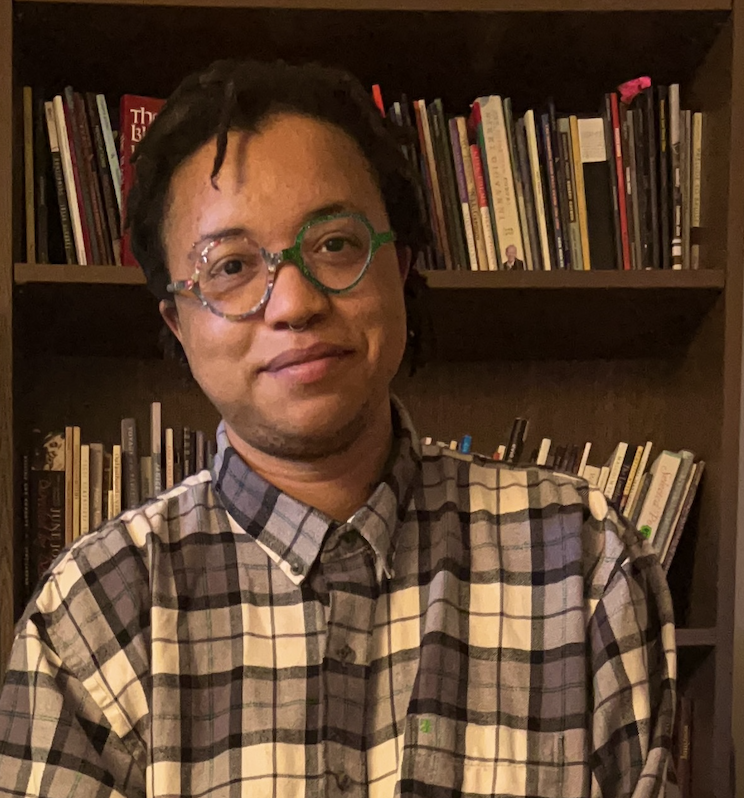
Jianan Qian is a bilingual writer from Shanghai, China. In Chinese, she has published four original works and translated several iconic authors, including Shirley Jackson. In English, her works have appeared in Granta, Guernica, The Los Angeles Times, and elsewhere. She teaches creative writing at Towson University in Maryland.