By RODRIGO URQUIOLA FLORES
Translated by SHAINA BRASSARD
Story appears below in English and the original Spanish.
Translator’s Note
It is a pleasure to share my translation of this short story from contemporary Bolivian author Rodrigo Urquiola Flores. This semi-autobiographical work of fiction transports the reader to the windswept edges of the city of La Paz during the early and mid-1990s, when young children like the author and I were cognizant of the mysterious and feared chupacabra as a topic of conversation and media coverage.
The story is part cataloging of the author’s first significant experiences and memories. Thrillingly, the narrator takes us on a journey from the neglect and loneliness of his spare, dusty home to the high drama of the soccer stadium. It is nothing short of a revelation. In this third space, he finds seemingly all the raw materials of life: effort, teamwork, luck, heartbreak, agony, triumph, relief.
Through the storytelling of his Aymara grandmother, Urquiola also takes us back in time to the Ocobaya hacienda, a site of subjugation and domination. I have resisted translating – and therefore decontextualizing – pongo, patrón, and amo, the unique terms of racialized power associated with this social and economic system. Curious readers are invited to learn more about haciendas, a significant feature of not-so-distant Latin American history with meaningful connections to the plantation system of the United States.
Chupacabra
In the beginning was the Chupacabra. And some god saw that it was good.
Before starting school I lived mostly with my grandma Viviana. She worked as an empleada doméstica in a huge, beautiful house with a lush yard watched over by a neat row of pine trees.
Although I was not a rowdy child – my hobbies consisted of sitting on the kitchen floor, watching and sometimes swallowing the black ants that marched between the fruit bowl and the wall, memorizing world capitals from an old atlas, and talking to Astro, the German Shepherd trained to disarm any would-be terrorists – my grandma tended to shut me in her room while she worked to make sure I did not bother anyone. I guess when you’re not fully domesticated yourself it’s hard to understand how your mere presence can disturb someone who is.
A few months before these earliest of memories, some terrorists (at least that’s how the press referred to them, though they called themselves leftist revolutionaries) had kidnapped the businessman Jorge Donovan. Apparently their plan was epically bad and their luck even worse, as he ended up dead, two of the kidnappers were shot to death and the rest sent to prison. My grandma worked for the family of Señor Donovan’s daughter.
But I do not want to talk about terrorists or revolutionaries or businessmen or kidnappings or policemen suspected of wrongdoing or the bodyguards who walked endless laps around the house. So much has already been said about all that that I prefer to talk about the invisible.
I met Adrián the Shadow in the empleada’s room, where we tended to spend more time than in our own home. He was somewhat older than me. He only came out of the wall to talk to me. I have often tried to recall the shape of his face or the clothes he wore, to no avail. I can only recall – or am I making it all up now, in the act of remembering? – the tone of his unhurried, almost raspy voice, his sour breath. I can remember his voice but not his words, just his name. I remember the sadness that sank over me when he left and falling asleep exhausted on the wood floor, a stuffed bear named Hugo as my pillow.
But I don’t want to talk about that Adrián either, nor about sadness or that teddy bear’s origin story. What’s the point, since these remain, in their own way, visible? With time one learns that sometimes things can be said, shouted even, without uttering any words.
Silence in an unpredictable animal.
School began and I went to live with my mother in our house in Santa Fe de Khessini. That’s where I met Adrián Choque. I was in first grade and he was in fifth. We first crossed paths one day after class, when a couple of neighbor kids started shoving me so I’d fall and dirty my uniform. Adrián intervened and chased them off. After watching them flee he told me how that morning he’d fought with his older brother, Alcides, who had come home drunk and begun kicking their mother for not giving him more beer money.
“I bloodied his nose with this fist,” he said, smiling. “And the bastard ran away.”
I also smiled, of course, happy for his triumph.
Perhaps “house” is a bit generous for describing the single mudbrick room where I lived with my mother, brother, and, from time to time, my brother’s father.
I loathed the place. I hated being left by myself, surrounded by dust that blew down from the hill in gales, hunger growing with every dusty breath thanks to the wind that savaged your lips and then dried the blood from those selfsame lips.
I do remember that I was very curious about pain. I no longer ate ants. Instead, I boiled oil or water, approached an anthill, preferably the home of red fire ants, cracked open the chosen community with a pickaxe, waited for the angry mob to rush out, then doused it. If I used boiling oil, the anthill never recovered. The piece of scorched earth became something like hallowed ground, its surface unblemished.
I also learned that sometimes you have to throw rocks, sometimes big rocks, to protect yourself from street dogs and that it can be fun to toss cats in the water barrel, mostly because they steal the food that takes so much to come by. And I learned, by way of a beating, that water can be way too valuable to go around wasting on playtime.
The silence of animals.
One afternoon, while I was launching stones from my homemade slingshot at the birds perched in the highest branches of the eucalyptus tree behind my house, on land where my neighbor kept pigs, my friend Adrián Choque came to ask for my help. He was agitated and sweating. I searched his eyes to see if he was crying. While I could see they were red, I found only sweat running down his cheeks and forehead.
“I need you to hold onto this for me,” he said, handing me a Bubble Gummers shoe box that seemed empty but was sealed tight with tape. “You’re going to bury it. Don’t open it.”
As he ran down towards the river that flows a hundred meters from my house, he repeated, “Don’t forget: bury it.”
I did as he asked. I took the pickaxe, dug a hole where there had once been an anthill and hid the box. I covered it with dirt and arranged some sticks and leaves on top.
That was September. Little did I know that I would not see Adrián for many years.
It was the middle of the second week of October when I said to my mother, “I have a buried treasure in the yard,” and confessed about the shoebox. I recounted the sweat that had poured from my friend’s skin like water.
But she didn’t believe me. She thought I was talking about Adrián the Shadow, the being she called “imaginary” who came out of the wall of the empleada’s room where my grandma still lived.
No, she did not believe me and I cannot blame her. She had other worries. My brother’s father had recently disappeared after racking up debts with several neighborhood families. She needed to find a job soon because some days we couldn’t even buy bread.
In the beginning was the Chupacabra. In the end, as well. But what was the Chupacabra?
Once, my Aunt Yoselin, my Uncle Dimas’s wife, explained that we didn’t really know, but it was probably an animal-like creature. A new type of beast. Evolution or lab experiment or accident of nature or a little of all three. On the news they said it was addicted to blood, and victims were often found with fang marks on their necks and their bodies drained of life, as if ravaged by deadly desert heat. Their faces bore the shock of sudden pain, their mouths a half-scream, half-horrified smile, eyes wide in terror.
“They can even make themselves unseen and fly,” my aunt told me one night as we listened to the crickets, watched the clumsy flight of black and red beetles, and glimpsed the faint glow of blue fireflies floating among the branches of a pine tree. “A chupacabra could be watching you right now from that mountain, waiting for you to fall asleep so it can come slurp your blood.”
An animal coming out of the walls of the room where you sleep. Becoming flesh. Its teeth emerging from its gums, coming towards you. An animal made of silence: invisible, flying, avenging.
It was Sunday, November 9, 1997. A little more than a week after my eleventh birthday, although I didn’t register it at the time. Our household was never very good about celebrating or even remembering important dates.
It was a day like any other. In the morning I hunted flies for the spiders I kept in jam jars and in the afternoon hunger called boredom and boredom called the kitchen knife. I don’t remember how long I played with the knife, with the possibility of pain, imagining how my bloody entrails would spill from my stomach and my mother’s cries when she came home and found me dead. I made a few shallow, cowardly cuts, barely scratches. I hid the knife when I heard someone open the door. It was my Uncle Dimas.
He cleaned my face and combed my hair. We left that lonely, mind-numbing place that was my home.
“We’re going to the stadium,” he said.
I remember the sky-blue Bolívar jersey with the Taquiña logo that my uncle bought me and that was a little too big and later got lost, never to be seen again. I remember that we sat in Recta General, the mid-range seats kissed by the afternoon sun. I remember that the green of the Hernando Siles Stadium field was luminous, a green I had never seen before – so pure, a sunny and cloudless sky become grass. Bolívar beat Chaco Petrolero three to zero in the group of six round-robin of that national championship. I remember Thomas N’Kono, the Cameroonian goalkeeper who had played in the 1990 World Cup in Italy and how when he cleared the ball from the penalty box, he could make it soar over the entire pitch. I remember the taste of cinnamon ice on my tongue. I remember the crowd jumping to their feet to celebrate each goal.
And now I knew what I wanted to be in life: a soccer player. All the gods I could believe in – fate, chance, time, a few others – seemed to come together on the field where the players are mere instruments of their divine will, as changeable as a ball.
To the gods, we are the silent animals.
We returned home as night fell. Uncle Dimas said goodbye. As soon as he closed the door I ran to where I had hidden my friend’s box, a sinking feeling in my stomach. Sometimes life’s most important events occur in one’s absence.
I was right. Someone had been searching the area. Where the shoebox should have been was now nothing but a hole in the ground. I was certain it was Adrián who had taken the box, even as I remembered I never showed him where it was buried.
The wind blew cold. I had the strange sensation that someone or something was watching my every move. I went inside to hide, throwing myself on the bed and pressing play on the cassette player with the Russian music (mostly Ivan Rebroff, I’d later learn). I covered my face with the blanket and thought about the Mallasa Zoo’s lion, which I always imagined escaping and somehow making its way, ravenous, to Santa Fe.
I pictured how, there among the scrubgrass, the lion defeated the chupacabra following a bloody battle that I would never see because my head was under the covers. The lion was victorious, devoured his rival, but remained hungry.
The next day, after my mother left the house for work, I went back to the hole. There was a brick-sized rock that hadn’t been there the night before. I picked it up and underneath found a fifty-peso bill and traces of white powder that looked like flour or powdered sugar. I smelled it. My nose burned a little and I sneezed. I didn’t think much of it. I was delighted – those fifty bolivianos represented a fortune.
“Adrián isn’t your imaginary friend,” my mother remarked one night as we dined on hamburgers she had bought on 53rd Street. I just listened to her, surprised she had chosen these words to break our customary silence. “You’re Adrián. You’ve been talking to yourself since you were little. You even talk in your sleep. But when you’re awake you hardly say a thing. You must have some kind of autism. I read about it in a magazine.”
I gave no response, and she let it go.
Once, my grandma, who always shared stories from her childhood, told me about the special punishment of a laborer named Porfirio on the Ocobaya hacienda, where she went to work after running away from home at fourteen.
The patrón’s eldest son had discovered Porfirio kissing another male pongo by the river. After furnishing a beating while shouting “maricón de mierda,” he concocted a punishment that seemed inspired by the myth of Sisyphus. He ordered him to push a wheelbarrow up and down a hill, filling and emptying it of the same pile of dirt, an exhausting and pointless task. Every day Porfirio would take up his punishment, and my grandma could never understand why he did not run away as others had, especially since he had no family to tie him to the place. He endured the abuse in silence. Days passed. The quantity and ferocity of lashings doled out by the patron’s son diminished until they ceased. The special punishment continued, but now when the amo’s and pongo’s eyes met there was an exchange of smiles and winks, although the patrón’s son quickly returned to his furious cursing of the “faggot piece of shit” whenever his wife or the patrón himself was around.
Maybe it was this image that induced a strange dream where I watched Adrián Choque enter my house from the wall that is the night, only to dig up the package he had left in my care, take it away, then return to re-bury it a few hours later and leave the hiding place as if nothing ever happened. Over and over again, like an endless punishment that can only be imposed on an invisible and silent animal, who smiles knowingly in the dark.
Also like a dream was my memory of the first goal of the Bolívar match. In my mind I watched Sérgio João receive the ball with his chest, guard it for a few seconds before entering the penalty box, calculate the angle of the far post and score with a delicate touch that sketched a perfect half-circle before being caressed by the back of the net. That image and ensuing celebration, the smiles and hugs, played over and over in the field of my imagination.
I thought about the possibility of taking refuge, of living within a glorious repeating cycle. Pain and punishment were inevitable – just look at what became of the ants I drowned in boiling oil, or the existence of a rabid creature like the chupacabra, itself a sort of punishment, a variation on the first murderous carnivore. Every Bolívar game, a fiesta of sky-blue and white confetti raining from the stands. Every final whistle an exquisite death. We are memory and to remember is to search the intricate silence of the images left behind. But we are also animals with a voice, and the voice gets bored of speaking alone and so becomes the game and the game becomes the celebration – joy as celebration of victory and agony as celebration of defeat – and everything that ends does so only to begin again.
A brief smile after the pain, the exhaustion, the hunger, after having run from bullies’ kicks with the sting of sweat in your eyes, is the greatest reward we can hope for.
I never managed to become a professional soccer player. Life happens and it hardly matters what we keep hidden or choose to reveal.
Coincidence does more than repeat names. It also leads you in circles.
Some seventeen years later, in May of 2014, I ran into Adrián Choque.
It was after Bolívar’s victory over Lanús of Argentina in the Copa Libertadores quarterfinals. I was heading home in a Puma Katari bus filled with other Bolívar fans riding high after qualifying for the semis. A voice coming from the loudspeaker requested the young cede their seats to the elderly, and I stood to offer mine to an old man.
I didn’t notice the man’s face until he put his hand on mine, smiled and said my name with alcohol-tinged breath. This was no old man but my old friend, Adrián, now shrunken, the skin on his face weathered and furrowed by wrinkles.
We shared a weak handshake. Neither had more to say. I watched his head bob against his chest as he struggled not to fall asleep and decided to get off at the next stop, on 16th Street in Obrajes, still far from home, without saying goodbye.
Chupacabras
En el principio era el chupacabras. Y algún dios vio que eso era bueno.
Antes de entrar a la escuela, yo vivía con mi abuela, Viviana.
Ella trabajaba como empleada doméstica en una casa enorme y bella, con un amplio jardín cuyo césped era vigilado por una hilera de pinos.
Aunque no fuera un niño ruidoso y mis ocupaciones no hubieran sido otras que sentarme en el piso de cerámica de la cocina a tragarme las hormigas negras que iban y venían del frutero a la pared, memorizar de un viejo atlas las capitales de los países del mundo y hablarle al Astro, un perro pastor alemán entrenado para desarmar a algún terrorista eventual, mi abuela prefería encerrarme en su cuarto para que mi presencia no molestase a nadie. Cuando uno no está bien domesticado no entiende que a veces la simple presencia puede perturbar a alguien que sí lo está.
Unos meses antes, unos terroristas (así los llamó gran parte de la prensa, pero ellos se decían revolucionarios de izquierda) habían secuestrado a don Jorge Donovan con tan mala suerte y pésima estrategia que terminó muerto y un par de ellos acribillados y los demás encarcelados. Mi abuela era la empleada doméstica de la familia de la hija de este señor quien, además, era un empresario exitoso.
Pero no quiero hablar de terroristas ni de revolucionarios ni de empresarios ni de secuestros ni de policías bajo sospecha ni de los guardaespaldas que se paseaban dando incansables vueltas alrededor de la casa, ya se ha dicho tanto sobre eso que prefiero hablar de cosas invisibles.
Conocí a Adrián, la sombra, en el cuarto de la empleada, allí donde solíamos vivir más tiempo que en nuestro hogar. Era un niño algo mayor que yo. Salía de la pared solamente para hablar conmigo. Muchas veces he intentado recordar la forma de su rostro o las ropas que vestía, pero es inútil. Apenas recuerdo —¿o estaré inventándolo ahora que, una vez más, emprendo el esfuerzo de la memoria?— el tono de su voz, ocre, pausado, casi ronco, su aliento amargo. Puedo recordar el tono, pero no puedo recordar sus palabras, apenas su nombre. Recuerdo la tristeza que me dejaba cuando se marchaba y el profundo cansancio que me hacía dormir en el piso de madera, apoyando mi cabeza en un oso de peluche que se llamaba Hugo.
Pero tampoco quiero hablar de ese Adrián ni de la tristeza ni contar la historia del origen de ese oso de peluche, no, para qué, me digo, si, al final, en los intrincados senderos del recuerdo, continúan siendo, a su modo, visibles. Con el tiempo uno aprende que a veces se pueden decir las cosas, hasta gritarlas si fuera necesario, sin necesidad de pronunciar las palabras que uno creyera que debe decir.
El silencio es un animal impredecible.
Empezaron las clases y me fui a vivir con mi madre a nuestra casa, en Santa Fe de Khessini. Allí conocí al Adrián Choque. Yo cursaba primero básico, él hacía quinto. La primera vez que nos encontramos fue cuando un par de vecinos nuestros, compañeros de mi curso, al volver a casa luego de las clases, empezaron a golpearme y a empujarme para que cayera al suelo polvoriento y ensuciara mi guardapolvo blanco. Él los ahuyentó. Después de verlos correr me contó que se había peleado con su hermano mayor, el Alcides, quien esa misma mañana había llegado ebrio y había empezado a propinarle puntapiés a su madre porque ella no tenía dinero para comprarle más cerveza.
—Con este puño le he sacado sangre de la nariz —me dijo, sonriendo—. Y se ha escapado el cabrón.
Yo también sonreí, por supuesto. Me alegraba su triunfo.
Quizás la palabra casa sea generosa para describir el cuarto de adobes en el que vivíamos mi madre, mi hermano y, de vez en cuando, el padre de mi hermano.
Yo aborrecía ese lugar. Odiaba quedarme a solas, rodeado por el polvo que descendía en ventarrones de la loma, la sensación del hambre haciéndose grande, como si explotara en algún lugar del cuerpo y se expandiera gracias al mismo viento que uno no podía dejar de aspirar por la nariz, ese viento polvoriento que primero te secaba los labios y luego la sangre en los labios ásperos.
Recuerdo, sí, que sentía mucha curiosidad por el dolor y sus límites. Ya no comía hormigas; hacía hervir aceite o agua, me acercaba a algún hormiguero, sobre todo los de las hormigas rojas, esas que pican con rabia, abría la comunidad elegida con el golpe de la picota, esperaba a que salieran las turbas enardecidas, y echaba el líquido; si era aceite hirviendo lo que había echado, el hormiguero no se recuperaba. Ese pedazo de tierra se convertía en algo así como suelo sagrado y su superficie permanecía impoluta.
También aprendí que apedrear perros es necesario a veces, aunque tengas que hundirles los cráneos y que tirar gatos al agua del turril puede ser divertido sobre todo porque ellos te roban la comida que tanto esfuerzo cuesta comprar. Aprendí, a golpes, que el agua puede llegar a ser demasiado valiosa como para andar desperdiciándola en diversiones, que para eso estaban los pozos sucios en el río.
El silencio de los animales.
Una tarde, mientras yo les arrojaba piedras con una resortera que me fabriqué a las aves que se aposentaban en las ramas del alto eucalipto que había detrás de mi casa, en el terreno de un vecino que empleaba el espacio para criar cerdos en un amplio chiquero, mi amigo, el Adrián Choque, vino a pedirme ayuda. Estaba agitado, transpiraba. Busqué sus ojos para ver si lloraba. A pesar de verlos enrojecidos, solo encontré sudor chorreando desde su frente.
—Vas a guardarme esto —me decía, mientras ponía en mis manos una caja de zapatos Bubble Gummers que no pesaba mucho y que estaba muy bien sellada con cinta adhesiva–. Vas a enterrarlo. No vas a abrir.
Repitió, cuando bajaba corriendo hacia el río que pasa a cien metros de mi casa:
—No te vas a olvidar, vas a enterrarlo.
Yo obedecí. Tomé la picota, hice un hoyo en el suelo en algún lugar donde antes había un hormiguero —encontré algunas hormigas rojas chamuscadas por el aceite– y, luego de partir en dos a un par de gordos gusanos de cuerpo blanco y sustancia lechosa al cavar más hondo, escondí la caja. Hice barro para camuflar por encima y puse unas ramas para que ese sitio se confundiera con el aspecto de los otros arbustos.
Era septiembre. No sabía que no volvería a encontrarme con el Adrián sino hasta muchos años después.
Corría la segunda semana de octubre cuando le dije a mi madre:
—Tengo un tesoro enterrado en el patio —y le confesé lo de la caja. Le conté del sudor que brotaba de la piel de mi amigo como agua.
Pero ella no me creyó. Pensó que le hablaba de Adrián, la sombra, ese ser que ella llamaba imaginario y que salía de la pared del cuarto de la empleada, donde todavía habitaba mi abuela.
No me creyó y no la culpo, tenía otras preocupaciones, el padre de mi hermano había huido de casa después de endeudarse con muchas familias del barrio. Ella necesitaba encontrar un trabajo pronto porque algunos días ni siquiera podíamos comprar un pan.
En el principio era el chupacabras. En el final, también. Todos los dioses probables estaban de acuerdo, eran uno, el azar, la casualidad, el tiempo y los demás. Pero, ¿qué era el chupacabras?
Una vez, mi tía Yoselin, la mujer de mi tío Dimas, me explicó que podía ser cualquier cosa, pero que estaba más cerca de ser un animal. Una nueva bestia. Evolución o experimento genético o accidente natural o un poco de todo aquello. En los noticieros decían que era un ser adicto a la sangre, muchas veces encontraron en sus víctimas un par de colmillos a la altura del cuello y los cuerpos secos de vida, como atravesados por el calor asesino de un desierto; en los rostros una expresión de dolor, la mitad de un grito, una sonrisa horrorosa, los ojos abiertos al máximo.
—Incluso podrían hacerse transparentes y volar —me dijo mi tía, una noche, mientras escuchábamos a los grillos, asistíamos al torpe vuelo de esos escarabajos con la espalda negra y la cabeza roja y veíamos la tenue luz de un par de luciérnagas azules flotando entre las ramas de un pino—. Un chupacabras podría estar mirándote ahora mismo desde aquella montaña, esperando a que te quedes dormido para tragarse tu sangre.
Un animal saliendo de las paredes del cuarto donde duermes. Haciéndose corpóreo. Emergiendo sus dientes hacia ti. Un animal hecho de silencio: invisible, volátil, el vengador.
Era el domingo nueve de noviembre de 1997.
Poco más de una semana después de mi cumpleaños número once. En la familia nunca fuimos muy afectos a celebrar o recordar fechas y quizás por eso yo, en ese momento, no recordaba que mi cumpleaños hubiera sucedido. Era un día como cualquier otro. Por la mañana cacé moscas para las arañas que aprisionaba en frascos de mermelada y por la tarde el hambre llamó al aburrimiento y el aburrimiento llamó al cuchillo de la cocina. No recuerdo cuánto tiempo jugueteé con el cuchillo, con la posibilidad del dolor sobre mi abdomen, imaginando cómo saltarían las entrañas rojas de sangre y el aullido de mi madre cuando volviera a casa y me encontrara muerto. Me hice un par de heridas leves, cobardes, rasmilladuras apenas. Oculté el cuchillo en mi espalda cuando escuché que alguien había abierto la puerta, lo arrojé a las hierbas cuando vi que ese
alguien era mi tío Dimas.
Me lavó la cara, me peinó. Salimos de ese lugar donde el tiempo parecía detenerse y que era mi casa.
—Vamos a ir al estadio —me dijo.
Quizás no venga al caso ni sea necesario, pero quiero recordar ese momento feliz y, si la escritura, o el ejercicio de la memoria, no nos sirve para eso también, no sé para qué servirá.
Recuerdo la polera celeste del Bolívar con el logo de Taquiña que mi tío me regaló y que me quedaba un poco grande y que después se extravió y nunca más volví a encontrar. Recuerdo que ingresamos a la Recta General. Recuerdo que el verde del césped de la cancha del Hernando Siles me pareció luminoso, un verde que nunca había visto antes, tan limpio, un soleado cielo sin nubes convertido en pasto. Bolívar le ganó por tres a cero al Chaco Petrolero por el hexagonal final de aquel campeonato nacional. Recuerdo a Thomas N’Kono, el arquero camerunés que había jugado el Mundial de Italia 1990 y que, cuando sacaba el balón de su propio arco, podía hacerlo atravesar toda la cancha hasta poner en peligro al arquero rival. Recuerdo el helado de canela sobre mi lengua. Recuerdo a los espectadores poniéndose de pie para celebrar cada gol.
Y ya sabía lo que quería ser en esta vida: un futbolista. Todos los dioses en los que podía creer –el azar, la casualidad, el tiempo y algunos otros– se reunían en una cancha y el jugador era el instrumento de toda voluntad divina, tan caprichosa como un balón.
Quizás no venga al caso, quizás la mejor opción es siempre esconderse detrás del silencio. Ya no importa. Ya está. Para los dioses somos nosotros los animales mudos.
Volvimos a casa de noche. Mi tío Dimas se marchó. Cuando cerró la puerta, yo corrí a buscar el lugar donde había escondido la caja que me encomendó mi amigo. Presentía lo peor. A veces los sucesos más importantes de una vida acontecen en ausencia de quien la vive.
Acerté. Alguien había removido la tierra. Donde debía estar reposando la caja de zapatos, ahora no había nada más que un hoyo en el suelo, un hoyo torpe, hecho a patadas. Supe que el mismo Adrián había sido quien se llevó la caja, lo supe incluso cuando recordé que nunca le había enseñado el lugar exacto donde la había enterrado.
El viento soplaba frío. Tuve ese miedo que me hacía creer que alguien o algo estaba observándome, vigilando mi nuca. Me escondí en el cuarto, me tumbé en la cama, encendí la radio, puse ese cassette negro que tenía canciones rusas (años después me enteraría de que la mayoría las cantaba Ivan Rebrov), me tapé la cara con la frazada y pensé en el león que siempre imaginaba que se escapaba del zoológico de Mallasa y que, por alguna extraña casualidad, terminaba llegando hambriento a Santa Fe.
Imaginé que, entre las hierbas, el león derrotaba al chupacabras luego de una batalla sangrienta que nunca pude ver porque mis ojos estaban bajo la frazada. El león vencía, devoraba al rival, pero continuaba hambriento.
Al día siguiente, luego de que mi madre saliera de casa, no recuerdo ya si a buscar un empleo o a trabajar, volví al hoyo. Allí donde anoche no había encontrado nada ahora había una piedra del tamaño de un ladrillo. La levanté. Encontré un billete de cincuenta bolivianos y, debajo de él, restos de un polvillo blanco que parecía una mezcla de harina y azúcar molida. Me agaché para olerlo. Sentí un leve ardor en la nariz y estornudé. No le di mayor importancia. Estaba contento, esos cincuenta bolivianos eran una gran fortuna.
—Adrián no es tu amigo imaginario —me dijo mi madre una noche que cenábamos unas hamburguesas que había comprado en la calle 53; yo la escuchaba en silencio, sorprendido porque hubiera usado esas palabras para quebrar nuestro mutismo—. Adrián eres tú mismo. Hablas solo desde que eras pequeño. Incluso hablas cuando duermes. Pero cuando estás despierto casi no dices nada. Debes tener algún tipo de autismo. He leído en una revista que a veces es así.
No contesté. Tampoco dijo nada más.
Alguna vez mi abuela, que siempre me contaba historias de su infancia, me habló del castigado Porfirio en la hacienda de Ocobaya, donde llegó a trabajar luego de que ella huyera de casa a sus trece o catorce años.
El hijo mayor del patrón había encontrado a Porfirio besándose en el río con otro pongo y después de propinarle una golpiza y gritarle muchas veces ¡maricón de mierda! había decidido castigarlo quizás inspirado en Sísifo. Le ordenó subir una cuesta con una carretilla una y otra vez, vaciarla y llenarla con la misma tierra que había alzado y echado en un trabajo agotador e inútil. Cada día, Porfirio hacía eso y mi abuela no comprendía por qué no huía como varios otros habían hecho, ya que no tenía una familia que lo atara a ningún suelo. Soportaba el abuso del hijo del patrón en silencio. Pasaron los días. La fuerza y cantidad de los azotes disminuyeron hasta desaparecer. El castigo continuaba, pero cuando las miradas del amo y del pongo se cruzaban, había un intercambio de sonrisas y guiñar de ojos que se cambiaban por el furioso ¡maricón de mierda! cuando la esposa del hijo del patrón o el patrón en persona estaban cerca.
Fue quizás la imagen de este castigo la que me provocó un sueño extraño que tuve donde veía al Adrián Choque entrando a la casa desde la pared que es la noche solo para desenterrar el paquete que me había dado a cuidar, llevárselo quién sabe dónde y después de un par de horas volver a enterrarlo y dejar el escondite como si no hubiera sucedido nada. Así, una y otra vez, como el castigo eterno que solo se puede dar a un animal invisible y silencioso, sonriente en lo oscuro después de cumplirlo.
También recordaba el primer gol del partido del Bolívar. Veía a Sergio Joao recibiendo el balón con el pecho, aguantando la pelota unos segundos antes de pisar el área chica, calculando el ángulo del pórtico más lejano a la mano extendida del arquero rival y haciendo el primer gol con un delicado toque que hacía que el balón dibujara un breve intento de esfera mientras era acariciado por las redes. Esa imagen y la sucesiva celebración, las sonrisas y los abrazos, sucedía una y otra vez en ese terreno de mi imaginación.
Pensaba en la posibilidad de vivir dentro de una repetición feliz ya que el dolor, el castigo, era inevitable, como el que le había sucedido a las hormigas a las que les echaba aceite hirviendo, inevitable como la existencia de un animal rabioso como el chupacabras que, a su vez, era un castigo, una repetición del primer carnívoro asesino, pero ahora el aceite hirviendo de los dioses iba a caer sobre nuestras cabezas. Cada final de juego una muerte feliz. Cada partido del Bolívar una fiesta de papeles celestes y blancos cayendo desde la tribuna. Somos memoria y la memoria es buscar en el intrincado silencio de las imágenes que se quedan siempre atrás. Pero también somos animales con voz porque hemos aprendido esa cualidad de los dioses que se divierten con nuestras vidas y la voz se aburre de hablar a solas y deviene en el juego y el juego en la celebración –la alegría como celebración de la victoria y la tristeza como celebración de la derrota– y todo lo que concluye finaliza solo para empezar de nuevo.
Una breve sonrisa después del dolor, después del cansancio, después del hambre, después de haber corrido tanto evitando patadas, después del sudor ardiendo en los ojos, es la mayor recompensa.
Nunca pude convertirme en futbolista. Las cosas suceden como tienen que ser. Después de todo, no importa qué palabras elijamos silenciar.
La casualidad es así, no solo repite nombres.
Unos diecisiete años después, el quince de mayo de 2014, volví a encontrarme con el Adrián Choque.
Fue luego del partido que Bolívar le ganó al Lanús argentino por cuartos de final de la Libertadores. Yo volvía a casa en un Puma Katari rodeado de otros bolivaristas que también venían muy contentos por la clasificación a semifinales. El altavoz del bus pidió que los jóvenes cediéramos nuestros asientos a las personas mayores y me puse de pie para cederle el mío a un viejo.
No me fijé en el rostro del anciano sino hasta que puso su mano sobre la mía, pronunció mi nombre con un tenue aliento alcohólico y me sonrió. No era un anciano, era mi amigo, el Adrián, reducido, la piel de su rostro quemada y más oscura que nunca, con arrugas surcándolo.
Nos estrechamos la mano en un saludo débil. No dijimos nada más. Lo vi cabecear, lo vi luchar consigo mismo para no quedarse dormido y decidí bajarme en la siguiente parada, en la calle 16 de Obrajes, todavía lejos de casa, sin despedirme.
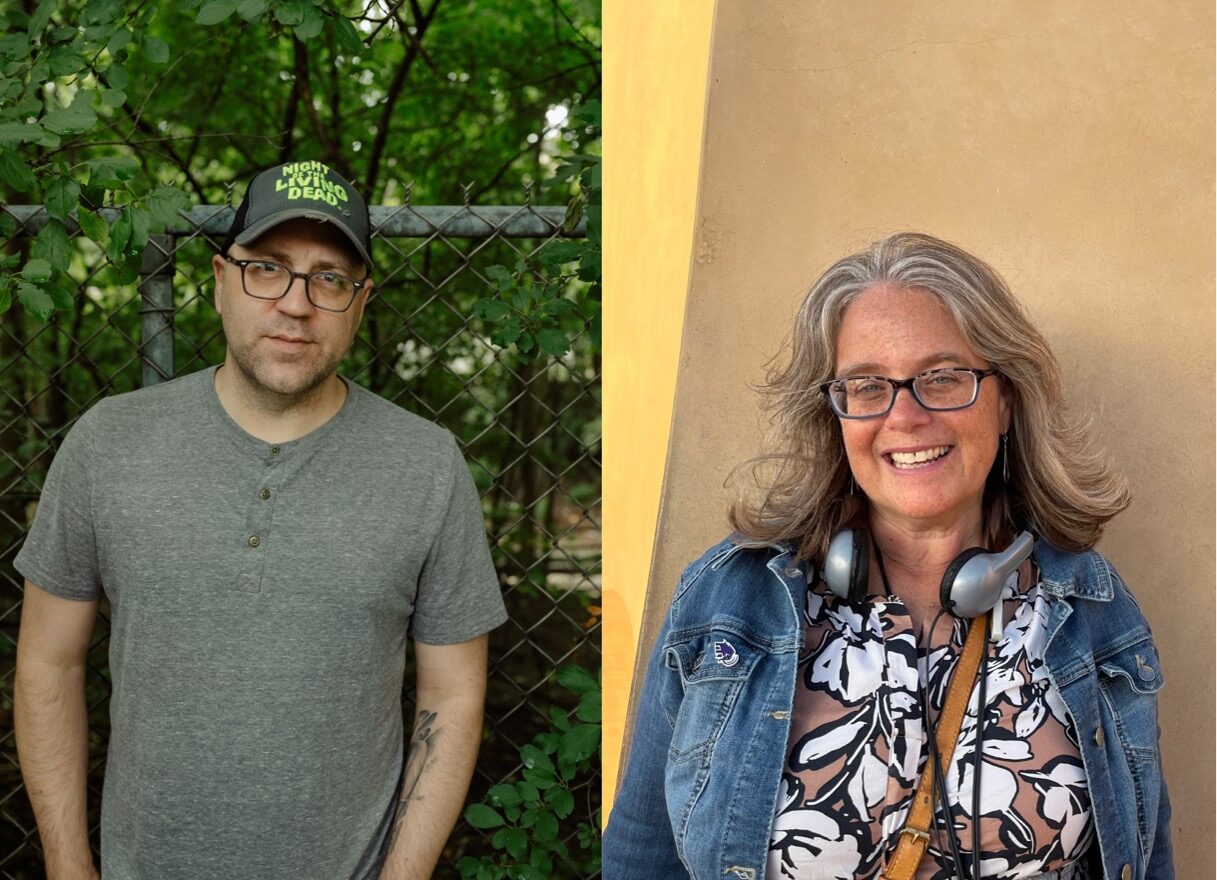
Shaina Brassard is an American writer and translator based in Albany, New York and La Paz, Bolivia. Her literary translations have appeared in Asymptote and Fictionable and been recognized by the Queen Sofía Spanish Institute. She was a resident of the 2024 Art Omi Translation Lab along with Bolivian author Rodrigo Urquiola Flores.
Rodrigo Urquiola Flores was born in 1986 in La Paz, Bolivia. He is the award-winning author of the novels Lluvia de piedra (2011), El sonido de la muralla (2015) and Reconstrucción (2019), the short story collections Eva y los espejos (2008), La memoria invertebrada (2016) and Ayer el fuego (2022), and the plays collected in Hasta las últimas consecuencias (2024). His short stories have won numerous international awards and residencies and been translated into English, French, Quechua, Portuguese, Bengali, German, Croatian, Romanian, and Slovenian.