Reggie pulled his truck up the driveway and past the old goat pasture, a field of knee-high brome that now fed only a rusted tractor, not a buck or a nanny in sight. The only good thing about his wife’s death all those years ago—he could finally let go of the shaggy herd she had loved so much, fill the freezer, and focus on the more agreeable ruminants.
Reggie killed the ignition next to the house. One coal-colored cloud floated like a top hat above his yellow lopsided rancher. Past that, the afternoon sun painted the foothills a fiery mauve. In the distance a trio of bluffs gave way to an abstract canvas, just cattle and rust-red desert smudging south to New Mexico and on into the Navajo Nation.
In the new quiet, the low click of the engine cooling, Reggie thought he heard someone crying, someone crying or maybe someone screaming. He rolled down the window and tilted his head. Just the wind at first, but then he heard it again, something that sounded, certainly, almost human. He thought of a child’s cry. He winced, remembering his daughter as a small girl skinning her knee in the driveway or twisting an ankle in a prairie dog hole in the yard.
The thing was, Reggie didn’t always trust his ears. He’d long been prone to hearing things that weren’t there. Even as a boy, voices screamed up at him from the prairie’s high grasses, whispered from among battered stones in the creek beds. The voices took on new terror when his wife died, nearly ten years ago now, and though for a while Reggie had his daughter Clara to quiet the racket, she was gone now too, and so every day was an occasion for cacophony—the shrieks and screams of the high desert climbing like spiders into his ears.
Reggie stepped out of the truck and walked around the back of the house. The bantams slept on in the pinyon trees, their breasts waving like multicolored flags. The cattle still roamed the western field, milling out of earshot. The sheep were far off too, mowing a lane beside the south fences. The air stood stock-still, the laundry slack on the line. Barely anything moved on the entire sixteen acres. But there it was again, crawling up from somewhere near the sheep shed and winding inside Reggie’s brain—a high-pitched crying or whining. No, Reggie thought as he surveyed the property, a whimpering. The word for that sound was whimpering.
“Shit,” he said aloud. Intruders.
Reggie’s life had been conditioned on borders. Bull gates and alleys, squeeze chutes and locked feeders. And though he stayed as much out of politics as possible, it was a simple fact that anything encroaching on his land, any interloper inside his fences was at best a major pain in the ass and at worst an all-out assault on his livelihood. Reggie had no time for the mangy crews that roamed the edges of his property—the wolves that traveled in shriveled packs, clumps of teeth and fur appearing on the ridge; the foxes and coyotes that drifted in, diseased and desperate. And he had no time at all for the dozens, sometimes hundreds, of stray dogs that wandered back and forth across the highway, hungry and thirsty, pregnant, beaten, carrying scars from car fenders and boots, teeth and stray bullets. Reggie had no time for their sick eyes or wet mouths. No time at all for their cries that sounded, in the distance, like something familiar. Like a woman in pain. Like a young girl calling out for her father.
Inside the sheep shed, Reggie yelled a sing-songy “Hey-there!” to anything that might be lurking, a variation on the “Hey-bear!” he and his wife used to call out when riding horses in the predator-rich hills to the north. “Hey-there!… Hey-there!” he called again, stepping gingerly across the dirt floor. “You little shits better not have any of my hens in your teeth.”
The sun was still up, but the sheep shed’s pallet roof cast eerie shadows on the floor. Reggie had moved his sad little flock to the back pasture on Sunday, and the shed felt suddenly like the loneliest place on Earth.
“Hey-there!” he said again, and then stopped, waiting for a response. As he turned into the feeding stalls, the noise rose suddenly, like he’d rung a doorbell. A chorus of whimpers chimed from the back corner.
Reggie had to bend to fit into the shed’s gabled crook. He pushed away clumps of clay-caked straw and stray wool to find the pups huddled beneath an old horse blanket in the corner. Six of them, all yipping and howling at full volume now that he’d lifted the ratty blanket and exposed them to the cold spring air.
Reggie nudged the ball of pups with his hand, counting them. One had a bad eye, droopy and oozing grey-green liquid. One had a crooked mouth, a birth defect, maybe, or an injury sustained in the first difficult days of its life. But apart from that, they were just puppies. Their mouths and ears and eyes were rimmed in dark black, like someone had applied a thin line of makeup. Their coats were lighter, a buttery tan that glistened in the sheep shed’s slant light.
An image of Reggie’s daughter, Clara, flashed in his brain, her own fine hair, long and golden when she was a girl. He knew from a battered Christmas card he received two winters ago that she kept it short now, chopped in a sharp angle beneath her chin. The picture on the card also told him she had two border collie mutts, both striped down the face like glam rockers. As a kid, Clara’s propensity for taking animals in had nearly rivaled Reggie’s commitment to keeping them out. She was always trying to rescue something, like the farm was a makeshift vet clinic; over the years, she’d dragged in every stray cat and tried to domesticate every species of rodent, kept snakes in coffee cans and cities of insects in shoeboxes beneath her bed. One summer she named every goat after a country music star, then cried mercilessly for months when Reggie killed Tammy or castrated Garth, boycotted the dinner table when Dolly was on deck for Sunday supper. It had confounded Reggie. It confounded him still.
It wasn’t just the animals, though. Where Reggie saw boundaries set to keep things safe, Clara saw walls set to keep things caged and gagged. Even as a girl, she’d noticed the fence Reggie had built around himself, the muddy moat he dug and filled between them. She needed more than Reggie ever knew how to give, more than he’d been taught how to give by his own father, by anyone he’d encountered out here in the lonely borderlands. For most of their lives, his wife had been there to pick up the slack, draw them back together when they drifted apart. Then one day she wasn’t, and just like that he was truly on his own.
There was more than one way to lose livestock, more than one way for predators to kill.
In the sheep shed, Reggie pushed the pups apart, looking partly for the mother to emerge and partly to see that they hadn’t brought a nest of bugs in with them. There was more than one way to lose livestock, more than one way for predators to kill. But the pups were clean, and alone, and apart from their whining and shivering, they looked mostly healthy. Reggie stood and watched them wriggle back together in the muddy straw. He looked around the barn, as if to check for witnesses. Reggie thought about his father, the wind-beaten skin around his eyes, his hands thick from years of rope and plow. He would have killed them all right there without a thought, or would have made Reggie do it, forced young Reggie to bag them and haul them to the river. Reggie might have killed them too, had it been earlier in the day, had he thought to bring his gun from the truck, or a shovel. Instead, he threw the blanket back over the pile and left them to the wind. Not my problem, he thought. It was early March, the nights still freezing. Either the cold would get them or their mother would come back and drag them off. Or maybe something worse would find them huddled in the night. Either way, they wouldn’t be here in three days when he needed to move the sheep back in, and the problem would be solved using the least amount of energy—one of Reggie’s leading philosophies about raising stock. He had killed every kind of animal you could name over the years, but he was not a monster. Another of his philosophies, despite his profession: Given the choice, he’d take not killing over killing any day.
Reggie heard the pups bawling in the sheep shed for two days straight. He tried to ignore the awful noise by checking off a list of errands that took him into town or to the edges of the property, as far away from the shed as possible. He went to the filling station for water. He dragged down the bones of an old coop across the highway. He drove the thirty miles to Chewy’s Feed and Hardware, though he didn’t really need any feed or hardware.
When he got home Wednesday afternoon, the air around the house was silent, not a yip or bawl at all as he unloaded more pallets from the truck bed. No sign of the pups as he cleaned the house and filled the water tanks and washed up for dinner.
In the kitchen, the radiator was whirring in a way that made him uncomfortable, so Reggie clicked on the portable TV set on the counter. He turned down the picture and turned up the volume, just a grey screen mumbling about the weather. He was heating up a Tupperware of chili when another animal noise made him jump. This time the noise was undeniably real and undeniably human. Someone was knuckling his front door. The stranger’s sharp raps echoed through the house.
“What now?” Reggie said to the microwave.
On his front porch stood a short woman with dark hair, cut in an angle at her chin, the same haircut his daughter wore. Or maybe, thought Reggie sullenly, this was the same sort of hairstyle that all young women were wearing these days and he just didn’t know it. She clutched a clipboard to her chest and squinted against the setting sun. She was Navajo, Reggie guessed. She wore a professional blouse-and-slacks ensemble. Professional but not official, he thought. Not the outfit of a bureau worker or social services. Not a lawyer or a surveyor either. Certainly not a farmer. She wore coal-colored lipstick and earrings that swayed when she spoke.
“Yeah?” said Reggie. “Can I help you?”
“Hello!” The woman’s voice was practiced and confident. “I’m Trini from the Perfect Paws team down in Gallup. Are you Reggie?”
“Huh?” Reggie could not remember the last time anyone had come to his house unless he was paying them for work.
“I’m Trini from the Perfect Paws team,” she said again. “Are you Reggie”—she looked down at her clipboard—“Reggie Benzer? Thank you so much for agreeing to help us, Mr. Benzer.”
“I don’t even know who you are,” said Reggie.
She frowned and looked down at her clipboard again. “You are Mr. Benzer? It says here you signed up to be a Guardian Angel for us.”
“Guardian Angel?”
“Let me see.” Trini flipped over a page on her clipboard. “Says here that you ‘encounter many strays, injured or abandoned dogs, and dogs otherwise in danger in the course of your work’?” She looked up and smiled weakly.
Reggie put his hand on the doorframe. “No dogs here,” he said. He didn’t say, And if there were dogs here, they’re all dead by now.
Trini frowned. “You checked the box here that says you’d be interested in helping us with rehomes and rehabs? That you might even want to foster?”
“Rehomes and rehabs?” Reggie pictured the pups in the sheep pen, the one with the droopy eye, the one with the crooked jaw. “You drove all the way up from Gallup? Where did you get my information?” He hated coincidences almost as much as he hated hearing voices that weren’t there.
“Well, I assumed you gave it to us.” She flipped her pages again. “Looks like one of our volunteers talked to you earlier this month.”
“I don’t think so,” said Reggie.
“Maybe it was your wife, then?”
Reggie looked over the fence to where a fledgling cactus garden had once been. Sunflowers and primrose, kingcups. Now it was just a scraggly patch of weeds. “Jenny’s been dead nine years now.”
Trini did not react to this information. She studied her clipboard instead. “Hmmm. This says it was one of our Shiprock volunteers. They’re usually in the Bashas’ parking lot near campus on Tuesdays, recruiting. Initial contact date was… the third of February? Is that ringing a bell?”
Reggie swayed a little in the doorway. He felt suddenly lightheaded. He moved over the words in his mind. Abandoned dogs. Shiprock. Campus. Bashas’. Clara lived in Shiprock, worked at the college there. Clara with the two Aussies and the new haircut. Clara who hadn’t spoken to him in years.
“There’s no dogs here,” Reggie said again and shut the door in Trini’s face.
After dinner, Reggie went down to the cellar, ostensibly to clean his bench, which he’d left in disarray the night before. He hung awls and hammers neatly on the pegboard and swept sawdust into tidy piles in the cellar’s concrete corners. When the silence started to sound like laughter or someone snoring, he clicked on the AM radio and tuned to a country station, leveling the dial to a barely audible yodel.
He arranged a socket set, then went through half a dozen Folgers tins he used to hold nails and screws, setting aside the crooked and the mismatched, tossing out the warped and the abhorrent. God damn dogs, he thought. God damn Clara. And what were the odds that this lady would show up the day after he let a whole litter freeze to death in his shed? Clara would have something to say about karma, something to say about cosmic connections or the universe doing its thing.
Two Polaroids hung above Reggie’s bench near a bucket of finishing tools. In one photo, his late wife stood by the sheep shed, her head turned back toward the camera, a desert sunset streaking blush on the low hills behind her. In the other photo, his wife and daughter stood in the front flower box next to the grubby goats they loved, the two of them hovering like beautiful apparitions over the bed of swaying sunflowers and packed Shasta daisies. Reggie moved around the photographs purposefully, avoiding his wife’s and daughter’s gaze. Oftentimes these days he skipped cleaning that part of the workshop altogether. Photographs talked too, he’d found, if you looked at them long enough.
Over the years, Reggie had gleaned from television, and movies on television, that most people thought death brought you closer to the ones left alive. For him and Clara, though, not so. In those first years after his wife’s death, they fumbled through awkward holidays, they fought and made up and fought again, they went months without speaking at all, and when they did speak, their words were twisted and barbed with a grief neither of them knew how to manage.
At first, they fought about small things: how much Reggie smoked, his mood swings when he tried to quit, money and work and politics, about how often Clara visited, about Reggie needing to have the television on full blast even when she did visit. But their fights always, inevitably, came back around to Jenny. Reggie could barely stand to say her name, now that she was gone, could not bear to summon her. Like most things in his life, he did his best to snuff out the terrible dirge that played when he thought of her. By contrast, Clara seemed to be coping by talking about her late mother as much as she could, as if Jenny were just out front in her flower garden or on a long drive into town. In the year after her mother’s death, Clara wanted to lift up every memory and walk back through each moment that had brought them here, as if in going back over it aloud they could step back into the past or reverse the course of history. Reggie knew different. What’s done is done when it comes to death. True with animals, and true with people too. And then there was the business with the ashes. The ashes were the final straw.
It was a Friday night, and Reggie had made a stew, the brown pool of meat streaking their plates as they stared at each other, trying their best to find something to talk about. This was during one of their better periods—Clara over to the house once or twice a month for dinner, Reggie down to Shiprock occasionally to help with her car or walk with her near campus. But it was also the drought year, and the seventh anniversary of his wife’s death—seven a number Jenny had always found auspicious—and earlier that fall, on a day when the farm had gotten too loud to handle, Reggie had decided to take his wife’s ashes out into the low hills south of the national forest where the two of them used to ride together. He’d scattered her at the edge of a crooked bluff and said a few breathless words for the wind. He’d hoped this would be a silencing ceremony, a ritual to scrape away, like a knife stripping bone, all the voices that haunted him. He hadn’t consulted Clara, though.
Clara picked at the chunks of mutton on her plate. “How’s Mom?” she asked, a question that, in its present-tense formation, wounded Reggie more than any other, a question that often meant it was nearly time for Clara to leave. When her mother died, Clara had not fought him on the idea of cremation, and she even helped to pick an urn, white porcelain printed with blue peonies. But lately she hovered over the urn whenever she was there. As if her mother might, at any time, step out of it and live again.
Reggie said nothing, tried not to look in the direction of the empty urn.
But Clara being Clara, she saw through him right away. “Reggie?” She raised her eyebrows. When he didn’t answer, she pushed back her plate and went to the mantel, lifting the lid by its delicate handle.
Reggie didn’t have time to look up from his stew before Clara was raging at him, holding the empty urn in his face accusingly.
“What did you do?!” she screamed, but there were tears in her eyes as she did.
The fight that unfolded then was unlike their other fights in one way: this time, when Clara left and said she wasn’t coming back, that she’d prefer they didn’t talk, she kept her word.
Now, in the basement, under the careful eye of his dead wife and his lost daughter, Reggie couldn’t concentrate on the task at hand. He kept losing track of his count, tossing dog nails in with the good ones. A desert wind scratched at the basement’s ice-block windows, a wind that outside would be whipping down from the hills, tearing through the scrub mesas and twisting the early chollas in ungodly shapes in the yard. Reggie thought maybe he heard the weather vane squeaking atop the back barn. Or it was something else. He looked up as if he could see through the opaque glass to the backyard and on through to the sheep shed. He hadn’t checked on the pups in forty-eight hours. He was putting off going out there. He turned off the radio and listened. Nothing. Not a peep.
Back upstairs, Reggie sat in the big wingback chair by the window and tried to read, but he kept staring instead at the thermometer on the front porch. Forty degrees, but it would be near freezing in a few hours, an even colder night than the two previous. Frigid starlight poured into the front room. He read the same page of his book four times before he finally gave up and went out.
In the yard, the ground made a crunching noise beneath his boots, a hard frost forming on the scrabble grass. There was still no noise coming from the sheep shed. Reggie had brought a shovel with him this time. He was preparing himself to dig.
Inside, the shed was pitch black. Reggie tilted his lamp toward the back of the pen and waited for movement, for sound, for some sign of life. A part of him said a small prayer. Some other part of him took it back.
When he pulled the blanket off, the pups were still there, all six of them still accounted for. But, beneath the glow of his lamp, they weren’t moving. When Reggie nudged one of them with a gloved hand, the pup scrunched up into itself and gave off a series of faint whimpers. Reggie let out his breath. Some of them, at least, were still alive.
He moved through the animal clump, nudging each until it responded. Four of the dogs moved. Two of them lay unresponsive and stiff, not frozen exactly, but rigid with cold, all the life sucked out of them. In the flashlight’s filmy glow, they looked blue and alien, like no blood had ever pumped through their veins at all. When Reggie lifted the small one, the one with the bad eye, it was a stone in his hands, just as cold and just as heavy.
It took Reggie half a dozen calls to get Trini on the phone the next day, and when he did, she didn’t sound overly pleased to hear from him, even when he told her he had a litter to offload, that four of them had made it through the night and were now shrieking wildly in a cardboard box in his living room. Lucky for him, she’d be in the area that evening, she said. It was a long drive from Gallup.
Reggie answered the door holding the trembling, yipping cardboard box. He’d given the dogs water and tried to feed them, swaddled them with clean linens and hot water bottles. The weather had shifted, a sharp wind accosting them on the dark porch, Trini nearly drowning in her parka. Reggie coughed at the wind and pushed the box forward like an offering.
“My daughter signed me up,” he said apologetically. No matter what he felt about Clara and the dogs, he knew what it meant to waste someone’s time, knew what it meant to drive these roads at night. “She works at the college. There in Shiprock. She must have talked to one of your people.”
Trini studied him, eyes shadowed by her puffy hood.
Reggie set the box down between them. The pups shifted and whined. He rubbed his neck. “She thinks I’m a hick. Stuck in the past. This is some kind of joke, I guess. Or revenge, maybe.”
“So you don’t want to be a Guardian Angel?”
“No. It’s a misunderstanding. My daughter… well, when she was a kid, she was always bringing in animals. Trying to save them. We never really saw eye to eye on that one. Hell, when I was young, Dad used to pay us to round up whole litters and stuff ’em in a sack and go down the low banks of the Animas there and…”
Reggie looked up. Trini’s face had contorted into a horrified scowl.
“Shit.” Reggie looked down into the box where the puppies were squirreling around beneath the thick blankets. “Just to say there are old ways of doing things, but also those old ways weren’t cruel when they weren’t old.”
Trini pursed her lips. “Well, we won’t bother you out here anymore.” She fished a business card from her jacket pocket. “But if you do want us to ever come out and pick up the strays, you can call us, and if we have someone close by…”
“I’m not a monster.”
“Of course not,” said Trini, flatly.
“It’s just that Clara…”
Trini scooped up the box. “Sorry, but I should get these guys indoors and check them out. It’s a long drive back.”
“Yes,” said Reggie. “Thanks, then.” He made a move to help her, but she was already hulking the box down the drive and packing the dogs into the back of her Subaru.
In the Bashas’ parking lot the next day, Reggie looked for an E-Z Up or a tent, people with kennels of dogs to adopt or blown-up pictures of sad animals in cages. But it was a Friday, and no one was in the lot but a few midday shoppers and a man sleeping in a pile of blankets beside a pyramid of neon blue jugs of windshield wiper fluid. Clara had agreed to meet him at two o’clock. He’d suggested lunch, but she’d offered the Bashas’ parking lot instead.
On the ride down to Shiprock, his truck rattling on the near-empty highway, Reggie had turned the situation over and over, twisted it every way he could, trying to better understand Clara’s position. But all roads led him back to his last memories of Jenny.
There were nights, near the end, when Jenny couldn’t even talk, when Reggie had to lean his head on the same pillow to let her whispers fall inside his ear. And even though she was bedridden, feeble, and ghosted, he lay close and let her talk about what needed to get done on their little ranch, what animals needed to move where, what fences she’d mend as soon as she was able again, the flowers she’d plant, the new tile she’d planned for the kitchen. It was in one of these moments, though one of more dutiful clarity about her fate, that Jenny had made him promise to spread her ashes. “No funeral,” she’d said, in the same way that she’d said “No treatment” earlier that year. “Do it the old way. Like we did with my father. Somewhere only you and Clara can find me.” Reggie had known what this meant and had known too that he’d keep this promise to his wife, just like he’d kept every other promise to his wife. What other virtues did he have left in this world?
But had he been right? Had he been honorable in all this? He still hadn’t worked it out as he pulled into the Bashas’ parking lot. What Reggie had worked out, in the years he spent going over it all, was that life often requires you to hold many things sacred at once, even things that appear to be at odds with one another. Perhaps if he’d just tipped the scales slightly, if he’d just honored the living a little more than the dead, Clara wouldn’t hate him or pity him or whatever this was. Maybe if he’d privileged the here-and-now over the long-gone-past, Clara wouldn’t be sending people to his door to collect stray dogs.
Reggie spotted her car as soon as it pulled into the parking lot; the beat-up teal Taurus had been his wife’s car, back when she drove, back when she did anything. Clara navigated the lot and pulled beside him. She rolled down her driver’s-side window. Reggie started to open his door, then closed it again and rolled down his passenger-side window instead.
“Reggie,” she said softly, like she was trying to see if it would hold up in the cold air.
“Hi, Clara.” Reggie took off his hat and set it on the seat beside him. The truck’s height meant that he had to peer down at Clara from above, that she had to stare up into the sun.
“Everything okay?” She squinted, then reached for her sunglasses on the dash. “You were weird on the phone. Are you sick or something? Or broke?”
“Jesus.” Reggie put his hat back on. “I’m not sick and I’m not broke.”
“Okay, what then?”
“Did you sign me up for some goddamn pet protection program? Some dog squad thing?”
Clara watched him for a moment, her mouth in a straight line. Then, slowly, she started to laugh. It rippled up through her like a tremor, like a series of tremors that gathered into an uncontrollable shaking. She laughed until she couldn’t breathe, her body quaking wildly in the Taurus’s front seat.
“Are you serious?” She coughed and caught her breath. “I’m gonna piss myself.” She wiped her eyes. “Did you come all the way down here about that?”
“You think this is a funny joke?” Reggie felt his voice getting louder.
“Well, it is funny,” said Clara. “But no, actually. Not a joke. I thought it might be good for someone to check up on you. Hell, maybe you even had a change of heart about the dogs, being all by yourself all the time.” She started laughing again but tamped it down. “When you called, I thought something serious was wrong.”
“Something is wrong!” Reggie was shouting. He felt suddenly frustrated by having to talk through the truck, at having to extend his anger out across the bench seat and into the parking lot. “Damnit. I’m busy, Clara. I don’t need more to do. And if you wanted me checked on, you should’ve just called me. How about that? Why not just call?”
Clara stopped laughing. She took off her sunglasses but didn’t look up at him. Instead she stared straight ahead, as if she were looking through the grocery store’s walls.
Reggie pictured his wife sitting in the old Taurus instead of Clara. He cleared his throat. “I did say I’m sorry, Clara. About the ashes. I did say so.”
“Jesus, the ashes. It’s not about that. You know it’s not just about that.”
Reggie waited for her to say more, but she just stared ahead. The two of them sat in silence, watching shoppers zigzag their carts across the cold blacktop.
“You know as well as I do that whatever she wanted is what she got.”
“I said it’s not about the ashes.”
Reggie cleared his throat again. He wanted to spit but didn’t. “That’s not what I mean. I mean, how things went back then had nothing to do with me. Even less to do with you.”
A sheet of snow clouds had rolled in, their shadows stripping the parking lot in long, fuzzy bars. Clara stared forward, her hands clenched on the wheel.
“I don’t know how many ways to tell you she just wouldn’t do it. That’s all there was. The plastic gowns. The bags of poison. Didn’t want it.” Reggie wiped his mouth with the back of his hand. “Stubborn as a goat, Jenny. You know how she was, especially at the end. You had the same conversations with her I did.”
“I’m sure that’s not true.”
Reggie took a deep breath. “Well, it’s true that she wouldn’t have liked this.” He waved his hand toward her and back at himself.
Clara brushed a stray hair from her face. “You know, you always thought I was being selfish or stupid, with all the barn cats and the dogs, all the bugs in jars in my room. And with Mom too, the way I tried to get her to fight harder, how I clung to her memory, how I tried to help you hold onto her.” Clara sighed heavily. “I always thought you were the selfish one, keeping things buttoned up, shutting me out, saving nothing. And then you go off and toss Mom to the wind.” Her eyes had begun to water. “It’s beautiful, Reggie. It would have been beautiful. If you’d just thought to talk to me. It could have been really beautiful.” Clara kept staring out the front window. The parking lot was nearly empty now. Clouds had moved in fully.
She started the car. “Then I saw these dogs down here in the parking lot one day and thought of you, thought maybe….” She sighed, rubbed her face, then looked up at him, finally. “But maybe I was wrong.” She pulled the gearshift by the steering wheel. The car made a loud thud as it shifted into drive. “I’ll see you around, Reggie.” As she pulled out of the parking lot, Clara put her hand out the window in a single, stern wave, like a flag on Reggie’s fence bending just slightly in the wind.
Snow started to fall on the way home. In the truck’s headlights, it reminded Reggie of the static on his TV set, and he imagined watching a television show that was just this, just a road passing by you in the night, the whole world moving around you at seventy-plus. The beauty of such a show, he thought, was the endless possibilities, always the prospect of something new and unexpected waiting on the horizon. That was the beauty of it, but that was also the rub.
Just outside of La Plata, Reggie tapped his brakes. He saw a flash of movement on the shoulder. A spring doe, maybe, caught in his headlights or stuck behind the highway commission’s new barbed-wire barrier. Where there was one deer, there were usually others. Last thing he needed tonight was a backbone through his bumper, hooves against his windshield.
Reggie flashed his high beams, and just as he did, he felt a violent thump beneath his tire, the sudden lurch of his vehicle as he plowed over something in the road. The doe he’d been imagining shifted suddenly in his mind, bucked and rattled and morphed into something smaller, something more domestic, something canine.
Reggie screeched to a stop and got out of the truck. He walked to the back bumper, searching his skid marks for a blood trail, for fur or bones mashed into the asphalt. He combed the shoulders, walking the high-grass ditches in both directions for twenty yards, but he found nothing but snow and mud, and eventually his own boot prints where he’d doubled back on himself. Neither could he find any man-made explanation, no traffic cones or trash that would account for his collision. Even his front tire, which had spun ruthlessly through whatever he’d hit, was as clean as it ever was, not a tooth or tail to be found lodged in the deep treads.
Reggie got back in his truck and pulled forward slowly, craning his neck to survey either side of the road. In the fuzzy snow, he had difficulty seeing ahead of him, let alone the fields past the highway. He inched along for a few miles, but there was still no sign of the dog or doe or ghost he’d run down, no sign of the life he’d taken or the life that had been spared. He drove laps, back and forth over the same five miles for nearly an hour. As he drove, he pictured every mangy farm dog and coyote he’d ever shooed or kicked or killed rolling under his tire, beaten into the highway’s black oblivion. And what would he do if he did find the creature, huddled somewhere on the road’s frozen shoulder? What if he found it alive and well? And what if he found it lame, broken and bleeding beyond repair? Reggie eyed the rifle beneath the bench seat and felt a muffled retort on his shoulder. He imagined Clara in the truck beside him, saw her wince and turn away.
When Reggie returned again to where he thought the accident had occurred, he stopped and cut the truck’s engine. He rolled down the windows, listening, but could hear no animals, wounded or otherwise, calling from the shadows. He stared out into the darkness, waiting for the familiar chorus of voices that had nagged him most of his life, the wretched songs that bothered him always here in the high desert. He held his breath and listened as hard as he could, but beneath the silence he heard nothing. Not a whisper or a bark. Not a whine or yip. No distant chattering of canine teeth. Not Clara’s voice, howling like a wolf. Not his wife either. Not even the jaws of the dead, closing now around the wind.
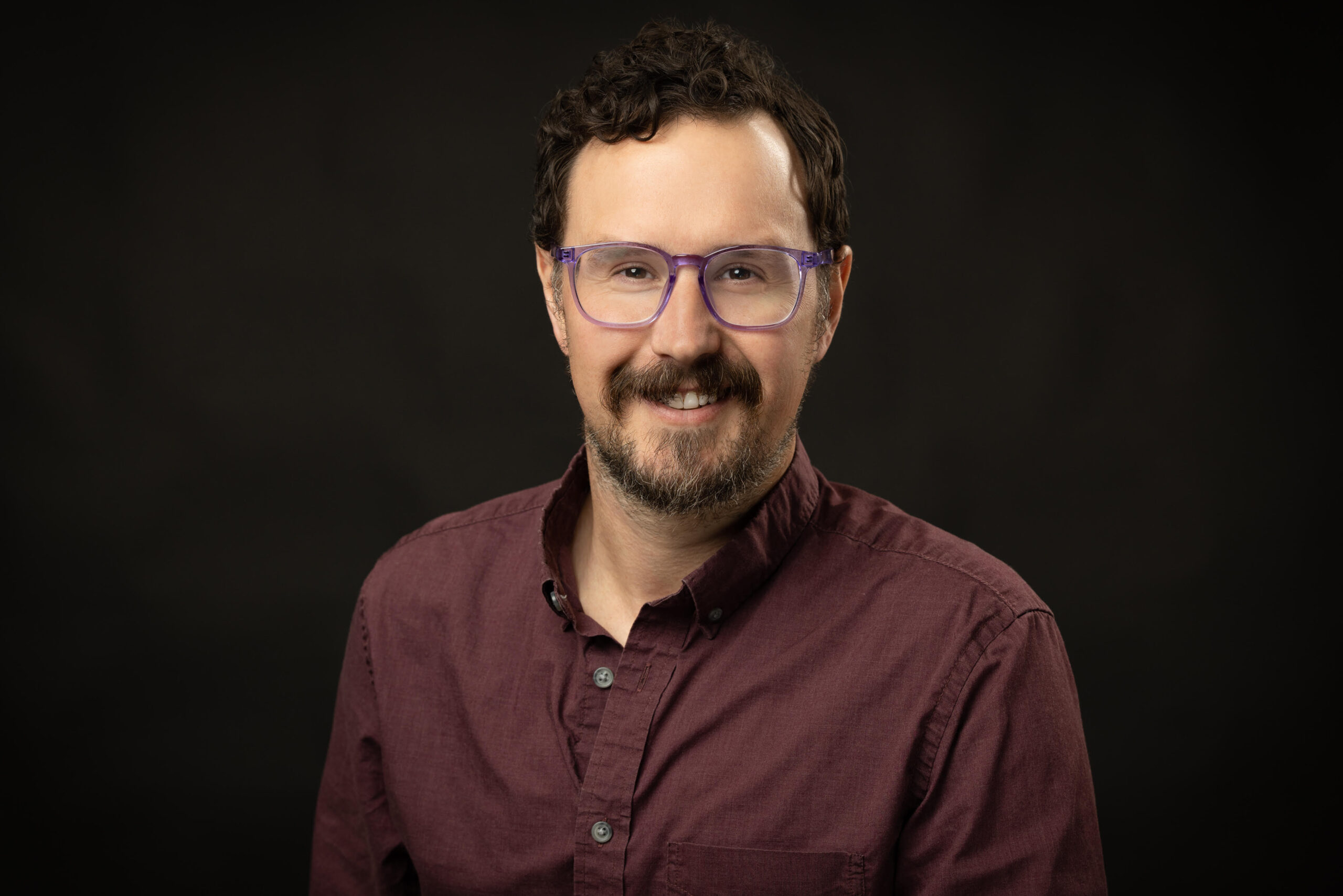
Russell Brakefield is the author of Field Recordings, My Modest Blindness, and Irregular Heartbeats at the Park West. He is assistant professor in the University Writing Program at the University of Denver.