Reviews

Egana Djabbarova’s My Dreadful Body: Exploring the Wounded Self and Belonging in Azerbaijani Diaspora Literature

By EGANA DJABBAROVA
Review by BRITTA STROMEYER

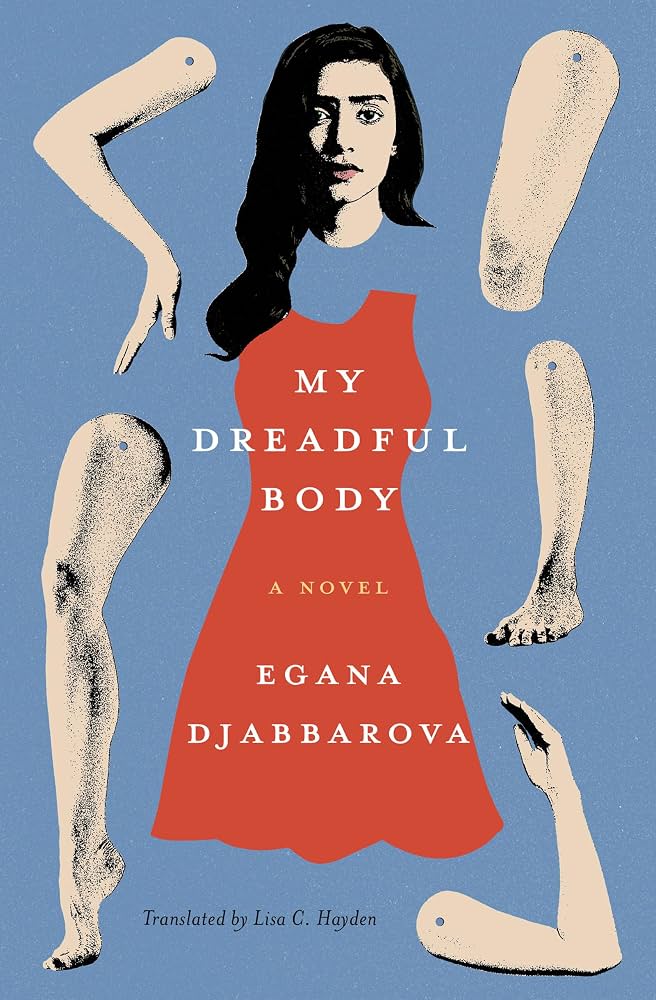
My Dreadful Body


Every now and then, a book is spawned that renders you speechless, demanding recognition for its searing vulnerability and astute cultural criticism. Egana Djabbarova’s My Dreadful Body, translated by Lisa C. Hayden, stands as one of those. The novel traces the lacerations of its largely unnamed narrator’s pain and grief bleeding into the suffering of an entire people by mapping a lineage of women—mothers, grandmothers, and aunts—whose identities are confined to roles as wives and caretakers, illustrating how societal expectations shape their lives and the lives of generations that follow.

Set in post-Soviet Yekaterinburg, Russia, the story follows the narrator’s upbringing within an Azerbaijani family, charting the cultural and societal challenges of life in the diaspora: “I don’t remember who it was and I don’t remember how long we ran; the only thing I remember is how much my shoulders ached from the heavy backpack, how the backpack hit my lower back, how I lost my breath, and how terrified I was. That was the first time I felt true primal danger and the proximity of death with my own skin. That was when I realized that being a stranger means being hated, being a vessel for rage.” The narrator’s toil with dystonia, a neurological movement disorder, serves as a visceral metaphor for this history; the illness not only robs her of speech and physical autonomy but mirrors the cultural constraints that have long stifled the women in her family. At its core, My Dreadful Body offers a piercing feminist critique of the systemic silencing and erasure of women’s agency, particularly within the context of the Azerbaijani diaspora.

Egana Djabbarova’s My Dreadful Body: Exploring the Wounded Self and Belonging in Azerbaijani Diaspora Literature
Read more...

What We’re Reading: July 2026

Curated by AIDAN COOPER

While many lounge into the soft heat of these summer months — leaning back, feet up, a cold drink in one hand — The Common’s editorial assistants have been perched on the edge of their seats, hunched over stories large and suspenseful. In this edition of What We’re Reading, interrogate boatfuls of questionable characters; restage plays sparking with historical intellect; ride alongside mercenaries galivanting in the Brazilian backlands; and balance on a tightrope of familial love above the darkness of half-remembered myth. Here, AIDAN CAHILL, BEN TAMBURRI, CAMILA MASSAKI GOMES, AMAYA RANATUNGE, and I have been reading stories that epitomize summer’s intensity: flowering with fruitful prose and hurtling by at a landslide pace.


What We’re Reading: July 2026
Read more...

Review of Mary Oliver: Saved by the Beauty of the World

Film by SASHA WATERS
Review by HANNAH GERSEN

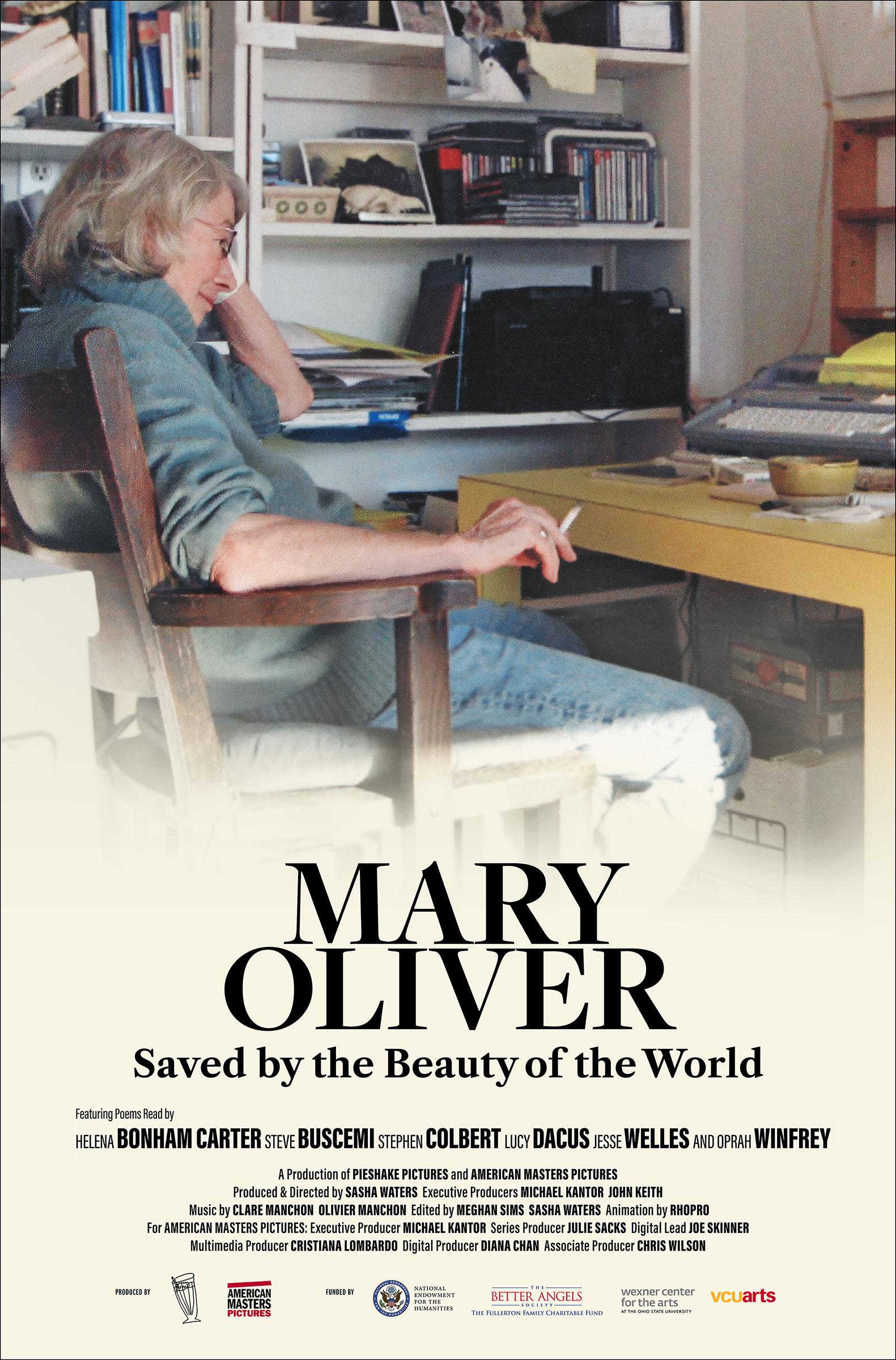
Poster for Mary Oliver's Documentary featuring her before a computer

Mary Oliver is a poet whose work is so well-known, so ubiquitous, that even if you think you’ve never read her, you’ve probably heard snippets of her poetry or seen lines of it on Instagram or tumblr. The phrase “your one wild and precious life” from her poem “The Summer Day” and “the soft animal of your body” from “Wild Geese” have become memes. She has a seemingly universal appeal that transcends age, gender, and politics: everyone seems to think she is speaking directly to the concerns of their soul.

Review of Mary Oliver: Saved by the Beauty of the World
Read more...

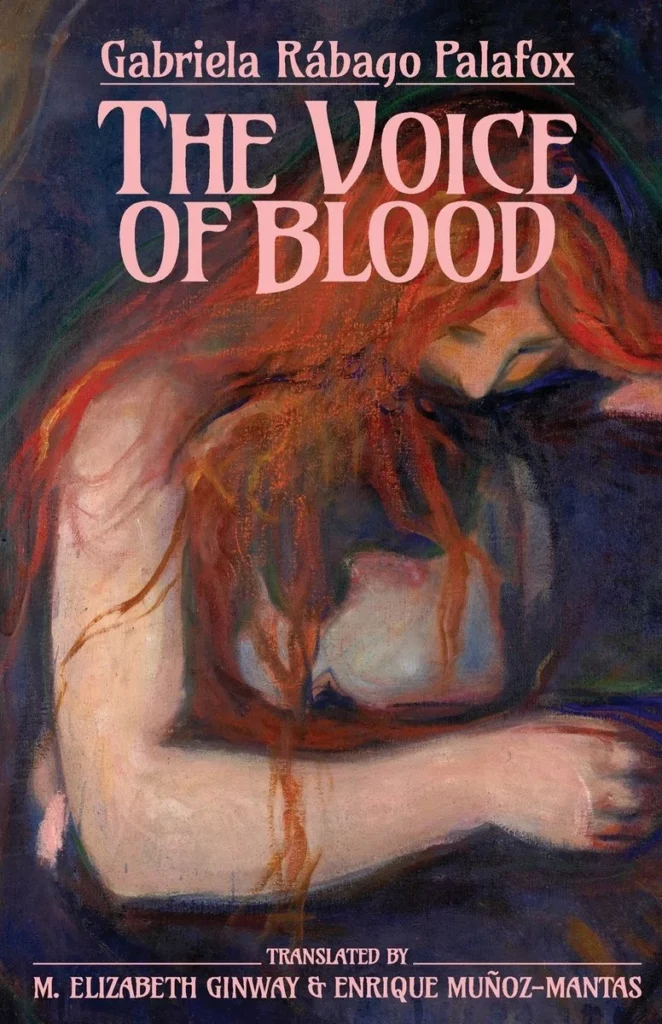
The Vampire Before NAFTA: A Review of The Voice of Blood

By GABRIELA RÁBAGO PALAFOX

Review by ASHLEY HONEYSETT

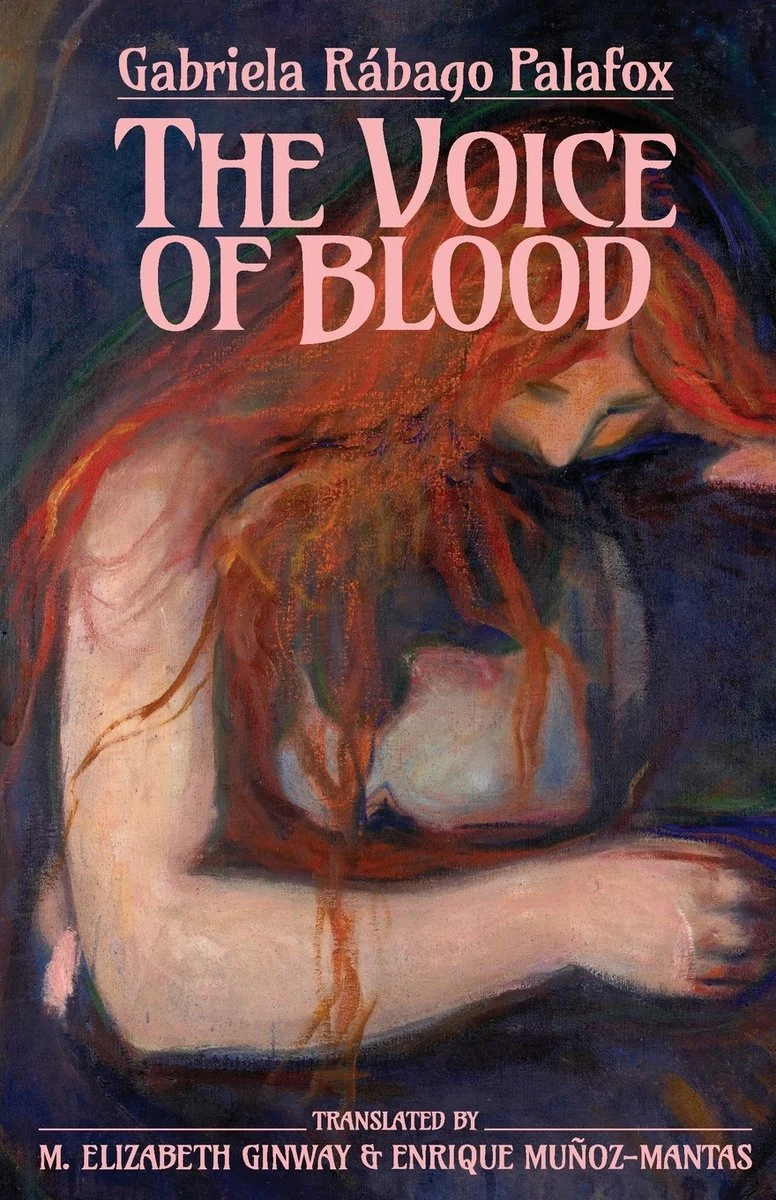
The Voice of Blood cover

The Voice of Blood cover

The short story collection The Voice of Blood is the first book by Mexican writer Gabriela Rábago Palafox to be translated into English, 35 years after its original publication. Rábago Palafox achieved some recognition in Mexico, winning a number of awards including the prestigious Puebla prize, but was not widely recognized in her lifetime. Interviews and biographical information are limited. The blurbs on the book refer to her as “the secret ‘cool aunt’ of a few Mexican writers,” and say that her work was almost impossible to find. She wanted an international readership, which her translators say was an unorthodox ambition in Mexico, which had insular, nationalistic literary and publication traditions. They speculate that, had she lived, her star would have continued to rise. But Rábago Palafox died in 1995, at age 47.

The Vampire Before NAFTA: A Review of The Voice of Blood
Read more...

What We’re Reading: June 2026

Curated by KEI LIM

As summer opens up before us, as we shake off our winter blankets and spring raincoats, writers and readers alike are flocking outside to drink in the long-awaited sunlight. Summer is the season of remembering how it feels to be a member of the world — this strange world of pollen and sneezes, of hot adirondack chairs and sweat, of cool waterfronts and sand between your toes. In these recommendations from RUSSELL BRAKEFIELD, TERESE SVOBODA, and STEFAN BINDLEY-TAYLOR, characters similarly discover where they fit and falter in their surroundings, and how they transform the worlds they inhabit. From cityscape to household, these stories traverse landscapes large and small, and one might just land in your summer-reading stack.

What We’re Reading: June 2026
Read more...

Review of Cécé by Emmelie Prophète

Review by SAM SPRATFORD

Book by EMMELIE PROPHÈTE 
Translated from the French by AIDAN ROONEY

Book cover of Cece

Uncle Frédo lies in the dark, water dripping through the sheet-metal roof. His American Dream crushed by the reality of existence as a non-white, non-citizen in the U.S., he returns to Haiti for the remainder of his life. He rarely speaks and is nearly always drunk. He spends his days in a dreamless twilight zone between sleep and wakefulness.

Cécé, his 20 year old niece and the inheritor of his psychic burden, is our real protagonist.

Cécé was born into a slum outside Port-au-Prince, a place fractured by violence. It is the recent past, in the heady early days of the digital age. Facebook was still the social platform of choice and capitalism had not yet made an industry of influencer marketing. Abandoned by a kleptocratic state, the Cité of Divine Power and its counterpart, Bethlehem, have seen gangs step in to provide structure for residents by claiming a monopoly on violence. Unlike the Hobbesian Leviathan, there is no law underwriting the circumstances under which violence can be applied. It is a lawless place—but not without an order of its own.

Review of Cécé by Emmelie Prophète
Read more...

What We’re Reading: May 2026

Curated by KEI LIM

With our spring issue hot off the press, check out these recommendations from three of the issue’s contributors: LIZ DEWOLF, ANDREW STEINER, and MARIA TERRONE.


Book cover of Beautiful Days by Zach Williams

Zach Williams’ Beautiful Days, recommended by Issue 31 contributor Liz DeWolf

I first came across Zach Williams’ work when I read his 2022 story “Wood Sorrel House” in The New Yorker. The story, in which a family arrives at a rental cabin and then forgets everything about their lives before, including how they got there, deeply unsettled me. Something about Williams’ careful, straightforward prose makes each disturbing revelation—The baby doesn’t age while the parents do! Food mysteriously appears in the freezer!—all the more destabilizing.

What We’re Reading: May 2026
Read more...

Book Review: Exemplary Humans

By JULIANA LEITE
Translated by ZOË PERRY

Reviewed by JAY BOSS RUBIN

Book cover of Exemplary Humans

In the opening chapter of this subtle epic, the centenarian narrator Natalia confides: “At this point in life, I’d say that going on forever or for too long is a bad decision, a very bad one; what’s nice is to exist and then stop existing, to exist for a while and then be able to change the subject.” In other words, if the transition between life and death is an abrupt one, then so be it. “[L]et’s be done with it,” she says, “though it would be nice to have the time to spritz on some perfume beforehand.”

When I first encountered this sentiment in Juliana Leite’s Exemplary Humans, translated from the Portuguese by Zoë Perry, I took it be a bit of a bluff. It reminded me of a bumper sticker I saw a couple of years ago in Portland, Oregon, that read: “I ♥ AGING & DYING” (which I interpreted as an existentialist rejoinder to proclamations of commercial allegiance—“I ♥ Mr Plywood” and so on—so common in my hometown). But by the end of Leite’s novel, which takes place primarily in Rio de Janeiro and Petrópolis, Brazil, and spans that country’s lengthy dictatorship, I was convinced that Natalia’s breezy acceptance of her own mortality was absolutely serious. It is not only possible, but strongly advised to love aging and dying. It isn’t easy, though. To transcend dread, and transform it into something more palatable, a unique kind of emotional intelligence is required, and so is a talent for adjusting one’s perspectives. Natalia is the novel’s exemplar of both these qualities.

Book Review: Exemplary Humans
Read more...

Review of Pastorals by Rachel Hadas

By RACHEL HADAS

Reviewed by REEVE LINDBERGH

Book cover of Pastorals by Rachel Hadas

Rachel Hadas is a close friend, someone I have known since the early 1970’s, and a summer neighbor in rural Vermont. She lives in a house that has belonged to her family, one generation following the other for many decades. Her new book, Pastorals, is an exquisitely written collection of brief reflections and meditations essentially but not exclusively centered on the house.

“Can one feel nostalgic for the present, especially when it’s layered so palpably over the past?” The writer asks herself this at the beginning of the book. Within the present as she lives and writes are the unseen presences of those who have visited or inhabited the same dwelling in the same place. They are not exactly ghosts but instead “the presence of an absence,” something Hadas feels at odd moments indoors or out: while going up the stairs; in the midst of picking blackberries on the hill; on the way down the dirt road to the mailbox. She likens these “seasonal phantoms” in her summer house to the ghosts in Walter De La Mere’s poem “The Listeners,” a poem that had puzzled but did not frighten her when she read it as a child. Readers of Pastorals will learn quickly that Hadas’s memory is filled with the poetry and prose of every age and nation along with her own beloved family ghosts.

Review of Pastorals by Rachel Hadas
Read more...