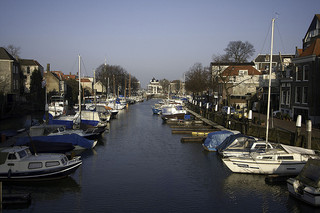
Dordrecht

By MARCEL PROUST

A baker in the square

Where nothing stirs but a pigeon

Reflections in an icy blue canal—

A great red mould,

A barge slipping forward, disturbing

A waterlily, sunlight

In the baker’s mirror flitting over a red currant

Tart,

Scaring hell out of a feasting fly.

At the end of the mass, here comes everybody—alleluia,

Holy Mother of Angels

Come, let’s take a boat ride on the canal

After a little nap.


–October, 1902
 

Marcel Proust (1871-1922) was a French writer, most famous for his seven-volume novel À la recherche du temps perdu (“In Search of Lost Time”). “Dordrecht” is taken from a new volume of his collected poetry, The Collected Poems of Marcel Proust,  (Penguin Classics), which is edited by Harold Augenbraum and  reviewed at The Huffington Post by The Common’s poetry editor, John Hennessy.

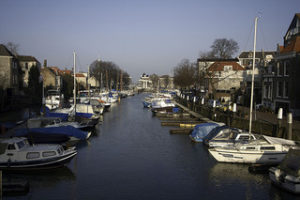
Photo by Marianne de Wit from Flickr Creative Commons
From the beginning, The Common has brought you transportive writing and exciting new voices. We are committed to supporting writers and maintaining free, unrestricted access to our website, but we can’t do it without you. Become an integral part of our global community of readers and writers by donating today. No amount is too small. Thank you!

Dordrecht

Related Posts

The Dark Green Carton

CHARMAINE LAM
My grandmother would often stop me when she saw me leave the house. “If you pass by the supermarket, can you pick up some milk?” Neither of us drank milk, but my great-uncle went through an entire carton by himself every day or two. I agreed, and a tradition was born.

Two Poems by Dalia Taha, translated by Sara Elkamel

DALIA TAHA
All we own are our lips / and the pupils of our eyes—the car / will plow into all of this. / And still, life is far too complex / for words like victory or defeat. // Life is Salma on the balcony / moving plants to bigger pots, in her eyes / the settlement’s lights. 

Monrovia, Liberia at night

Electricity Comes in the Morning

MARVIN GARBEH DAVIS SR.
A sudden hum, a soft pulse through the walls, and the bulbs bloom again: white, merciful, blinding, as if mercy itself has switched on the lights. You can hear the city rejoice. Someone shouts, “Current don come!” Radios click on. Pots clatter. Even the roosters seem to crow out of turn. The sound of the generator fades, its duties relieved.