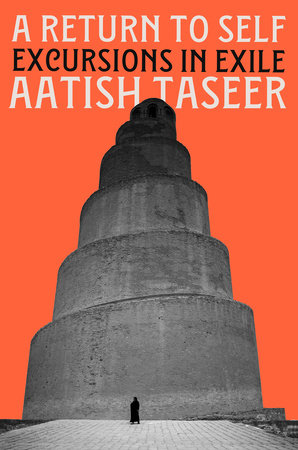
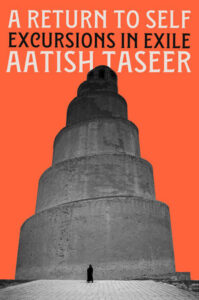
This piece is excerpted from the memoir A Return To Self by Aatish Taseer, a guest at Amherst College’s eleventh annual literary festival. Register and see the full list of for LitFest 2026 events here.
At 9:05 a.m. on the tenth of November, 2020, a hush fell over the leaden turbulence of the Bosporus. All activity on the strait ceased. Coast Guard ships, ferries, and caïques, like the younger members of a tribe of large marine mammals, drew close in a circle. Behind them, a Turkish destroyer kept vigil, the blue of its gunmetal merging with the strait’s frigid waters. A red-bottomed freighter marked with the words iraqi line hulked in the background. That cityscape of sea-blackened buildings, broad panes glazed silver in the daytime darkness, was no ordinary Left Bank, no mere farther shore. The silhouette of low domes and pencil-thin minarets piercing a nimbus of pale sky above was the continent of Asia. The wonder of looking at it, with my feet still planted on the shores of Europe, was not lost on me. I had been in Istanbul for less than seventy-two hours. The air grew heavy with anticipation, and then, low and deep and melancholy as whale song, came the first moan of a ship’s horn.
Everyone froze. The uniformed figure of an old sea captain snapped to salute. A stout woman in a long black coat with a blue headscarf drew her toddler near. Even the seagulls, whose cawing and mewling were so much a part of the commotion of the Bosporus, fell in line with this solemn tableau. The air was soon resounding with ship horns and sirens. The moment of remembrance stretched out. Its object, Mustafa Kemal Atatürk, founder of the Turkish Republic, stared out at me from the backs of two young Turks, where his youthful likeness was emblazoned on the red ground of the Turkish flags the pair wore as superhero capes around their necks. The Father of Turks, blue-eyed and visionary, with a touch of the derring-do of the old Omar Sharif about him, had died eighty-two years ago at exactly 9:05 a.m. in Dolmabahçe Palace behind me—an overcooked nineteenth-century confection of pilasters and sleeping columns. We stood on its manicured grounds, speckled with magnolia and spruce, remembering the fierce secularist who in the 1920s had fought off European incursions on all sides and founded a modern republic from the wreckage of the Ottoman Empire.
I was engaged in a remembrance of my own. As 9:06 rolled around and people stirred again, I awoke to the fact that I had seen all this before. I had traveled not only through space, but through time, journeying to a place where a younger self was waiting for me. Fifteen years earlier, I had stood at the edge of this very same waterway, witnessing this very same scene. Practically all my adult life lay between the last time I had come to this city, as an aspiring writer of twenty-five, ready to travel through the Muslim world for a book I had yet to write—from Istanbul to Mecca, and from Mecca to Lahore—and now, when, a few weeks away from forty, I had returned to Istanbul. Why? Was it to look again at what had become of the world I had traveled through in 2005? Was it to look again at what had become of me? What I knew, walking back through plane-lined boulevards draped with Turkish flags, Atatürk’s speeches blaring out of rows of freestanding speakers on the pavement, was what I felt: paralysis.
“You can go back many times to the same place,” says a character in V. S. Naipaul’s 1979 novel, A Bend in the River, “and something strange happens if you go back often enough. You stop grieving for the past. You see that the past is something in your mind alone, that it doesn’t exist in real life. You trample on the past, you crush it. In the beginning it is like trampling on a garden. In the end you are just walking on ground.”
Istanbul was not flat ground for me. It was still very much a garden, the perfectly preserved repository of the hopes, ambitions, and confusions of my twenty-five-year-old self. That first morning, I was so nervous about disturbing the overlay of memory that I entertained fantasies of not venturing out into the city at all. I imagined spending whole days in the sanitized security of my room at the Swissôtel, where I had paid $45 extra per night for a view of the Bosporus, gazing out at the sun-lit splendor of the most beautiful body of water in the world. I would live on room service, swim fifty lengths a day in the hotel’s indoor pool, and return a week later to New York City with my memories of Istanbul intact. My anxiety was akin to what one feels after a big snow when one fears nothing so much as the sight of those first tracks on its surface, knowing they will ensure the destruction of what until that moment had been pristine.
The city I had returned to was bathed in rare November sunshine. The Bosporus, which, by way of the Dardanelles, connects the Black Sea with the empyrean blue of the Aegean, with what the travel writer Jan Morris has called “waters of Homeric myth and yearning,” was in a bright, inviting mood. I used to think it was the geography of Istanbul that was special, that extraordinary location of old Byzantium—the Greek colony that would form the nucleus of the future city— peering out at the confluence of three waterways: the Bosporus, the Sea of Marmara, and the estuary that is the Golden Horn. Antiquity had regarded those who built their city on the eastern side of the strait—the poor inhabitants of Chalcedon, the town on the facing shore—as blind for failing to see the superiority of the site for Byzantium. Now, of course, it was all Istanbul, a seething megalopolis of 15 million set over hills of dark, furrowed pine.
As far as I know, only three cities through history—Rome, Istanbul, and New York—have been referred to as “the city.” The word Istanbul itself is a contraction of the Greek phrase eis ten polin: “into the city.” One imagines it as the superior reply to a question from someone in the outer boroughs. “Where are you going?” “I’m going into the city, of course!”
Grand as it was, even this city of cities paled before the glory of the Bosporus. As the sixteenth-century French topographer Pierre Gilles observed, the Bosporus “is the first creator of Byzantium, greater and more important than Byzas,” the founder of Byzantium. There is nothing on earth quite like it. Imagine the splendor of the Grand Canal in Venice married to the international shipping glamour of the Suez or Panama Canals. Over forty thousand vessels pass through the strait annually, about two and three times the traffic, respectively, of Suez and Panama. But the true singularity of the Bosporus lies on its shores, where the grand, seemingly incompatible binaries of Islam and Christendom, Asia and Europe, East and West, stand opposite each other, at times only half a mile apart. The strait itself remains as neutral as the sky, everchanging, ever-unreliable, like some people-pleasing friend aware of the pressures of having to be everything to everyone.
On my first morning, it was decidedly Greek. With the sun exposing deep veins of aquamarine and boats of every size tracing foamy zigzags over its surface, it seemed to flow inexorably south. To look at Istanbul then was to feel myself on the edge of a maritime culture of fresh fish and shrub-covered islands, where goats with metal bells pick their way around whitewashed churches. The hulking mass of the Hagia Sophia, the sixth-century church that became the enduring symbol of Christendom, seemed like a basilica to me again, surrounded by a copse of slim, tapered minarets. But scarcely two days later, the clouds were racing and the water had darkened. Now the Bosporus seemed to flow north to that cold lakelike sea of villages of blackened wood, sloping muddy streets, and red-bearded men with bright blue eyes. All of a sudden, Istanbul had become a Balkan city of lowering skies.
The Bosporus dramatized dualities. It did not resolve them. Here, one lived in a perpetual state of cultural whiplash. The perturbation one felt in Istanbul came from having to carry the city’s myriad selves in mind at once. Protean city! It could change on a dime, and one had to be ready to change with it, as the city itself had so many times through history— from Constantine’s New Rome of AD 330 to the premier city of Islam after its capture by the Ottomans in 1453—or be left nursing a sense of betrayal.
Excerpted from A Return to Self by Aatish Taseer. Copyright © 2025 by Aatish Taseer. Reprinted by permission of Catapult Books. Excerpted from an essay that originally appeared in T: The New York Times Style Magazine.
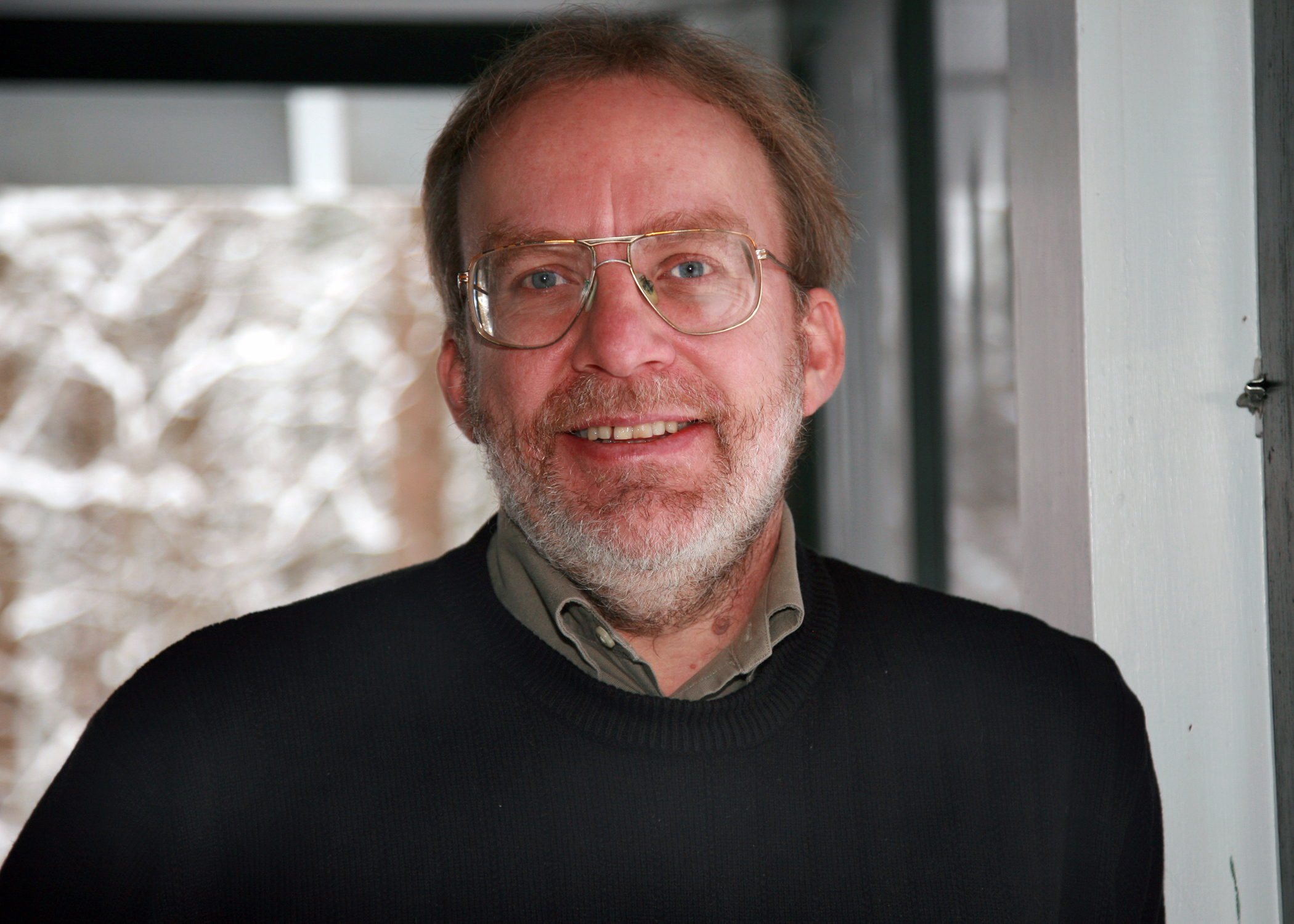
Aatish Taseer ’03 is the author of the memoir Stranger to History: A Son’s Journey Through Islamic Lands; the acclaimed novels The Way Things Were (a finalist for the 2016 Jan Michalski Prize), The Temple-Goers (shortlisted for the Costa First Novel Award) and Noon; and the memoir and travelog The Twice-Born. He is also the translator of Manto: Selected Stories, a volume of Saadat Hasan Manto’s short stories from Urdu. His books have been translated into more than a dozen languages. He is a writer-at-large for T: The New York Times Style Magazine. Born in England and raised in New Delhi, educated in the U.S. and previously a journalist in the U.K., he now lives in New York.