My Parrot Has Died

By MIGUEL-ANGEL ZAPATA


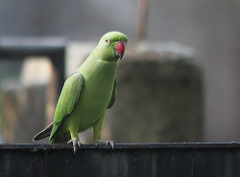
My parrot has died in a clinic in Huntington. His life was a miracle
He was the envy of all the birds in the neighborhood. For five
years he sang a piece by Boccherini and knew a couple Mexican
pop songs by heart. When he got excited he whistled at the girls who
passed by my house.

When he was happy, the house was a joy. His harmonious whistling
infected with happiness the jealous parakeets in the other cage. Better I’d
been a canary, he would tell me: death is a lullaby beneath
a tremendous poplar that protects us. The poplar likes its family, and lets
fall its leaves like bloody money
. It is an enormous sky from
where they can see the waterfalls, the wings of the birds that return to see
water at the source.

Today I’m sad. My parrot was a piece of heaven in a world of fear.
Translated by Loren Goodman


Miguel-Angel Zapata books include Lumbre de la letra, Escribir bajo el polvo, El cielo que me escribe, Cuervos, Los muslos sobre la grama, the bilingual A Sparrow in the House of Seven Patios, and Fragmentos de una manzana y otros poemas.

Loren Goodman is the author of Famous Americans, Suppository Writing, and New Products.

Click here to purchase Issue 03

From the beginning, The Common has brought you transportive writing and exciting new voices. We are committed to supporting writers and maintaining free, unrestricted access to our website, but we can’t do it without you. Become an integral part of our global community of readers and writers by donating today. No amount is too small. Thank you!

My Parrot Has Died

Related Posts

Feltspade

ELIAS SADAQ
I serve out my conscription / sleep in a bunk bed / for four cold months / in the engineer regiment at Skive Garrison / in a room with three other men / I fuck the colonel / the only sign that time is passing / is a pile of snow outside the window / that grows smaller

Book cover of Fifty Mothers

Mother is a Kind of Holding: Jenny Qi interviews Preeti Vangani

PREETI VANGANI
With vignettes, I could plumb its narrative arc to become a force propelling the book forward. It also felt haunting yet warm that the mothers kept reappearing throughout the life of this grief. That repetition created a chorus of voices that angers and despairs, yet cradles the speaker.

May 2026 Poetry Feature: Arielle Hebert, from Bottom Feeders

ARIELLE HEBERT
Home again at the water’s edge, / palms dancing in salt breeze. / I take a too-deep breath / and the air prickles my lungs / like an unfiltered cigarette. / Only the tourists are swimming, / coughing through the algal bloom, / eyes bloodshot and skin burning.