
By DIDI JACKSON
There are days
I go to the mailbox
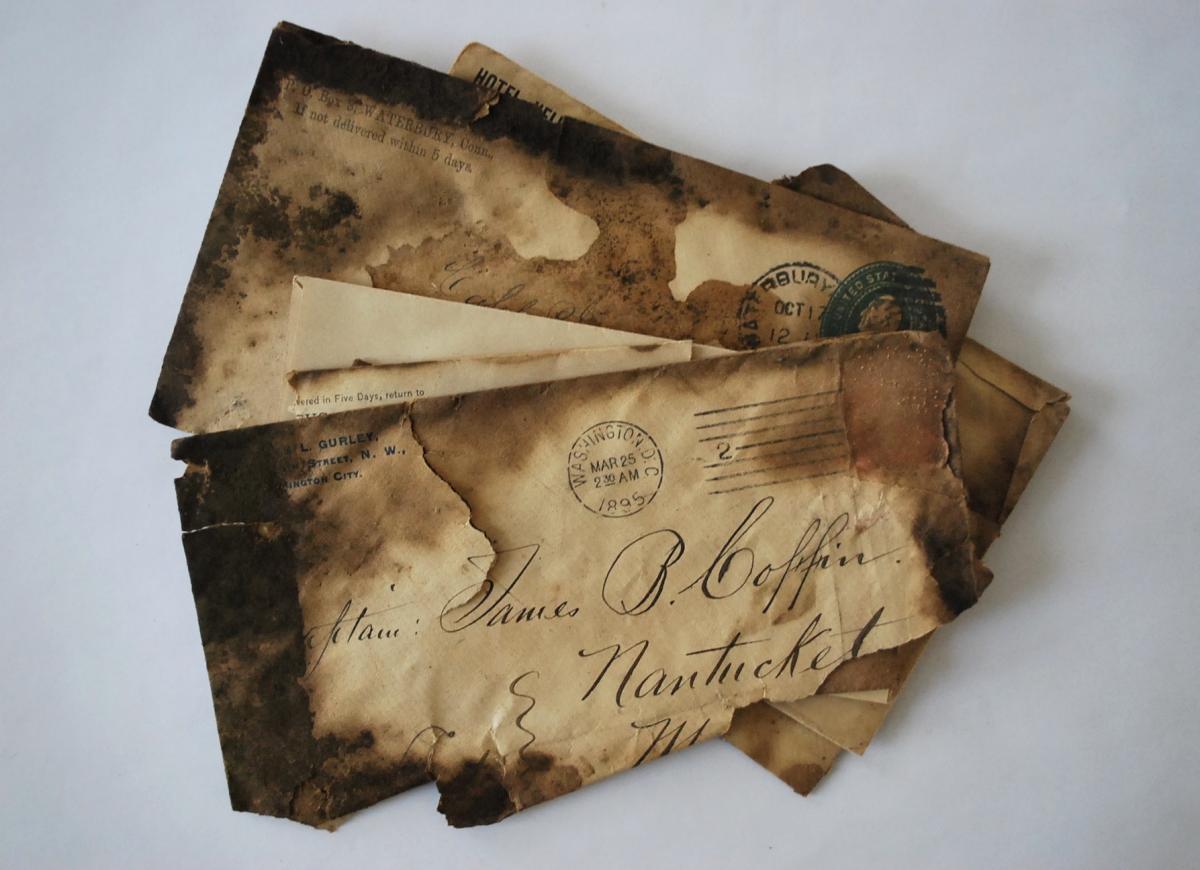
and find letters
from my dead husband
translating for me his suicide:
the cold blade softened into cursive,
his fear licked onto the stamp,
as the return address: the date of his death.
I look forward to these letters.
Some are addressed to my son,
I collect and keep those.
I think at times this is a greedy act,
but he is too young.
I see my body asleep in my son’s body,
my eyes behind his eyes.
But now I worry that there is distortion,
like Parmigianino’s Self Portrait
in a Convex Mirror, his hand
partly reaches out to me,
partly curls back into itself.
When I was a girl, my uncle
mailed to me framed collections
of mounted butterflies.
Blue Morpho. Tigerwing.
Malachite. Moon Satyr.
These are all names my husband
could take now. I imagine him
as Goldman’s Euselasia
or the Great Eurybia.
I know that to kill a butterfly,
you use a killing jar.
Because they are so fragile,
sometimes butterflies batter
themselves in the killing jar.
At night, this makes me wonder
about the mixing
spoons in the bowl,
the tangles of the dough,
the small, temporary fight.
For a clean kill, it is better
to first stun a butterfly
by pinching its thorax.
But you must practice to get
this method right,
so it is recommended to try
it on common moths or butterflies
you are not concerned about.
Pinch smartly between your finger
and thumb like tweezing a piece of sky.
Didi Jackson’s poems have appeared in Ploughshares, Passages North, Green Mountain Review, and The Café Review, among other publications. Her recent chapbook, Slag & Fortune, was published by Floating Wolf Quarterly. She divides her time between Vermont and Florida, teaching humanities at the University of Central Florida and poetry and the visual arts at the University of Vermont.
[Purchase your copy of Issue 10 here.]