St. Paul, Minnesota

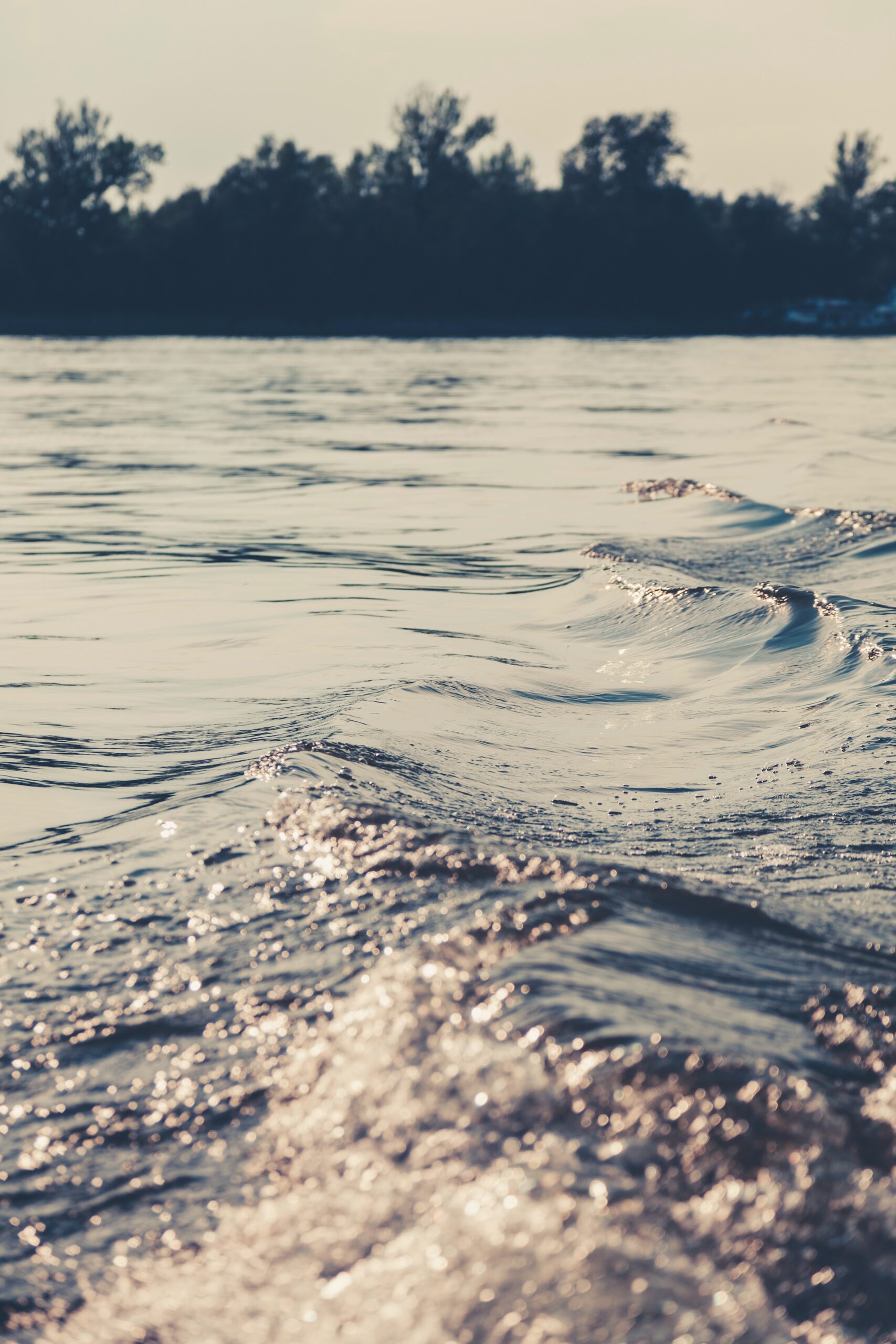
R is for raw sewage, riverine wetland, rubbish, rookery of herons and egrets, rusting barrels of toxic waste. I try to imagine all of this at Pig’s Eye Lake. Surrounding it, marsh, cottonwoods, floodplain, bluffs above the great river. It’s a place the Dakota consider sacred, James Rock says. Čhokáŋ Taŋka, the Dakota call it: the big middle. I try to imagine the burial mounds that were blown up with dynamite, and railyards, locks and dams, dredging, and all the household trash that was dumped in the marsh, the industrial debris: lead-acid batteries, solvents, electrical transformers, burnt sludge. Eight million cubic yards, some of it fluorosurfectants—the so-called forever chemicals needed to make non-stick frying pans, stain-repellent for couches and rugs—the PFOS that have spread everywhere, now taint my blood, and yours, and every creature’s.
R is for the removal of the Dakota in 1837, for Little Crow’s people who were forced to leave Kaposia, their village near the lake. The white squatters were ready to shove in. A French Canadian bootlegger named Pig’s Eye Parrant built a tavern, was the first white to claim land.
R is for rebuke, for William Folwell in 1888 scolding the city for emptying into the river thousands upon thousands of tons of solid and liquid filth and offal.
R is for rancid, rotten. The stink of it, the burning tires. In 1964, people who lived downwind told City Council that the Pig’s Eye dump had been on fire for eight years, that smoke and ashes blew into their yards.
R is for reclamation, raised beds, roots that draw poisons from the soil, red fescue, romaine lettuce. In 1990, Pig’s Eye has become a Superfund site. Mel Chin makes there a small garden of metal-tolerant plants and hyper-accumulators: dwarf sweet corn, and alpine pennycress, and bladder campion: toxic sponges whose roots suck up heavy metals that lace the soil. Chin designs the garden to resemble a crosshair target: a circle enclosed by a square of cyclone fence and crisscrossed with footpaths; he calls it Revival Field.
A few years later, the city buries Chin’s garden with dirt. Nobody can find it now.
In letter R, a trace of rêš, the Semitic word for head. In the mounds, human skulls, bones, shell beads, bear teeth, sand, a clay mask, red ocher, ash. In the treaties, the settlers’ lies. In the leaking barrels, more poisons. In the soil, more lead. Running through the wetland, the railroad, the tanker that spills diesel fuel. In the heronry, great blue and yellow-crowned.
R is for rebar, and rusted car parts, and Riverboat Clean-up on June 11, and retrieve, recycle, restore. And here’s Raina Belleau, she’s volunteering at Pig’s Eye, she’s pulling objects from the water, from the muck, she’s arranging her finds on a tarp. It’s 2011. Here’s what will go into her sculpture: a truck door, a Barbie head, plastic bags, a dog toy, headlights, a baby rattle, pliers, a belt, shoes, a tent stake, a basketball, tire tubes, a jacket, plastic water and pop bottles, a license plate, a jumper cable clip, a toy tractor. She’ll make Union: a white-tailed deer with two rubber herons perching on its scrap metal antlers, at peace, nesting there.
William Woolfitt’s poems, short stories, and essays have appeared in AGNI, Blackbird, Tin House, The Threepenny Review, The Cincinnati Review, and elsewhere. He is the author of three poetry collections, most recently Spring Up Everlasting (Mercer University Press, 2020).
Photo courtesy of Pexels user Peter Fazekas