Interviews

Northern Spaces, Idiosyncratic Characters, and the Beguiling Icelandic Landscape: Jenna Grace Sciuto interviews Nathaniel Ian Miller

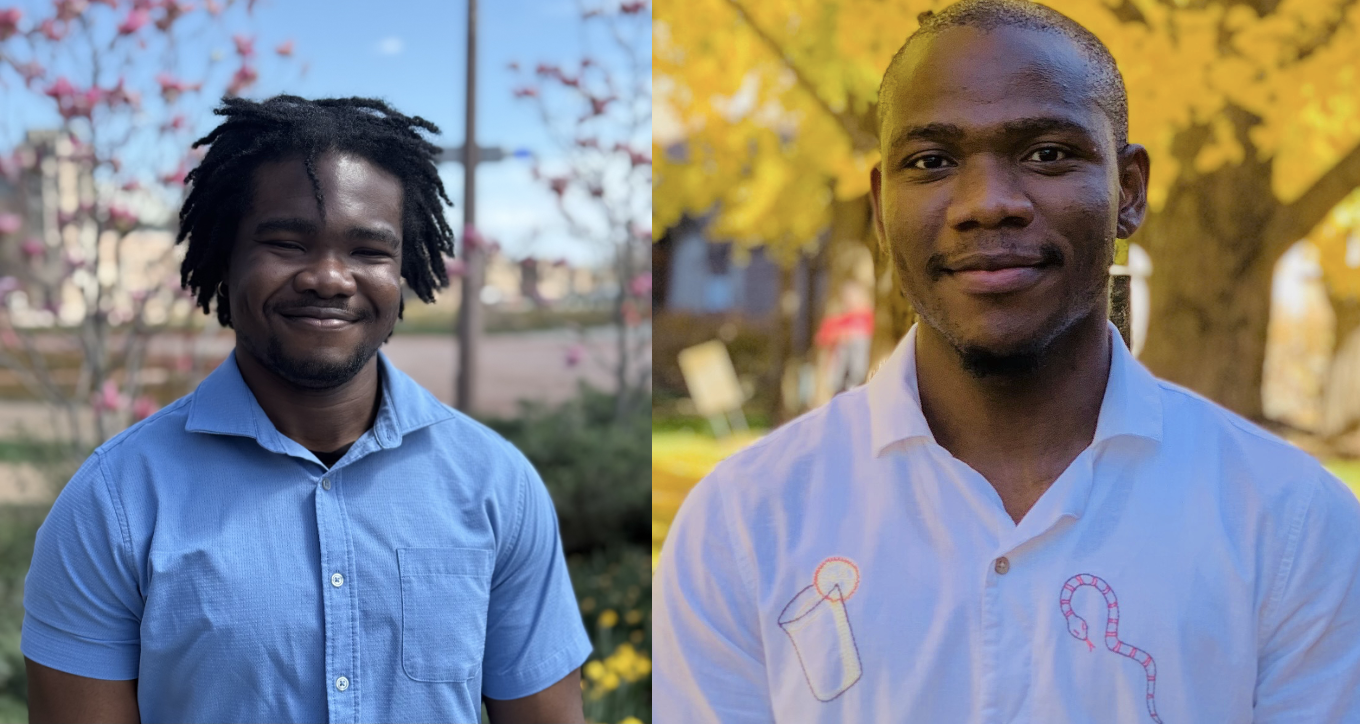
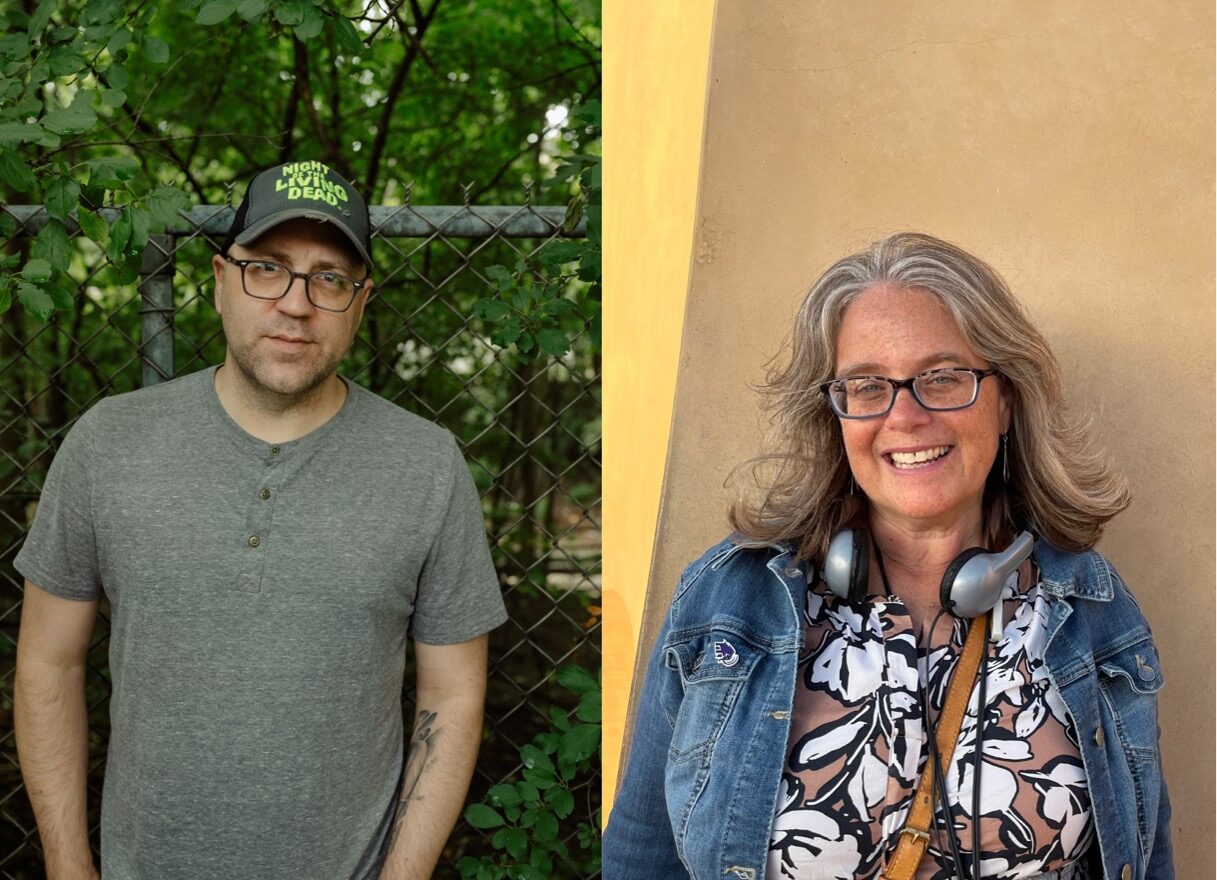
Headshots of Jenna Grace Sciuto (left) and Nathaniel Ian Miller (right)

Jenna Grace Sciuto (left) and Nathaniel Ian Miller (right)

NATHANIEL IAN MILLER has always been intrigued by northern spaces, a link that connects his acclaimed first novel, The Memoirs of Stockholm Sven, to his latest work, Red Dog Farm. Red Dog Farm is a wonderfully engaging coming-of-age tale about a young Icelander named Orri and his relationships with family, friends, and the farm where he was raised. Miller’s ability to write characters—whether human or animal—that are, in his words, “emphatically (and believably) themselves,” is a unique strength. JENNA GRACE SCIUTO discussed the book with Miller, touching on what writing about northern spaces enables in his novels, his influences (Icelandic and more broadly), and the versions of himself that have gone into this story.

Northern Spaces, Idiosyncratic Characters, and the Beguiling Icelandic Landscape: Jenna Grace Sciuto interviews Nathaniel Ian Miller
Read more...

Translating Toward Possibility: Sarah Faux Interviews Mariam Rahmani

Headshots of Sarah Faux and Mariam Rahmani

Sarah Faux (left) and Mariam Rahmani (right)


Friends for over a decade, MARIAM RAHMANI and SARAH FAUX have been connecting for years about their respective artistic practices. They recently spoke over Zoom for The Common: Sarah from her painting studio, and Mariam from her office in Vermont. In the following conversation, they discuss Mariam’s novel, Liquid, published earlier this year, which centers a queer Muslim woman who navigates 100 dates in one summer. They speak on how translating others’ work has served Mariam’s own voice in writing, and how messiness and uncertainty are at the heart of good literature.

Translating Toward Possibility: Sarah Faux Interviews Mariam Rahmani
Read more...

The Epiphany in the Ordinary: An Interview with Teju Cole

Teju Cole at Amherst LitFest 2025

Teju Cole at LitFest 2025

For TEJU COLE, prose, poetry, and photography tug against and bleed into one another. At the tenth anniversary of Amherst College’s LitFest, on March 1, 2025, Cole spoke with The Common’s Editor in Chief JENNIFER ACKER about his novel Tremor, his approach to genre-bending, and the role of writers and photographers in bearing witness to catastrophe.  

The Epiphany in the Ordinary: An Interview with Teju Cole
Read more...

Stop Being Precious About Process: Julian Zabalbeascoa interviews Michael James Plunkett

In this interview, JULIAN ZABALBEASCOA and MICHAEL JAMES PLUNKETT explore how a chance visit to the World War I battle site of Verdun sparked a decades-long journey that led to Plunkett writing Zone Rouge. Their conversation took place across time zones as Zalbalbeascoa was in Donostia-San Sebastian, Spain, and Plunkett was home in Columbus, Ohio, having just welcomed his second child. In their correspondence, they cover makeshift writing rituals from Morgan Stanley’s cafeteria to subway rides, the joys of publishing with independent presses, the art of dodging probable plot twists, resilience in the face of climate change, and “fiction’s ability to explore the human condition in ways data can’t.”

Left: Julian Zabalbeascoa's headshot. A bald man with facial hair poses in front of a body of water, looking into the distance.

Right: Michael Jerome Plunkett's headshot. A man with a grey beanie and facial hair smiles.  He's wearing a black Carhartt jacket.

Julian Zabalbeascoa (Left) and Michael Jerome Plunkett (Right)

Julian Zalbalbeascoa (JZ): Since The Common is a journal that celebrates how place functions in our lives, I thought we’d begin with the setting of your novel: Verdun, site of the decisive battle in World War I, which resulted in the deaths of over 300,000 French and German soldiers. When did your interest in Verdun (the place and the battle) begin? And when did you think to yourself, There may be a novel here.

Stop Being Precious About Process: Julian Zabalbeascoa interviews Michael James Plunkett
Read more...

Hitting a Wall and Making a Door: A Conversation between Phillis Levin and Diane Mehta

Author headshots

Phillis Levin (left) and Diane Mehta (right)

 
DIANE MEHTA and PHILLIS LEVIN’s conversation took place over the course of weeks—over daily phone calls and long emails, meals when they were in the same place, and a weekend in the Connecticut countryside. Though what appears below can only be fragments of their full exchange, the two poets—both previous contributors to The Common—share what they draw from each other’s work, and the work of others, exploring the pleasures of language, geometric movement, formal constraint, and expressing multiple perspectives in poems.

This interview includes recordings of many of the poems mentioned, read by the author.


Hitting a Wall and Making a Door: A Conversation between Phillis Levin and Diane Mehta
Read more...

Giving the Poem a Body: Megan Pinto interviews Lena Moses-Schmitt

author headshots

Lena Moses-Schmitt (left) and Megan Pinto (right)

When we listen to language, what do we hear? When we look at an image, what do we see? LENA MOSES-SCHMITT’s poetry beautifully captures the nature of perception. Her lyric-narrative meditations are interested in the mind’s movement across the field (visual, sonic) and the page. Moses-Schmitt writes in “The Hill”: “This morning I heard the man/ who lives downstairs say I love you to the woman–/not the words, but the rhythm, the shape, and I filled in the rest/ as if with red crayon.” Her debut collection, True Mistakes, moves between perception and imagination, the grieving for and the making of a life. MEGAN PINTO sat down with Lena Moses-Schmitt on a sunny June afternoon in Brooklyn. They marveled at the light through the leaves and drank cold seltzers with bitters. Their conversation shifted from superhero alter egos to how poetry sustains them through life’s many blips and heartbreaks.

Giving the Poem a Body: Megan Pinto interviews Lena Moses-Schmitt
Read more...

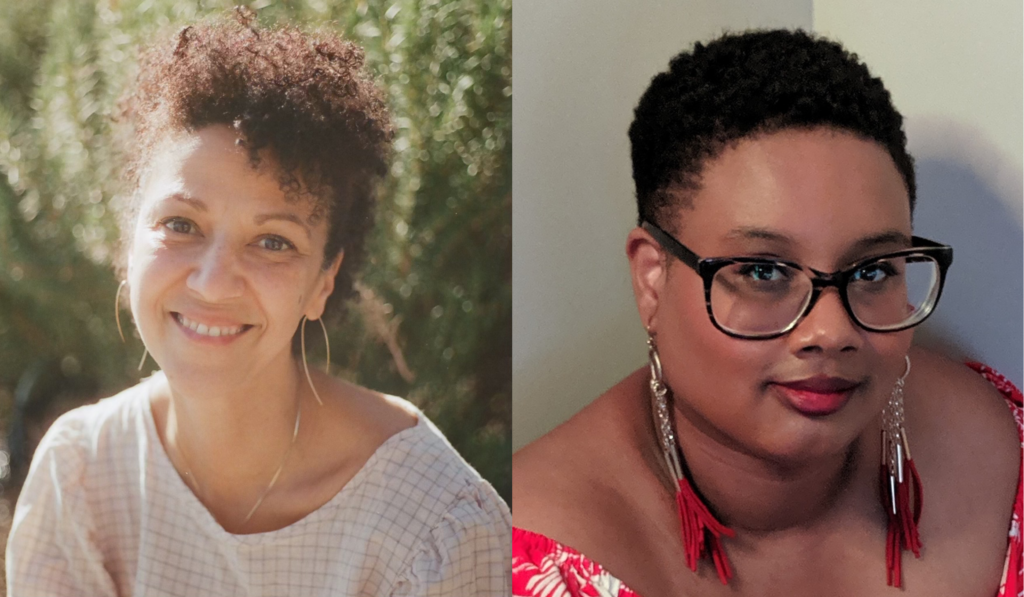
An Embodied Sense of Time: Raychelle Heath Interviews Rosa Castellano

Rosa Castellano (left) and Raychelle Heath (right)

Rosa Castellano (left) and Raychelle Heath (right)

RAYCHELLE HEATH (RH): Rosa, it is so lovely to meet you, and All is The Telling is such a beautiful read. The book is structurally interesting, and it’s inspiring on many different levels. The stories of different girls and women drew me in immediately. But, I want to start with the title. You’re telling a layered story here, and I’m curious how you arrived at the title. How does the title poem place the characters in the story arc of the book?

ROSA CASTELLANO (RC): I love this question! I hope that the collection’s title and the poem prepare readers for all of the telling that takes place in the book, which is largely concerned with telling stories and telling our truths, especially the stories we carry in our bodies. I subscribe to this idea of the layered self, like a series of paper dolls we can tug open to find a line of selves connecting who we are now, back to all the selves we’ve been, those previous identities that we hold. That’s how I’m hoping the poems in this collection work, linked together with various kinds of repeating patterns, working to tell the interconnected stories of a self. It’s a complicated thing, most days, to be an alive person.

An Embodied Sense of Time: Raychelle Heath Interviews Rosa Castellano
Read more...

Celebrating Intimacy of Self: Mauricio Ruiz interviews Melissa Febos


When MAURICIO RUIZ told MELISSA FEBOS he was interested in addiction, she said he could borrow her books. “I have done a lot of research,” she said. “You’re welcome to use the material.” They stood in the lobby of the Old Capitol Building in Iowa City after the 2024 Krause Essay Prize ceremony. Ruiz plucked a praline from a tray and told her he missed Belgian chocolate. Febos pushed up her glasses and said, “Do you know anything about the Beguines?”

Celebrating Intimacy of Self: Mauricio Ruiz interviews Melissa Febos
Read more...

The Moon as a Beacon of Human Earnestness: A Conversation Between Boston Gordon and July Westhale

In poet JULY WESTHALE’s upcoming book, moon moon, humanity finds itself in a precarious position—Earth has become unlivable, forcing people to seek refuge elsewhere. But when the moon proves overcrowded, humanity pushes even further, settling on the mysterious and perhaps astronomically dubious moon’s moon. Part modern epic, part ecological elegy, the collection tackles eco-grief, climate change, and human hubris, all while weaving humor throughout its poetic narrative.

July Westhale, whose earlier books include the autobiographical exploration of class warfare in California, Trailer Trash, and the intense poetic meditation on desire and divinity, Via Negativa (praised as “stunning” by Publishers Weekly), brings their signature incisiveness and wit to this timely new work. They also released the recent Unmade Hearts: My Sor Juana, a delicious translation of the work of Sor Juana Inés de la Cruz.

Today, Westhale converses with poet BOSTON GORDON, author of Glory Holes and the forthcoming Loose Bricks. Gordon, who also champions queer and trans voices through Philadelphia’s acclaimed “You Can’t Kill A Poet” reading series, guides this thoughtful discussion as they delve into meditations on writing, the moon, and what poetry teaches us about ourselves. 

You can pre-order moon moon here

The Moon as a Beacon of Human Earnestness: A Conversation Between Boston Gordon and July Westhale
Read more...