The Major Subjects

By LAWRENCE RAAB

Death is easier
than love. And true feeling, as someone said,
leaves no memory. Or else memory
replaces the past, which we know
never promised to be true.


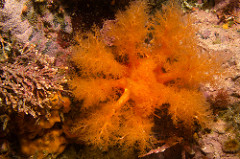
Consider the sea cucumber:
when attacked it divides, sacrificing half
so that half
won’t get eaten. Can the part left undevoured
figure out what to do?


The natural world is always instructive,
mysterious as well, but often
hard to praise. Love
is also difficult—the way it slides into
so many other subjects,


like murder, deceit,
and the moon. As my mother used to say
about anything
we couldn’t find: If it had been
a snake it would have bitten you.


Fellow poets, we must
learn again to copy from nature,
see for ourselves
how steadfastly even its beauty
refuses to care or console.


Lawrence Raab is the author of seven collections of poems, most recentlyThe History of Forgetting and A Cup of Water Turns into a Rose.

[Purchase your copy of Issue 05 here]

From the beginning, The Common has brought you transportive writing and exciting new voices. We are committed to supporting writers and maintaining free, unrestricted access to our website, but we can’t do it without you. Become an integral part of our global community of readers and writers by donating today. No amount is too small. Thank you!

The Major Subjects

Related Posts

Caribbean picture

Self-Portrait in The Caribbean

PAOLA ASSAD BARBARINO
Sometimes I am emboldened, / I decide to stand in the people’s balcony / I decide it is Maundy Thursday I decide to place a priest behind me that can speak to the people behind / my back / I decide to put out the fire and light my throat / scream

Feltspade

ELIAS SADAQ
I serve out my conscription / sleep in a bunk bed / for four cold months / in the engineer regiment at Skive Garrison / in a room with three other men / I fuck the colonel / the only sign that time is passing / is a pile of snow outside the window / that grows smaller

Book cover of Fifty Mothers

Mother is a Kind of Holding: Jenny Qi interviews Preeti Vangani

PREETI VANGANI
With vignettes, I could plumb its narrative arc to become a force propelling the book forward. It also felt haunting yet warm that the mothers kept reappearing throughout the life of this grief. That repetition created a chorus of voices that angers and despairs, yet cradles the speaker.