By JOHN MARTIN
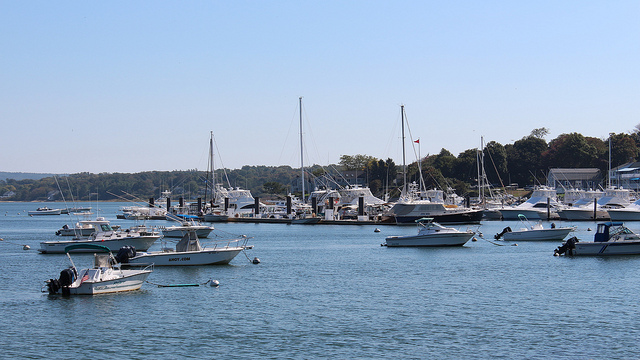
Even viewed from a distance, the harborfront tests the capacities of peripheral vision, tall masts and rigging far off to the right, and in front of us, here, clumsy, rectangular structures painted white with enormous, clear windows that darken in the afternoons.
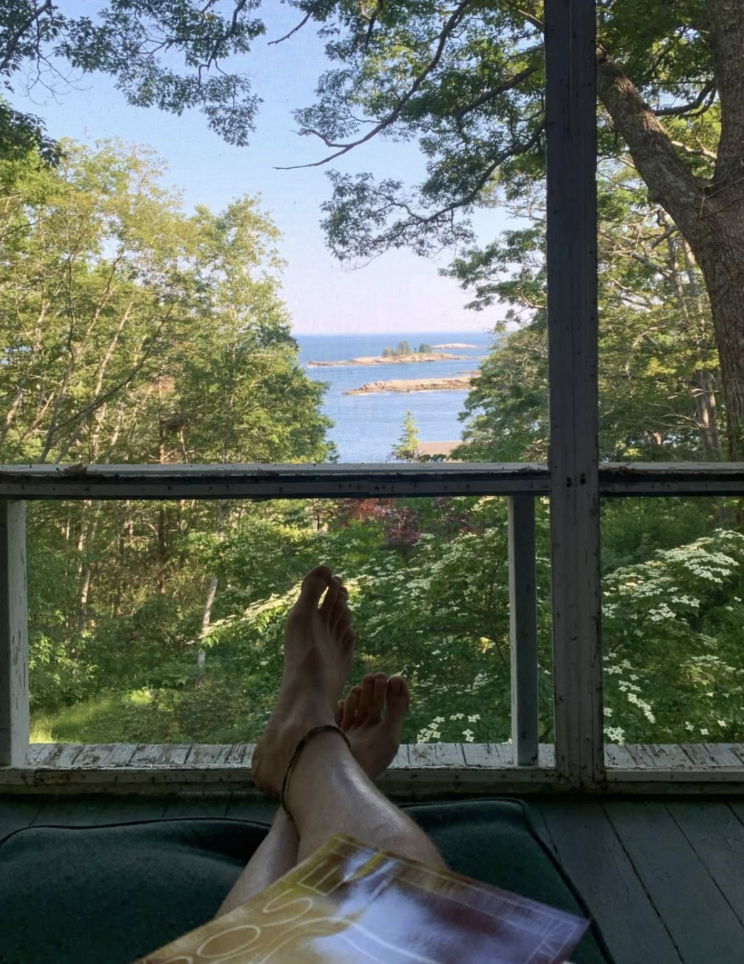
The light here is blue, like the water, like the eyes of middle-aged tourists who occasionally study our movements. My attention is drawn to a parking lot next to the largest of the structures, where gulls disperse and enclose the comings and goings of visitors like water adapting itself to the spill of large rocks. A breeze seems to lift them, shaving off feathers of white from their wings. It’s a remarkable sight.
And amidst the general hum of voices, of cars traversing the blacktop in slow, caravan-like progressions that extend the full length of the harborfront, I hear something else, a sound I soon realize must be the water itself, full of broodings and profound hesitations, a sound we move toward now, crossing the blacktop, slapping our feet against the wet boards of the dock. The sun has already begun its compelling descent into the west, but the evening feels very far off to us now, distant as our old age.
Old age, you say, testing the food laid out before you with the end of your fork. The waitress fills your glass up with wine. Butter and bread. The tips of our fingers smelling of lemon. I wonder if we’ll come here again, and I nod my head yes, never knowing for sure, only knowing the feeling is something I want to preserve, a feeling palpable as security, as falling in love.
Where does it go? Why do we trade in these feelings full of such nourishment for desperation and inertia, casting ourselves forward each day like dice against the felt walls of a crap table? In its own way, these feelings too convey a deeper necessity, our compunction to beat the odds, outlast the erosion of days and unkindness, master the cruel gesture, the cutting remark. A day at the beach is a frame like the one we use over the mantle, a window onto a make-believe land where limbs never tire and tempers quickly diffuse and a day at the beach lasts forever. So perhaps this then is art: a memory of something or someone just like this day.
And, as with the artist, we strive not just to perfect the memory, but to live and remember in the same instant—to warm with the pleasure of remembrance, and to warm with its genesis. To love and to smile. To spend a day by the water and in time find our way home.
John Martin’s work has previously appeared in Per Contra, Bias Onus Quarterly, Black Lantern Publishing, The Externalist, Curbside Splendor, and Work Literary Magazine.