By JOHN T. HOWARD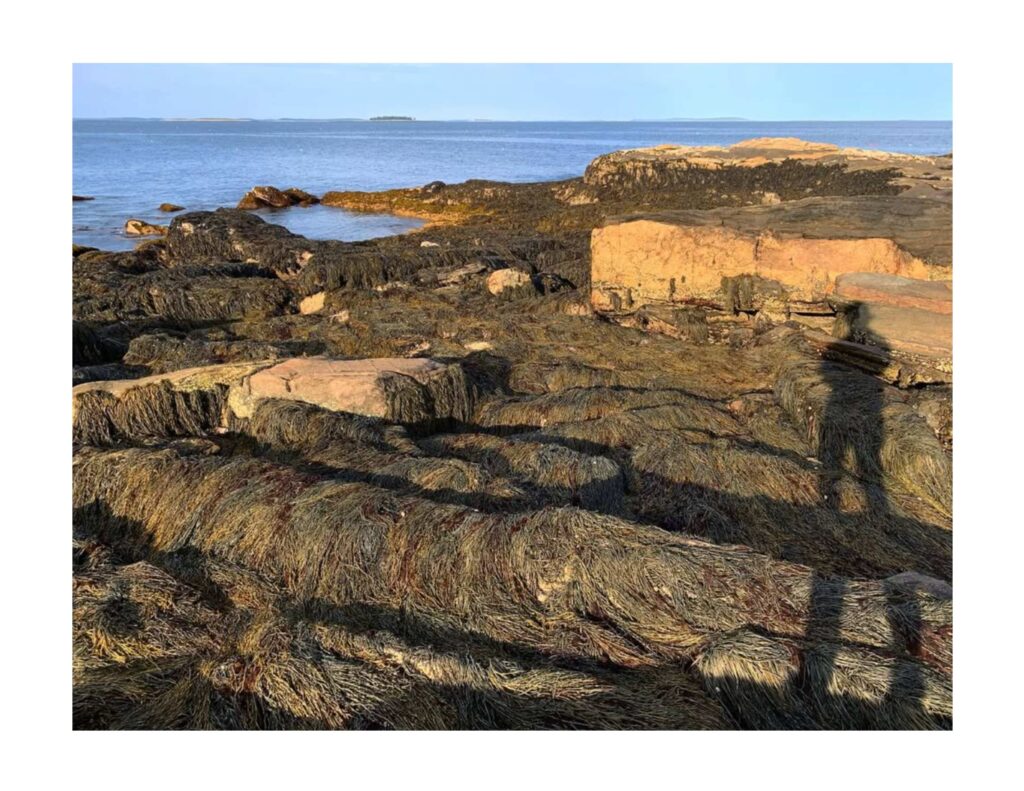 New Harbor, Maine
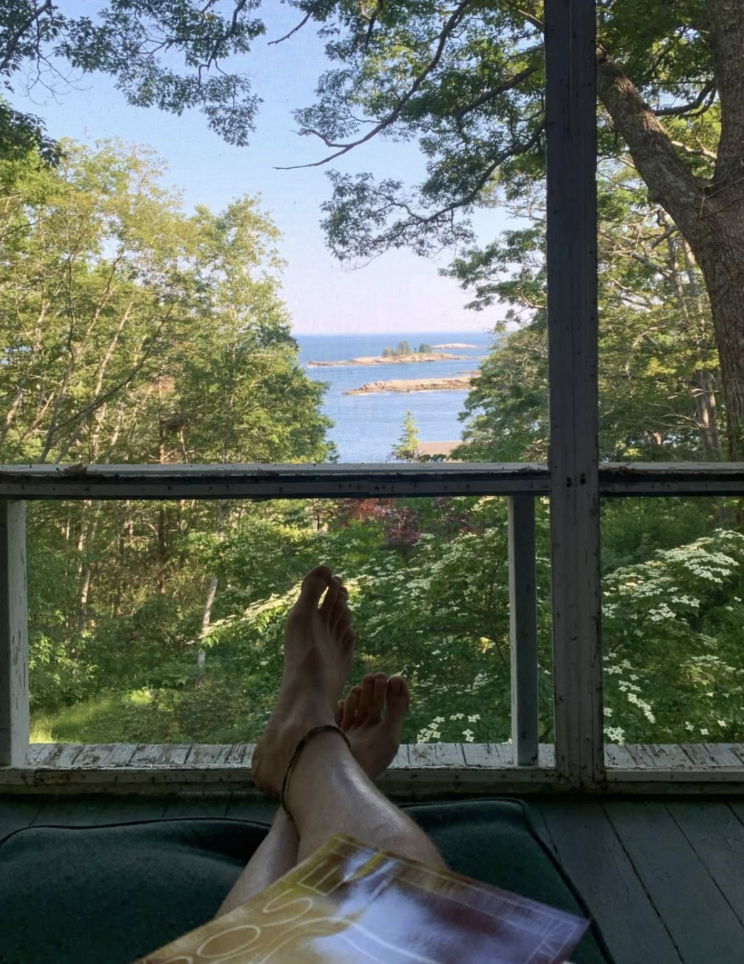
From the porch of the cabin, we can see the waters off Maine’s Midcoast region down below, the audible crash of waves constant. We can also hear the dunting of the bell buoy, and, through a wispy cover of fog, we can see the spectral presence of certain small islands and headlands in closer waters. The fog, further out, is thick enough to make the furthest remnants of land invisible. A second thought: the closer strips look as if they are cut from age-faded pieces of colored paper once the color of blue. Beyond these blanched scraps of an atomic hue, I look through the deep stretch of fog and think stone and wood, think bone and sinew. Far from here, there are wars raging. Bombs being dropped, civilians dead, dying. Government as we expect it to function is dismantling. Or being dismantled. I peer even further into that stretch of nothingness and contemplate the recent departure of my father, my mother, my brother the day before. All of these familial connections with their complicated histories, long arms of trauma stretching back decades, well before my first year in this cabin in Maine three years ago.
Seventy-seven years ago, Rachel Carson called this stretch of coast home for a bit. In 1953, she built a cabin on a nearby island. She explored that small landmass and other nearby shores. Just down the hill from this cabin I write from, she wandered around a salt pond that appears along the coast whenever low tide is low enough, and developed an intimate understanding of the tapestry of life found at the edge of the sea. With a sense of wonder, she described the whitening power of barnacles and the darkening power of mussels when built up, here or there along the shoreline, in the millions. It is difficult, with the world we currently live in, not to read Carson’s words about “the living snow of barnacles” without thinking of the hate-fueled response to ethnic diversity currently being marshalled across this nation. Another thought: it is a mistake on my part to always seek out such analogies for the perils of human life in that of the natural world witnessed all about. Of the perilous natural environment encountered down the hill from this place of refuge, Carson offers the following perspective:
“All the life of the shore—the past and the present—by the very fact of its existence there, gives evidence that it has dealt successfully with the realities of its world—the towering physical realities of the sea itself, and the subtle life relationships that bind each living thing to its own community. The patterns of life as created and shaped by these realities intermingle and overlap so that the major design is exceedingly complex.”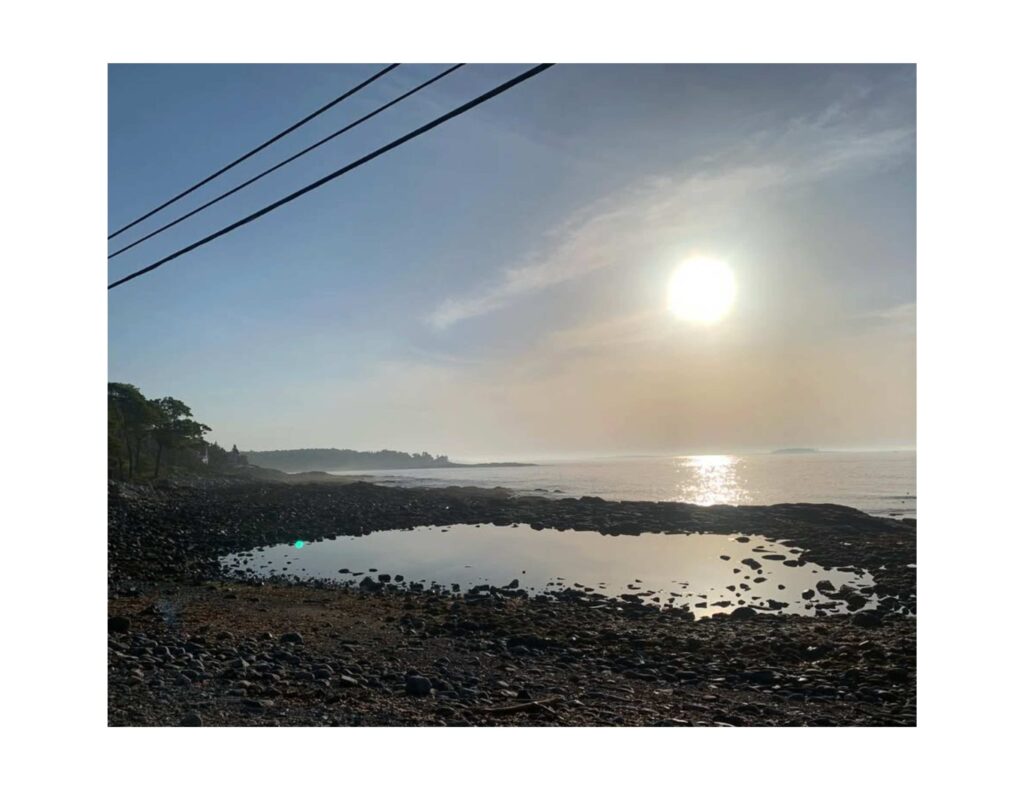 Another morning in New Harbor arrives, this time with sun in place of cloud and fog. The waves, still audible, seem almost louder than yesterday. The dunting off in the near distance swallowed up by the constancy of ocean sounds. Tumult, clamor, crash. If—while seated on the porch—I close my eyes and hold a hand to my chest, I can feel the sharp cone of my heart drumming along, that constant thruh-thrump like a percussive presence felt-heard through the meat of my thumb, my palm. If I concentrate on that two-beat measure, there is this awfully beautiful silence that streams into my thoughts, a silence built up from a constant state of bedlam, a state comprised, I imagine, of the realities of our world within and without. I dwell on that arresting silence and think of all the people I have loved over these four and half decades of life. I think of the people who have loved me. I think of those I no longer love. And those who, in turn, no longer love me. I sit with the blue rush of the one I love with such uncertainty at this point in time.
It all feels so exceedingly complex, the sounds, the silence, the peace found here, the distress that lingers elsewhere, the wreckage of thoughts that follow in the wake. “I have tried to interpret the shore,” Carson wrote, “in terms of that essential unity that binds life to the earth.” What if that unity, I now wonder from this porch in New Harbor, comes from a constant state of turmoil, from an ongoing conflict not unlike a consistent battering of waves? What if there simply is no true unity to uncover? Not here in New Harbor. Not there, wherever you are, reading this. Not anywhere across this small globe we struggle (and fail) to share. Not for us, Homo sapiens, the most domineering physical reality this world has ever had to weather.
John T. Howard is a Colombian American writer, translator, and educator. He has served as Writer-in-Residence at Wellspring House Retreat and holds an MFA in Creative Writing from Indiana University. His poetry can be found at Salamander, Notre Dame Review, PANK Magazine, The South Carolina Review, Hayden’s Ferry Review, swamp pink, and elsewhere. His creative nonfiction is published with The Cincinnati Review. For personal and political reasons, he publishes all fiction using his matrilineal surname, as Thomas Maya, and he has published short stories in Witness, Wisconsin Review, Saranac Review, and elsewhere.