Photo courtesy of the author.
Tehran, Diaspora
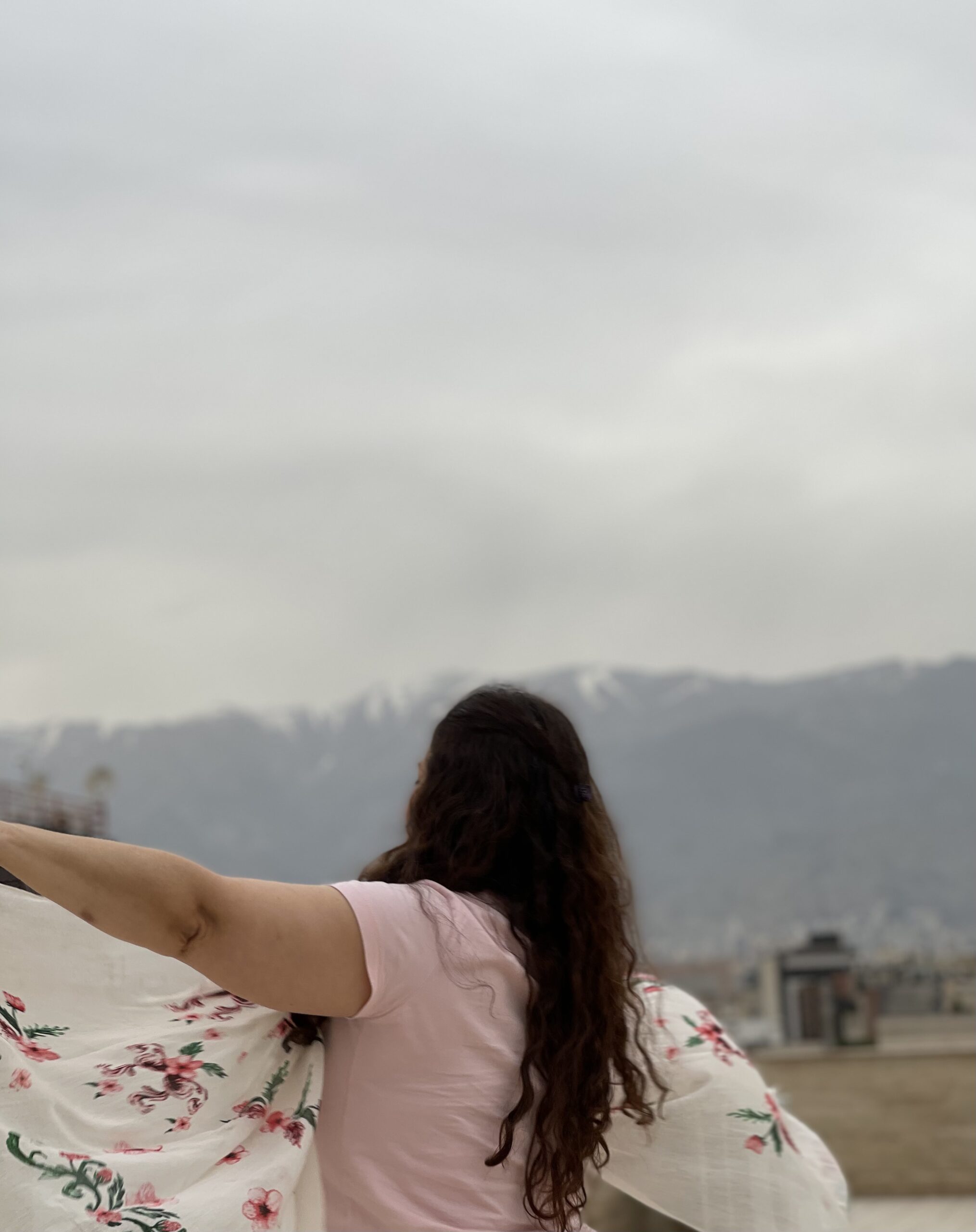
I moved to the U.S. for a creative writing program with a luggage full of must-haves and gifts, to survive the at-once costs with one paycheck, memorabilia from each friend and close relatives to hold, on days of unbelonging and loss, to feel the connection to the ground back to a place. The largest collection of belongings is in my phone. More than twenty thousand photos of food on the table (always more than one plate), streets of Tehran at night through the car window, wet and bright after rain, harmonious, unlike the dust and chaos of the day. My daisy covered shoes on the curb, friends singing, tapping on the table, hugging, running all the way to the top of a hill. When I moved, the photos became similar, screen shots of Facetime or Zoom calls, us in squares next to each other, our joy breaking out of the frame, heart emojis flying, everyone laughing.
I knew I might never get to go back to visit because words are sharp, cut the ropes from which you are hanging, but leave you midair. Landing differs from freedom. Now one by one memories of places where I have walked and lived and loved are replaced with images of destruction after Israel attacks Iran. My share of home from a fluttering “if” changes to “never ever.” The memory in mind connected to a living space, where people walk and live and breathe, is reduced to rubble, the static images on my phone. Once upon a time, I could walk around in memory, visit Tehran. Now, it’s as if my memory is invaded, that I no longer walk in a place once called home but wander around in a neverland. Imagine a long table in a coffee shop. You are writing on your own, sometimes people watching, coexisting. There is connection in the middle of distance. Now replace the people with mannequins, don’t you ask yourself, why am I here? The torn self looks for a tiny space to glue herself together, to coexist, I and من. On days like this, furthest apart, when others are having a potluck and “I” smiles, but من follows the news; “I” responds to emails, but من doesn’t put the phone down and moves from one social media to another. Someone’s life depends on من, to tell them in the minutes and droplets left of their slow internet that this place is safe, the other is not; to pass along the safety notes, stay away from the windows, cover them with tape, pack an emergency kit; to share information about a hotel which has opened its doors to those evacuating Tehran. Whatever I/من does is not enough to stop people from dying, books from burning, buildings from falling. There aren’t enough megaphones in the world for her to say what needs to be said, no spells to make it heard.
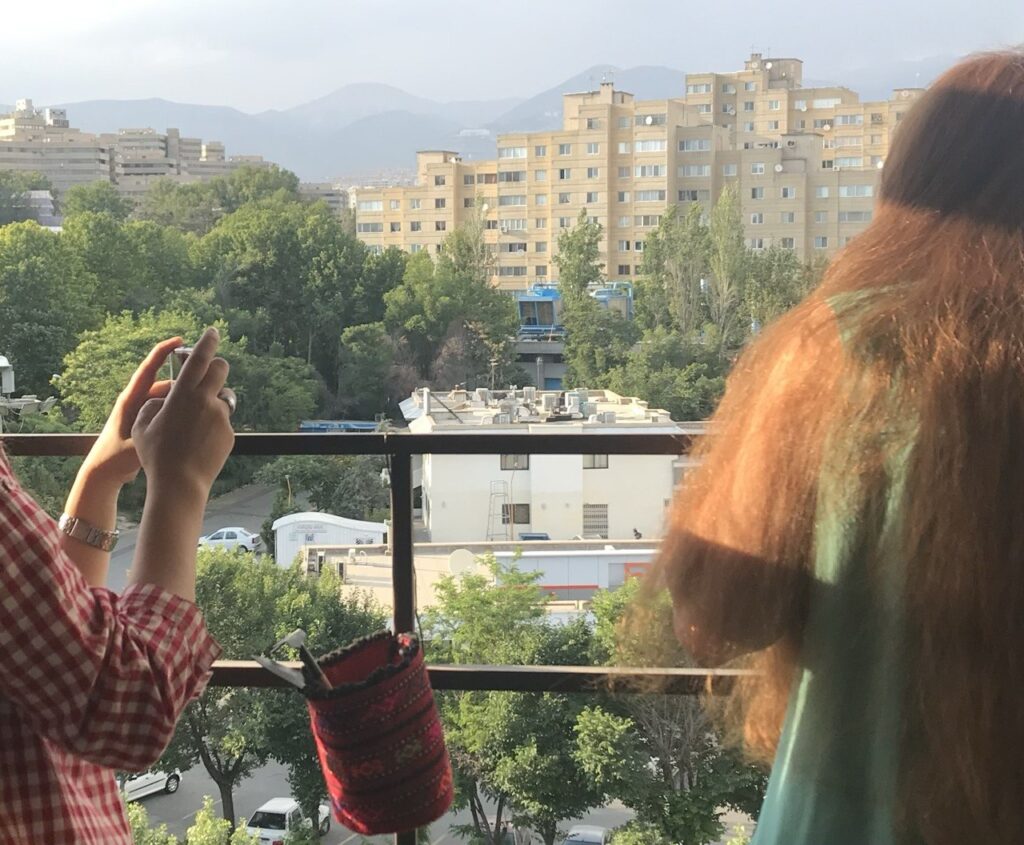
Photo courtesy of the author.
A conference call with friends, online, all of us born in Iran but scattered around the world after one tragedy or another. We were celebrating a friend’s birthday in our group chat, signing his birthday card, together apart, when Israel launched the strikes. Now we are on the call, and someone says she was making Adaspolo, preparing the lentils when she heard the strike. She could stop, she thought to herself, that she should. But she didn’t. Now we don’t know whether to smile or cry and I say that my mom was having dinner with her guests when it all began, and we all laugh then someone shares a photo of the pigeon’s nest in his balcony, two tiny eggs, new, unbothered with the war, growing in the shelter of an eggshell. Another friend comes into frame with a cupcake, for his partner, and we all sing happy birthday because all we have left on our hands is a life that demands to be lived.
Sarvin Parviz (she/her) is a multi-genre writer & multimedia artist born in Tehran, Iran. Her repertoire includes poetry, fiction, nonfiction, libretti, plays, collages, mixed-media paintings, video art, performance and photography. She is the winner of Graduate and Professional Council Award in Creative Activities (2024) and a semifinalist in the European Opera-directing Prize (2025) who recently developed her first opera at Guerilla Opera Writing Collective. Her song cycle S(or)i had its world premier at MIT in 2025. Her work has appeared in Fractured Lit, Grain Magazine, The Indianapolis Review, Apple Valley Review, Roi Fainéant Literary Press among others. She holds an MFA from Southern Illinois University Carbondale and as usual, is working on multiple projects.