Curated by KEI LIM
As summer opens up before us, as we shake off our winter blankets and spring raincoats, writers and readers alike are flocking outside to drink in the long-awaited sunlight. Summer is the season of remembering how it feels to be a member of the world — this strange world of pollen and sneezes, of hot adirondack chairs and sweat, of cool waterfronts and sand between your toes. In these recommendations from RUSSELL BRAKEFIELD, TERESE SVOBODA, and STEFAN BINDLEY-TAYLOR, characters similarly discover where they fit and falter in their surroundings, and how they transform the worlds they inhabit. From cityscape to household, these stories traverse landscapes large and small, and one might just land in your summer-reading stack.
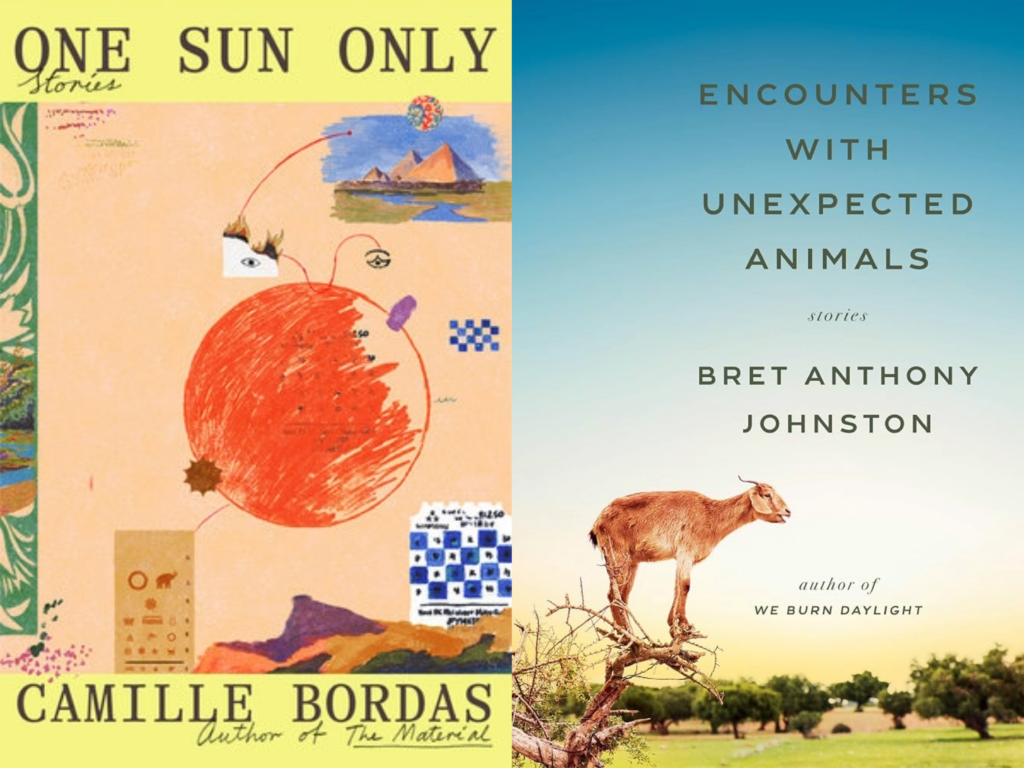
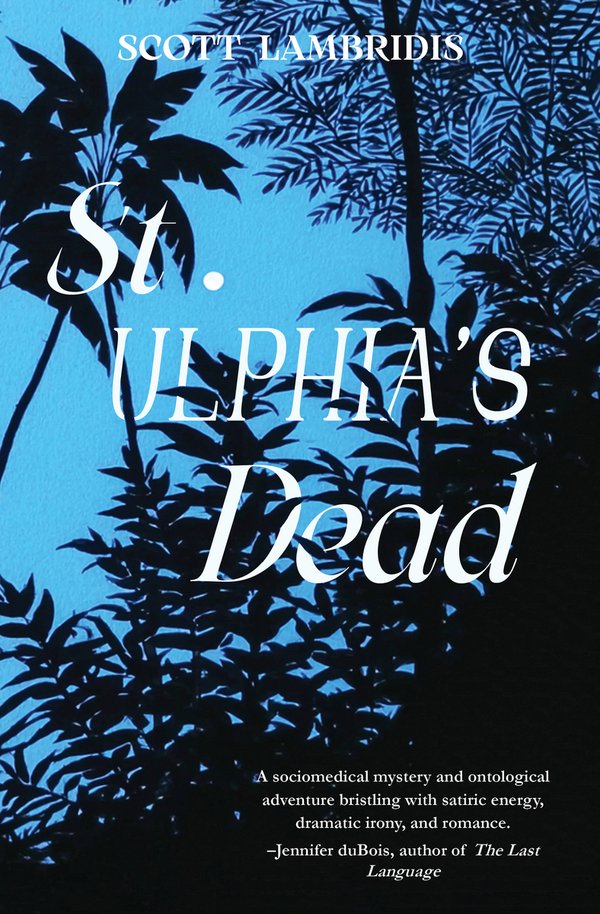
Camille Bordas’ One Sun Only and Bret Anthony Johnston’s Encounters with Unexpected Animals, recommended by Issue 31 contributor Russell Brakefield
The twelve stories in Camille Bordas’ One Sun Only follow an array of characters across several continents as they navigate the fortunes and furies of the human experience. These stories could rightly be praised for their humor and artful intelligence — characters are often offering witty and insightful observations about the world — but what I found most appealing was the way Bordas layers a subtle but distinctive strangeness atop her already compelling settings and situations. Though there’s nothing surreal here, everything is impeccably unexpected (a boy at a weight-loss camp dreams of playing the role of Tony Soprano, a grieving sister obsesses over the obituary writer in a glossy magazine, a woman accuses her brother’s girlfriend of faking colorblindness, a man writes his fears into Spanish-language learning guides). Many of the stories in this collection circle death, but most are more complex in their attention. The word that kept surfacing as I read was “textured” — each of these stories reaches beyond its subject in utterly original and engrossing ways. Most of the stories in this collection are excellent, but a few instantly became new all-time favorites for me, especially the last in the book, “Colorin Colorado.”
I was shamefully unfamiliar with Bret Anthony Johnston’s work before reading his new collection, Encounters with Unexpected Animals. Since finishing the book, I’ve gone back through most of his catalogue, which is stuffed with immersive fiction about South Texas. Encounters with Unexpected Animals is my favorite kind of collection — rooted deeply in place, full of sharply drawn characters, studded with language that is direct but doesn’t shy away from moments of intense lyricism. Compared to Bordas’ book, which felt totally magic in its unexpected turns and moments of escalation, this felt more like a master class on the classic short story. There are some unexpected animals here, but the humans are the real stars; these stories delve into the lonely, chaotic experiences of childhood as well as the dizzying paths of parents whose children are in trouble. Though the stories often tread into darker territories — uncovering moments of grief and disappointment and abandonment — the characters are treated with such empathy, and the sentences polished to such pitch-perfect prose, it is impossible not to feel a glimmer of hope lurking beneath the darker waters.
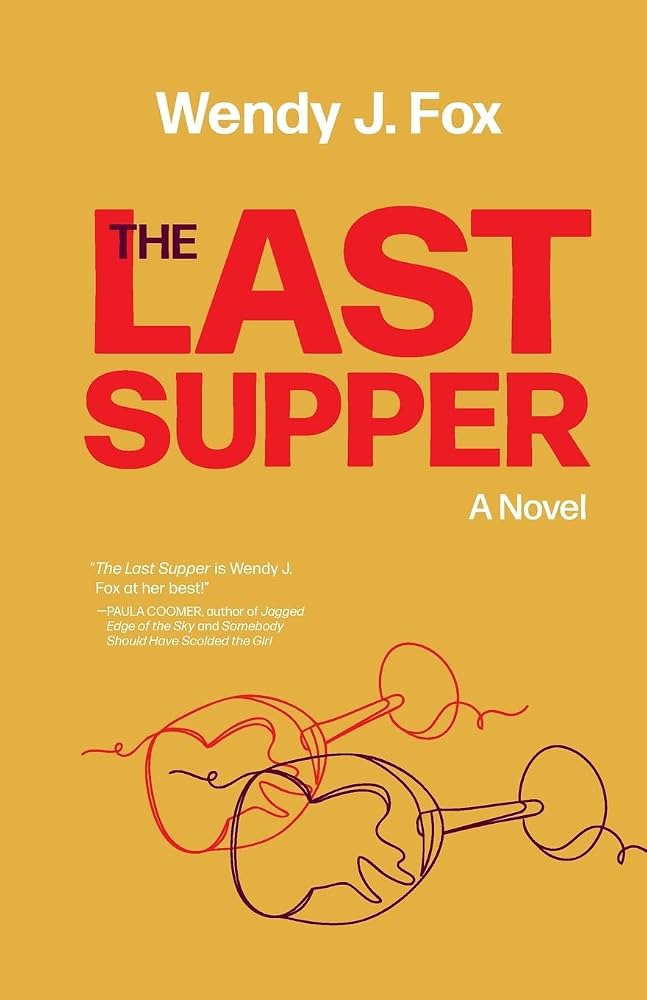
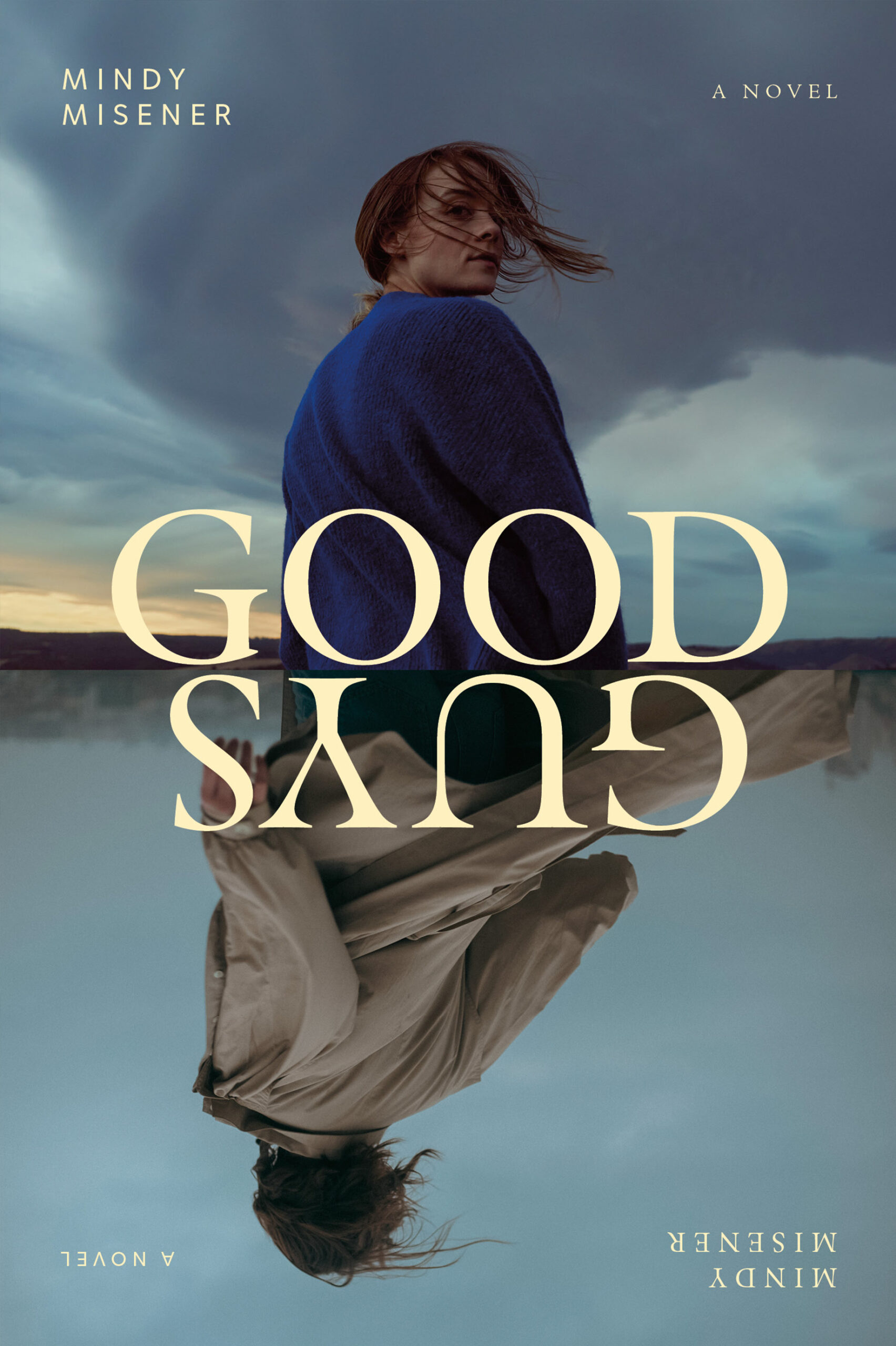
Wendy J. Fox’s The Last Supper, recommended by Issue 29 contributor Terese Svoboda
Nobody writes a more quotidian account of laboring in today’s kitchen than Wendy J. Fox in her fourth novel, The Last Supper. But it’s about as far from the New Testament as you can get, this bandying about of chicken fingers and chocolate pudding by two children up to their proverbial little eartips trying to please Amanda, their mother, but unable to avoid disaster. Amanda’s a very stay-at-home mom yet aches to see beyond its confines. One particularly frustrating afternoon, she decides to exploit her domesticity and build an influencer lifestyle brand she tentatively names AMANDAtory. At first, she aims for Martha Stewart perfection, but the children quickly turn that into more of a gritty reality show, complete with her husband announcing he’s being fired. “He looked like a dog that had been clipped by a car but would’ve rather been smooshed under the tires.” Her mother, a very sharp lawyer, is filing the divorce court papers practically before Amanda can complain. Fox’s detailed descriptions of the deadening aspects of housewifery reach for the surreal in their accuracy. How do you burn peas? Many women and even a few men will recognize the madness that simmers in the suburbs and relish the appeal of Fox’s clever, surprising — but given Amanda’s tentative grip on her own agency — optimistic ending.
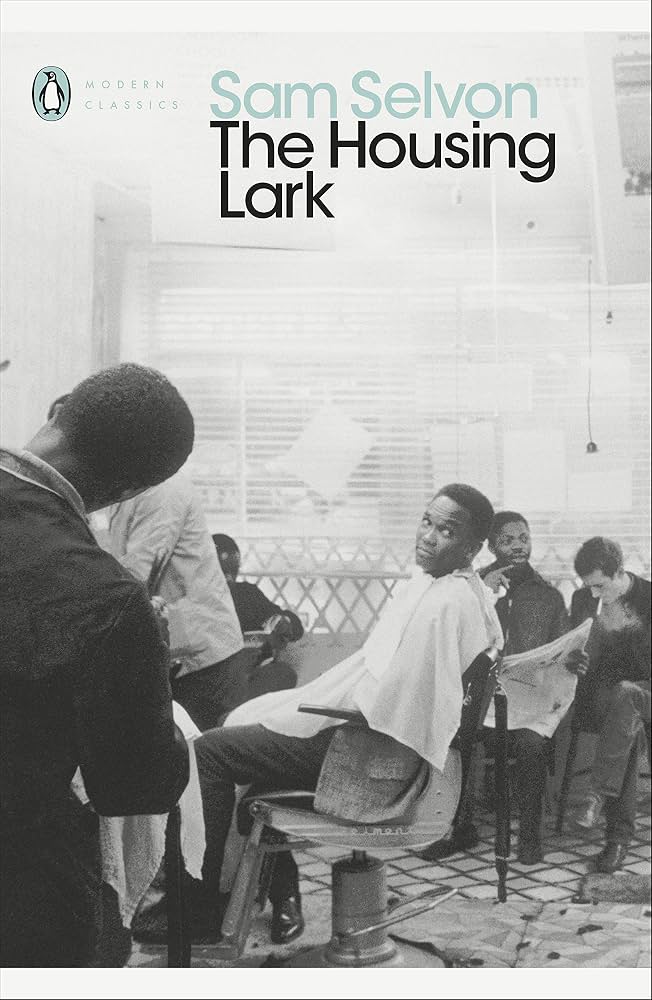
Sam Selvon’s The Housing Lark, recommended by Issue 31 contributor Stefan Bindley-Taylor
It’s hard to be a writer of Trinidadian descent and not stand, in some way or another, in the shadow of V.S. Naipaul. Works like Miguel Street and A House for Mr. Biswas made me fall in love with literature and remain some of my favorite books. This admission does not come without its share of complications. People have written entire dissertations about the controversies of Naipaul’s work and his character, and I won’t do them the disservice of trying to summarize that here.
But somewhere beyond the periphery of the looming shadow of Naipaul is the work of his arguably lesser-known (outside the Caribbean, at least) contemporary: one Sam Selvon. Whereas Naipaul’s relationship to Trinidad and the Caribbean became increasingly complex and, at times, antagonistic (having famously written that, “History is built around achievement and creation; and nothing was created in the West Indies”), Selvon’s writing is forever a kind of love letter to the region, its people, and its diaspora.
Few of his works exemplify this more than The Housing Lark, a brilliant jaunt through the happenings of working-class Windrush-generation migrants in London, as they try to find themselves a house. Selvon’s wit, empathy, and storytelling genius abound throughout the novel. His characters are brimming with schemes, heart, hidden motives, and a desire to survive in this unfamiliar and foreign world. There is such a tenderness to the way he renders their lives, held together by his signature, dazzling creolized prose. One of the pioneers of the technique, using a creolized voice as the narrative voice, Selvon tells a story like someone I know, about people I feel I know, too, as they try to recapture the magic from their corner of the world beneath the dreary skies of London.
When Selvon migrated to Calgary, having already published nine novels, he was famously briefly employed as a midnight-shift janitor at the University of Calgary for several months before they got their act together and brought him on as writer-in-residence. While I have several theories for why authors like Selvon, along with many of his contemporaries whose works so lovingly portray their islands, did not gain as much international recognition as the mercurial old master Naipaul, who went on to win the Nobel Prize, I will save these for somewhere else. Perhaps a dissertation of my own.
For now, I’ll use this opportunity to sing Selvon’s praises from the mountaintops, for my life has been forever bettered by a handful of his masterpieces: The Housing Lark, Ways of Sunlight, and A Brighter Sun. Selvon is one of the Caribbean’s greatest literary gems, and I implore everyone to make a little space for him on their bookshelf and in their heart.