New poems from MARCUS WICKER and ELLEN HINSEY
Table of Contents:
- Selections from Dear Mothership by Marcus Wicker
- Selections from Anatomy of the Eclipse by Ellen Hinsey
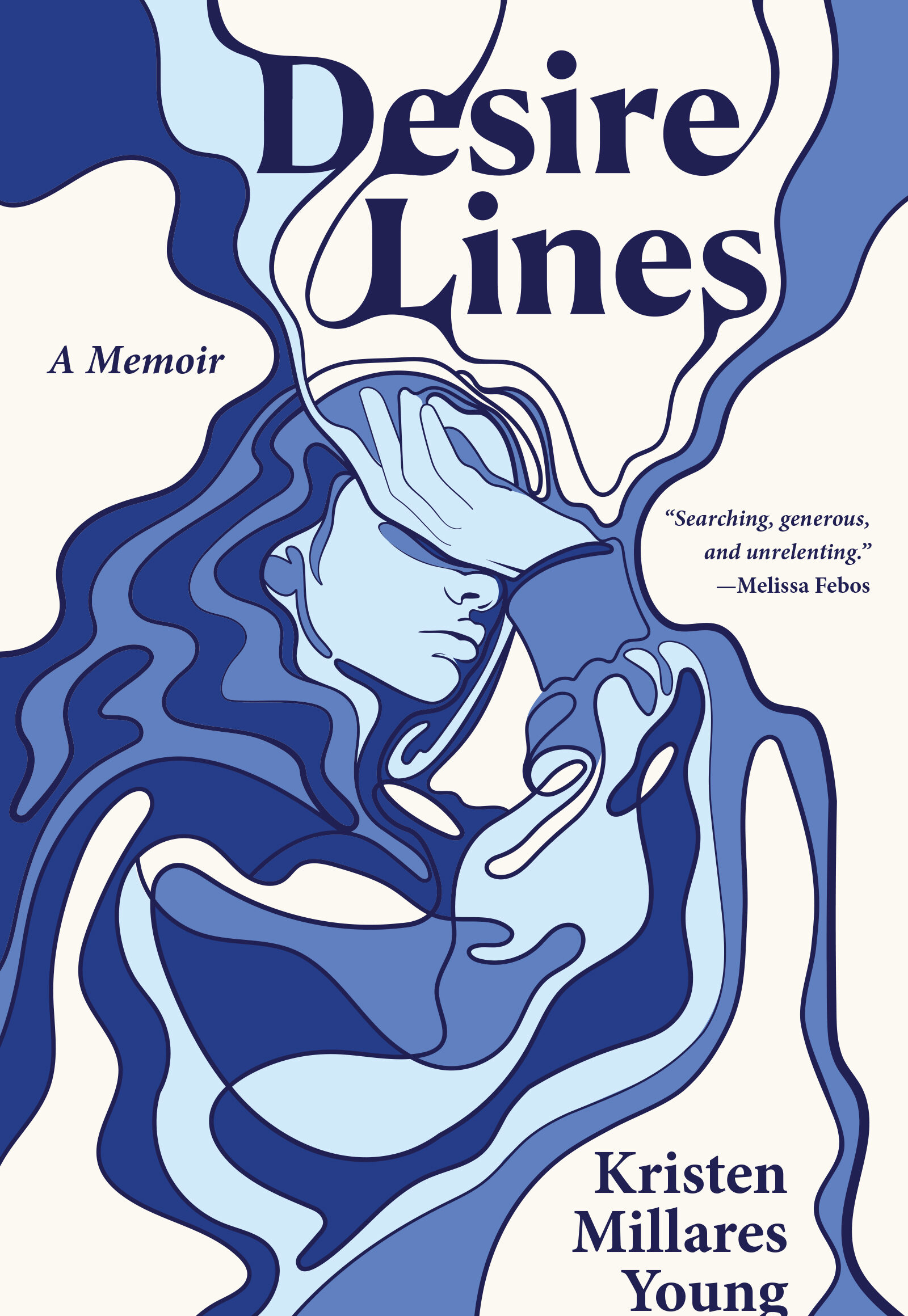
What if an alien landed in Atlanta in January 2020 and tried to document everything it saw for two years? Not just the big stuff like the pandemic, the protests, the Capitol riot, but also the unfiltered everyday occurrences: binge-watching reality t.v. and some retail therapy, a young girl quieting her wailing sister in the middle of an airport Popeye’s with a kiss to her invisibly injured elbow. That’s the premise of Dear Mothership, the new poetry collection from Marcus Wicker (Ecco, September 8). Part Afrofuturist odyssey, part cultural chronicle, the collection weaves the ATLien emissary’s observations together as it examines what is alien in our world, alongside poems that chart upheavals both personal and political.
PALINODE WITH WRINKLES & EXFOLIATING MASKS
“To get the job always stay starched,
creased to death.” I said that once.
Until a barber showed me the cost
in a handheld mirror. Relax your face
she’d say, martinizing my brow
with the flat of her palm. As if that
muscle hadn’t been shorn, long ago.
PALINODE IN DEFENSE OF SMALL TALK
Who said the babbling brook was frivolous?
Grace soothes in code. Cascades, above stones.
A rung above Stone-Age glyph or smoke signal
I ring my mother. Mama! I squawk.
My son! she rings. Whatcha know good?
A metronomic two-chirp canon—
midair murmuration two Cancers
shape into mudflaps against mood contagion.
Sometimes, dirt moods shape words into rocks
we kick across remote twin provinces.
When we kick our tires across the moat,
we close distance. Let down a drawbridge.
We let slow care dam the murk; draw us close.
Who said the babbling brook was frivolous?
From the book DEAR MOTHERSHIP: Poems by Marcus Wicker. Copyright © 2026 by Marcus Wicker. Reprinted by permission of Ecco, an imprint of HarperCollins Publishers. Preorder here.
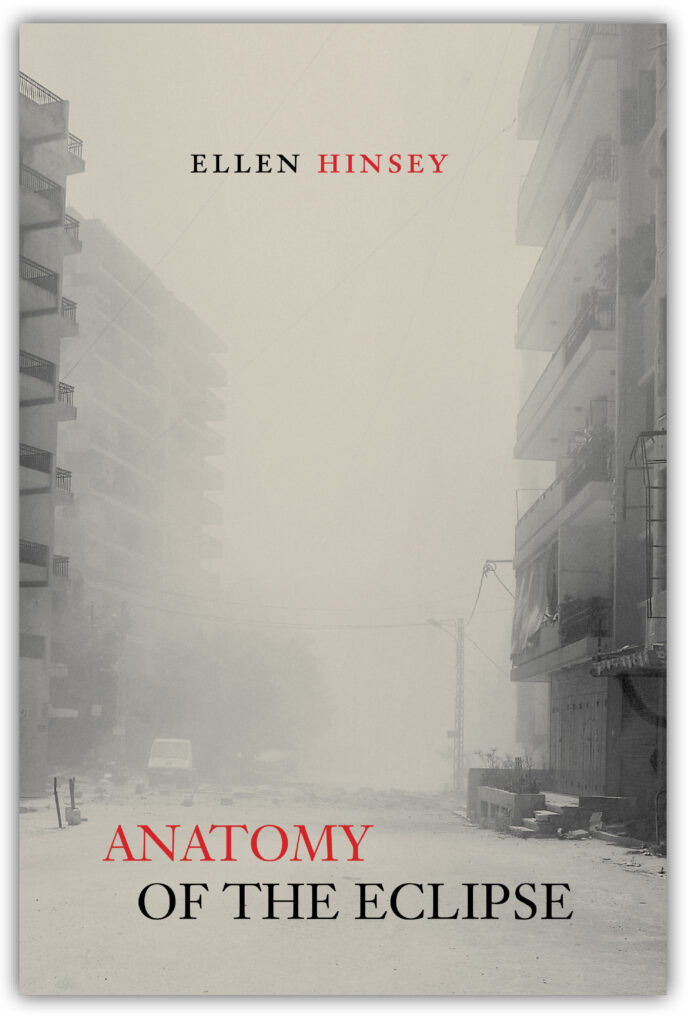 Anatomy of the Eclipse (Arrowsmith Press, October 15) chronicles the approach – and arrival – of a period of civic darkness. From the war in Eastern Europe to the spread of violence and lawlessness, Hinsey’s new volume tracks the danger signals of a world advancing towards edge-light. Yet, while oracular and oblique, these poems also quicken something in us, prior and utterly secure, an aspect of being that remains unintimidated by the portents of darkness. These poems also brace, embrace, and fortify, probing our potential for renewal through affirmation and compassion.
[ARCHIVE]
A NEW TRANSLATION OF SENECA
| It is not the man who has too little, but the man who craves more, that is poor. – Seneca |
||
|
Few are the marble cities that have escaped the Tyrant time. If news of its arrival is heralded over the high city walls, bear this tribulation with dignity. For like the eternal plague seasons: the trial of its fever hour too shall pass. Instead, return to the ivory scrolls and sit serenely beneath the venerable stoa. At the hour when plaited leaves weave a shadow wreath beneath your feet. Recall lines bequeathed for passage through Tyranny’s entangled thicket. Though the heat flush of temper inhabit you: for all that is indefensible—mantle yourself in patience. Time will divulge the deceit of the ill-intentioned act. Do not permit the dismantling of the house of your compassion. Even if its columns are besieged: it is a fortress that stands each day it is affirmed anew. Keep the Laws ever before you—like the standard bearer’s rugged torch, they will lead your way forward through the tenebrous darkness. For even if sheathed in Tyrian rhetoric, the weapons of fear are employed by the weak. What is justly done requires no recourse to Terror. And never forget: the Tyrant time reached others before you—they too weathered the deluge of its tempest-strewn path. For Tyranny always imagines it will write history. But, time and again, it is Justice that will arise, then bow down to write—the history of Tyranny’s demise, instead. |
[ARCHIVE]
ENDURANCE
|
If you must: weigh out endurance with the wreath of your breath. For below the snow is frozen ice—but under this ransomed night: there is also fire. This is what frightens them: an irresistible faith, and the willingness to burn. They would prefer to imprint hoarfrost on the honeycomb of ice grammar. They would prefer slag syllables soldering the lips ever more tightly together. Or to make their approach like transit trains—that pass unnamed below the rusted signal bridges. But the landscape remains unchanged—it still contains unmarked spaces they can’t fill. Afternoon light’s alpha blaze over the far, solemn mountains— A body’s unscripted leap into speech—beside the tacit reign of silence. For lessons learned during the Dark Season remain encrypted in the rings of the crooked tree: If the land is frozen, the old, cured wood of the alphabet will burn. If the word no longer catches fire: in silence’s depths—the omega’s grace-lit arch endures, upright. Listen while I speak these words slowly. I may only have the time to tell you once. |
[INSTRUCTION MANUAL]
INQUIRY INTO THE DIRECTION OF TIME
1.
The Classical Conceit
| Beyond the far horizon, the future beckons with its transcendent brilliance. |
2.
Traditional Corollary
| And beneficent dawn eternally augurs the bright contours of a new day. |
3.
Once Considered Implicit
| Contained in Time’s essence is a balm by which past transgressions will one day be absolved. |
4.
Unforeseen Quantum Possibility
| The disquieting suspicion that the Past—glimpsed in the rear-view mirror—may be closer than one thinks. |
5.
Formerly a Debunked Theory
| That when the Past’s volume reached a critical quantitative peak, it could trigger a landslide back—into the present. |
6.
A Verified Quantum Event
| The murderous velocity with which the Past can avalanche into the present. |
7.
Recent Headlines
| “When the Terror returned, they were forced to relive the past’s darkest hours.” |
8.
A Current Type of Affliction
| To watch as the predatory Past circles back—a black hawk—carrying no restorative balm for the living. |
9.
Trial Transcript
| He reported: “The fresh graves were discovered where previous graves—not yet excavated—were believed to be found.” |
10.
Grammatical Query
| Without definitive release from the Past—will lament now be our only present tense? |
11.
Paradigm Shift
| And that bright future: has it retreated over the far horizon? Why does it now seem—it may never be reached? |
Marcus Wicker is the author of three books of poetry: DEAR MOTHERSHIP, Silencer, and Maybe the Saddest Thing, selected by D.A. Powell for the National Poetry Series. His honors include a National Endowment for the Arts Creative Writing Fellowship, the Poetry Society of America’s Lyric Poetry Award, a Pushcart Prize, and Ruth Lilly Fellowship, as well as fellowships from the Harvard Radcliffe Institute, The Fine Arts Work Center, and Cave Canem. Wicker’s poems have appeared in The Nation, The New Republic, The Atlantic, Oxford American, and Poetry Magazine. He is an Associate Professor and the Orgill Chair of English at the University of Memphis, where he teaches in the MFA program.
Ellen Hinsey is an award-winning poet, essayist and translator. She is the author of ten previous books of poetry, essays, dialogue, and literary translation. Recent books include The Invisible Fugue and The Illegal Age, a National Poetry Series Finalist as well as the UK Poetry Book Society’s 2018 Autumn Choice. Hinsey’s essays on democracy are collected in Mastering the Past: Contemporary Central and Eastern Europe and the Rise of Illiberalism. Cities of Memory received the Yale Younger Poets Award. A former fellow of the American Academy in Berlin, her work has appeared in the New York Times, the New Yorker, and The Irish Times, among others.