
Photos courtesy of author
Arkansas State Parks



Curated by SAM SPRATFORD
With the holidays coming up, many of us turn to books for company on cold nights, or a respite from the stress of the season. If you’re craving an escape into the world of ideas, look no further! This month, our contributors DOUGLAS KOZIOL, CARSON WOLFE, and ANGIE MACRI deliver an eclectic mix of nonfiction and poetry recommendations sure to satisfy and inspire the curious reader.
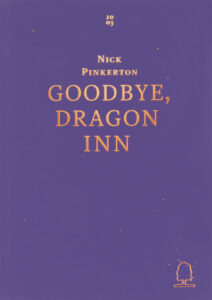
Nick Pinkerton’s Goodbye, Dragon Inn; recommended by Issue 28 contributor Douglas Koziol
Tsai Ming-liang’s 2003 film Goodbye, Dragon Inn is, in one sense, an elegy to a type of moviegoing no longer possible. Set in a single-screen Taipei theater on its final night, as it plays the 1967 wuxia (a Chinese martial arts subgenre) classic, Dragon Inn, to a handful of people, it would be easy to read the film as overly sentimental or nostalgic. But Nick Pinkerton resists this temptation in his book on the film, which treats the concerns of Goodbye, Dragon Inn with a wonderfully discursive and prismatic critical eye.

Poems By G. C. WALDREP, ALLISON FUNK, and KEVIN O’CONNOR
Table of Contents:
Below the Shoals, Glendale
By G. C. Waldrep
I am listening to the slickened sound of the new
wind. It is a true thing. Or, it is true in its falseness.
It is the stuff against which matter’s music breaks.
Mural of the natural, a complicity epic.
The shoals, not quite distant enough to unhear—
Not at all like a war. Or, like a war, in passage,
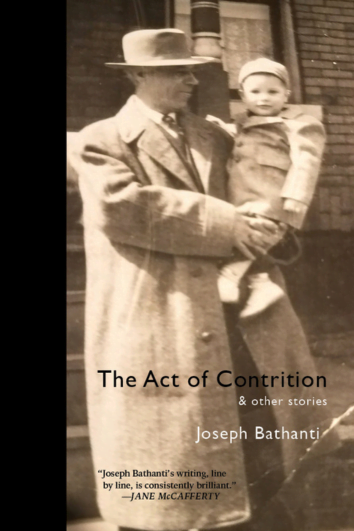
By JOSEPH BATHANTI
Reviewed by STEPHEN HUNDLEY
Omega Street. Malocchio. Napolitano and Calabrese. Fritz, Frederico, and Fred. In The Act of Contrition, a collection of linked stories and one novella, Joseph Bathanti reconstructs the mid-twentieth century in the East Liberty neighborhood of Pittsburgh. The Act of Contrition arrives on the heels of Bathanti’s 2022 book of poetry, Light at the Seam, and revisits characters introduced in the author’s 2007 story collection, The High Heart. Bathanti represents East Liberty as a kaleidoscopic dome of terms, places, and names that become familiar to readers, transporting—even trapping—them in a world that is sharp, hostile, and yet, manages to feel like home. Even as readers feel themselves fixed under the pressures of place, they cannot help but be, in equal parts, enchanted by the specificity of Bathanti’s prose. For example, take these lines, from “The Malocchio,” which wed the romance of embodied perspective to the frank realism of the quotidian archive:
“…nothing but brick piles and twisted metal peeked above the mud lots hacked with maudlin footprints and toppled clotheslines—trampled dresses and diapers yet clinging to them. Jackhammers still throttled. The stench of gasoline cloaked the ether—and in the distance, from Penn Avenue, rose the heavenly aroma of Nabisco’s ovens.”

By DAVID RYAN
Jonathan finds the shirt on the closeout rack at a trendy vintage shop in Provincetown. He’s never heard of the maker, the satin tag embroidered in the neck as if by hand, it looks British, probably twenty, thirty years old, this short sleeve—the cloth heavier than cloth, at least the cloth of shirts he might normally afford. The muted blue-green-grey rayon shimmers, the smallest blues and greens houndsteeth fused into a strange harmony within the gray and fine-lined black blocking. Its gentle plaids inferentially iridescent. And this, like an aura hovers about the shirt, its inferred past, as if the weave of fibers are quietly singing an elegy, an amassing of light. He fingers the cloth, imagines the fingers of a millworker feeding the cord into a sewing machine, shuddering wooden bobbins in some industrial town. And then he tries it on.
It’s his favorite shirt for a couple of years. One night, he wears it over a white, long-sleeved henley to a club where a friend of a friend knows the singer in the band playing. Jonathan and his friend get backstage. For reasons later forgotten—perhaps in a fit of generosity produced by the free bourbon in the dressing room, he lets the drummer, who’d commented on how beautiful the shirt was, wear it on stage. Jonathan and his friend return to the audience for the show. There his shirt appears, on stage, shimmering under the lights, and the moment of its glory, strangely perhaps, feels as if belonging to Jonathan.


Photos courtesy of author.
Moscow, ID
One day, across the street from the gay coffee shop, a toddler in a blue t-shirt cocked a pistol at me. Silver glinted in October sun. He clicked the trigger, Dad and Mom looking on. Got her is what the kid said to Dad, a man closer to seven feet tall than six.
Only when I passed them in the crosswalk did I see the orange plastic that covered the gun’s tip: a toy. Dad ruffled the boy’s hair. I buried myself in my cell phone.


RAYCHELLE HEATH sits down with CAROLINE M. MAR to discuss reconciliation, poetic form, and Caroline’s new chapbook, Dream of the Lake.
Raychelle Heath: Dream of the Lake is such a beautiful read, and I have so many questions. Our first encounter with the lake takes us through the stages of drowning. So I’m wondering, how do you see that as an entry point into the world of the book? And why did you want the reader to encounter the lake this way first?
Caroline M. Mar: That’s a good question. I had been trying to write poems about Lake Tahoe for several years and the poems were not working. They were very sentimental, or I couldn’t get beyond “Gosh, it’s so pretty.” Because it is really beautiful. It is spectacular in a way that defies description. It was easy for me to get lost in all of the beauty of it, but I knew that that wasn’t complicated enough. I knew that I was trying to ask some pretty complicated questions of myself, of my reader, and of the landscape.

By NIEVES GARCÍA BENITO
Translated by CARMELA FERRADÁNS
Piece appears below in English and the original Spanish.
Translator’s Note
“Silk Road” is one of twelve short stories in Nieves García Benito’s collection By Way of Tarifa (Por la vía de Tarifa), originally published in 1999.
Forced migration and human trafficking are two of the most pressing humanitarian issues in the world today. In the Mediterranean alone, thousands of people travel across the Straits of Gibraltar every year on their way to Europe, but only a few arrive at their final destinations in France and Germany. Many are stuck working in the fields of Murcia, Spain. Many more drown around the waters of Tarifa, the southernmost point of Europe, a mere nine miles from the coasts of Morocco. This is the location where the Mediterranean meets the Atlantic, where Africa and Europe are the closest and at the same time the farthest away for so many people. Nieves García Benito’s stories give voice to these children, men, and women who leave their homes in Africa hoping for a better life, a safer life in Europe.
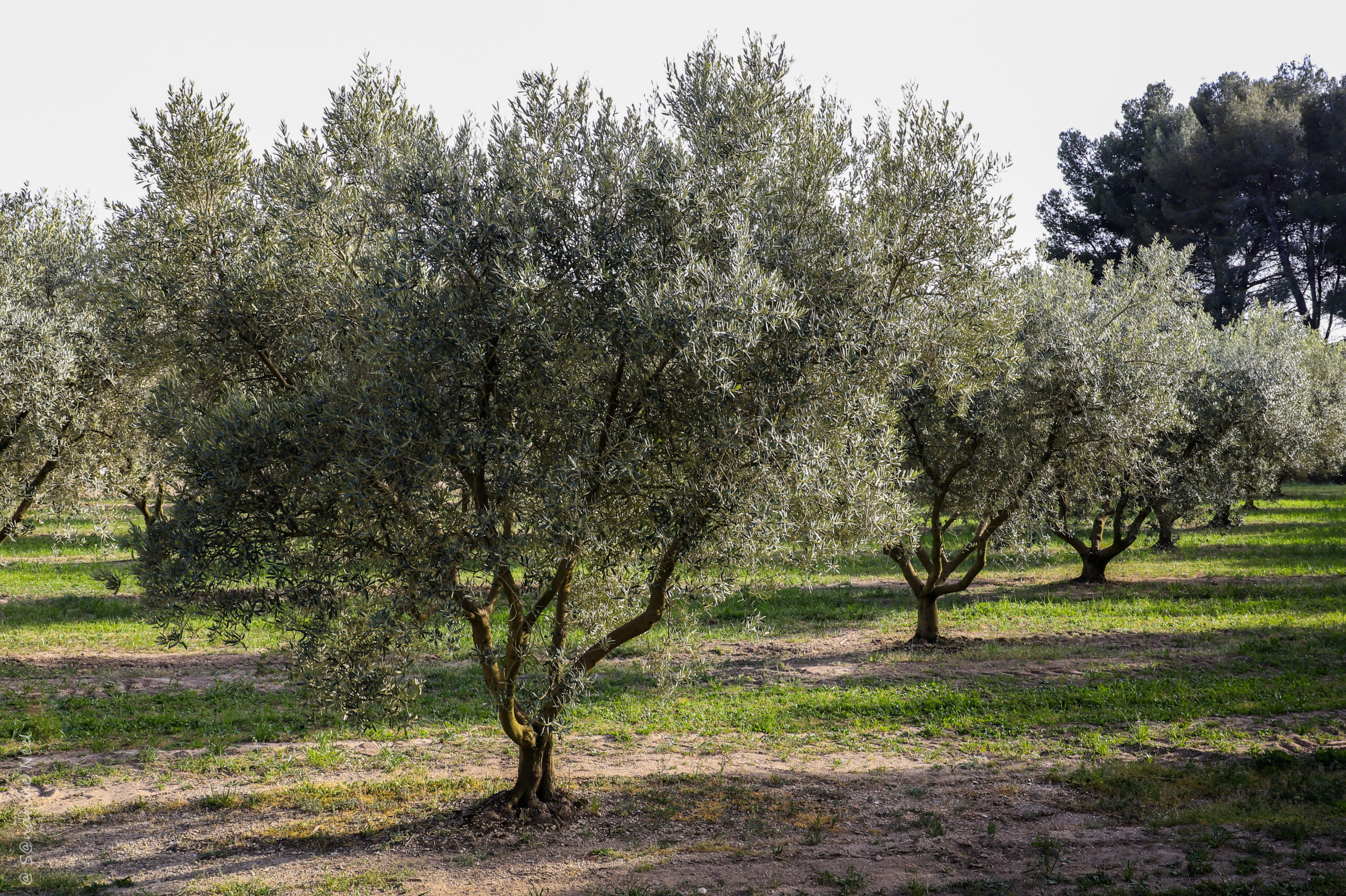
New Poems by Our Contributors NATHANIEL PERRY and TYLER KLINE.
Table of Contents:
34 (Song, with Young Lions)
By Nathaniel Perry
All the young lions do lack
bones. They lie wasted on grass,
cashed out, exhausted and un-
delivered. A poor man cries
eventually. A troubled
friend cries eventually.

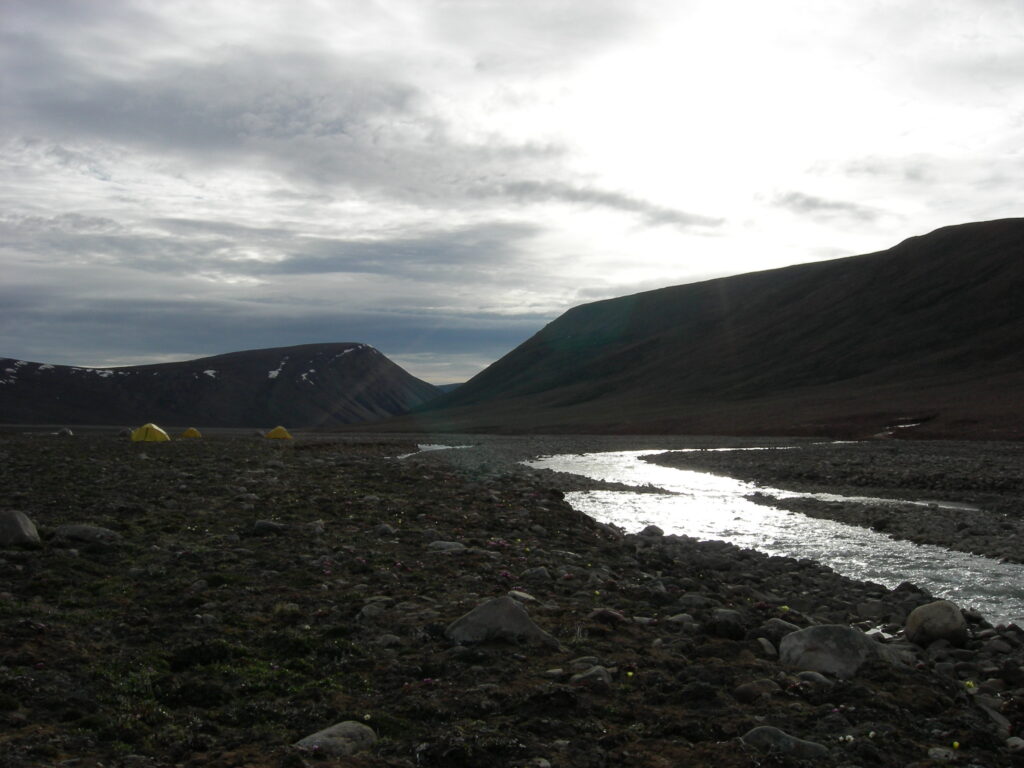
Photos courtesy of the author.
Ellesmere Island, Nunavut, Canada
Ellesmere Elegy
This land dreams up marvels:
a meteorite shower of clumpy
snow streaking under midnight’s sun.
This land embodies ruses:
broad valley floors and nondescript
slopes distorting scale and distance.

Don’t miss an issue! Subscribe to The Common.