“The Hare” and “Inês” Win O. Henry Prize 2026

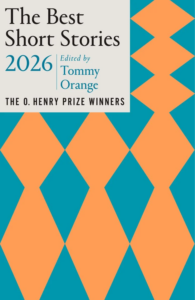
Book Cover of "The Best Short Stories 2026" edited by Tommy Orange

We are thrilled to announce that “The Hare,” written by Ismael Ramos and translated from the Galician by Jacob Rogers, and “Inês” by Joāo Pedro Vala have been selected for the O. Henry Prize for Short Fiction for 2026. Both stories were originally published in The Common Online in 2025. An anthology of the winning stories, edited by Tommy Orange, will be released this September from Vintage. 

In the prize announcement, series editor Jenny Minton Quigley writes, “Many of this year’s O. Henry Prize winners manifest a youthful, new way of seeing in their stories. If our world is to be saved it will be by the genius of the next generations.

View the full list of winners and read more about the prize at LitHub.

Congratulations to Ismael Ramos, Jacob Rogers, Joāo Pedro Vala, and all the winners! 
 

From the beginning, The Common has brought you transportive writing and exciting new voices. We are committed to supporting writers and maintaining free, unrestricted access to our website, but we can’t do it without you. Become an integral part of our global community of readers and writers by donating today. No amount is too small. Thank you!

“The Hare” and “Inês” Win O. Henry Prize 2026

Related Posts

https://bookshop.org/a/429/9798899480072

Amphibious Living: January O’Neil interviews Joseph O. Legaspi

JOSEPH O. LEGASPI
Amphibians, of course, are a class of vertebrate, ectothermic animals that include frogs, salamanders, and newts—creatures that initially start life in water and, as they grow, move onto land. The idea of this book is to explore what I call “amphibious living”: being able to live, survive, and thrive across these different landscapes.

Juliet McShannon headshot with Issue 31

Podcast: Juliet McShannon on “Rescue”

JULIET MCSHANNON
Juliet McShannon speaks to Emily Everett about her story “Rescue,” which appears in The Common’s spring issue. The story follows a woman on her search for a lost dog through a neighborhood very different from her own and explores ideas of loss, class, community, and healing.

Caribbean picture

Self-Portrait in The Caribbean

PAOLA ASSAD BARBARINO
Sometimes I am emboldened, / I decide to stand in the people’s balcony / I decide it is Maundy Thursday I decide to place a priest behind me that can speak to the people behind / my back / I decide to put out the fire and light my throat / scream