Poetry

Three Poems by Mary Angelino

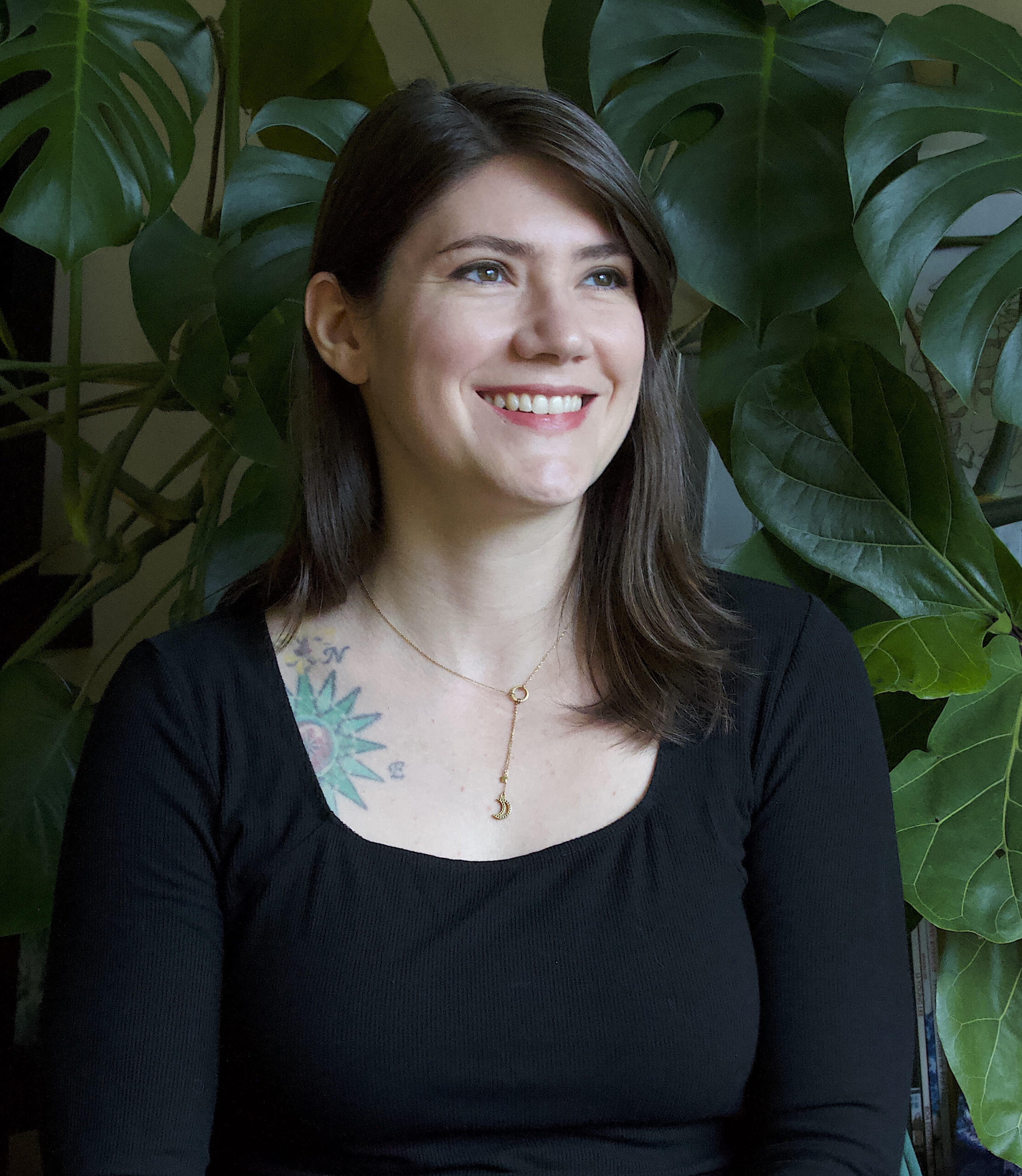
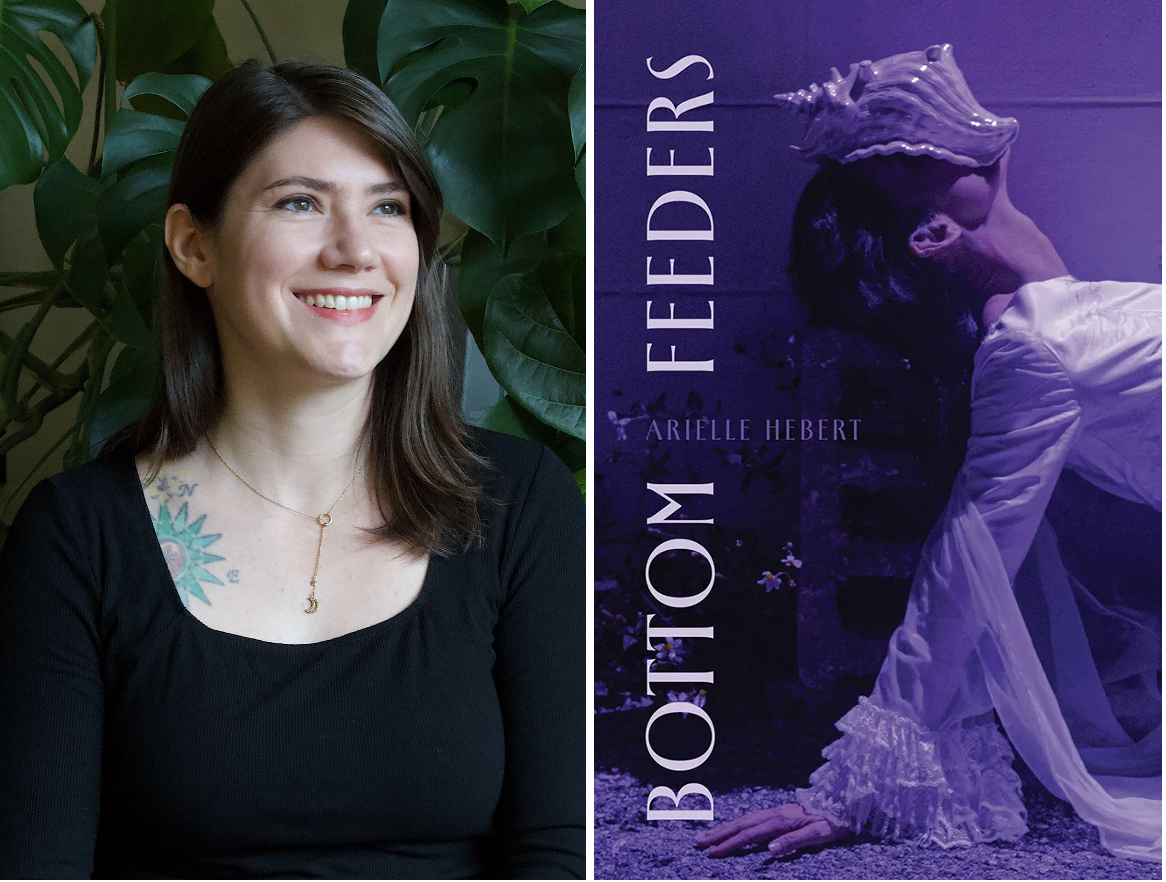
By MARY ANGELINO

#giftinspo for Cottagecore Girls

A sculpture bunny leaning against a book
 

Dispatch from Santa Clarita, California,
    nowhere near a cozy forest cottage, August, 2025

Nose heavenward, ears like capsized canoes,
I unbox a silver-gray rabbit, painted to look

metal and heavy. My new useless
bookend. Plastic. Stiff and unsteady—

I would have missed it on a shelf, out shopping
like people used to do, maybe held its weight

Three Poems by Mary Angelino
Read more...

January Poetry Feature #2: Words and Music(ians)

New poems by ALEKSANDAR HEMON and STEFAN BINDLEY-TAYLOR

This month we bring you new work by writers who also have careers in music.

 Table of Contents: 
—Aleksandar Hemon, “Snipers”
—Stefan Bindley-Taylor, “Naming the Wind” and “At our first house”


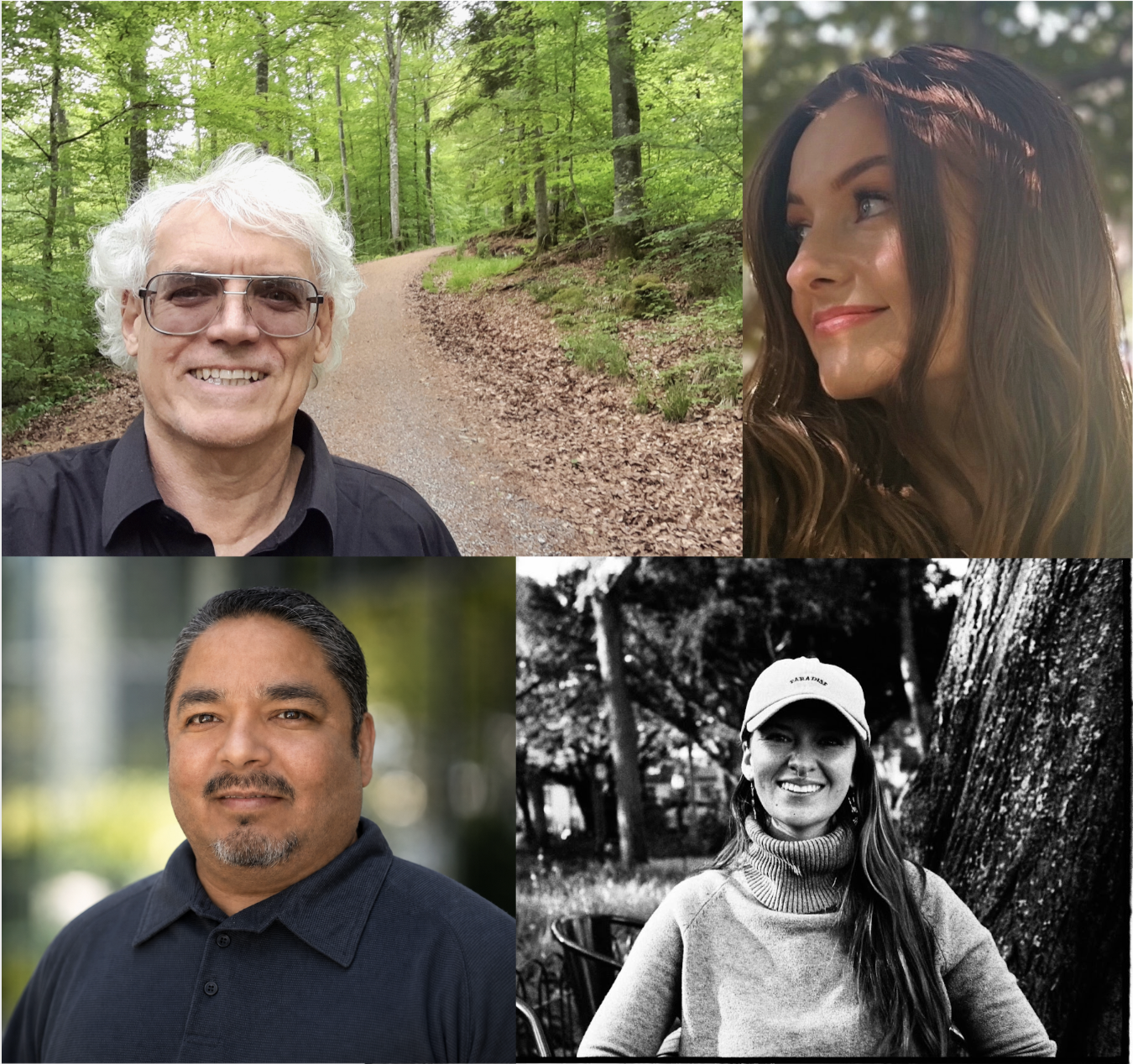
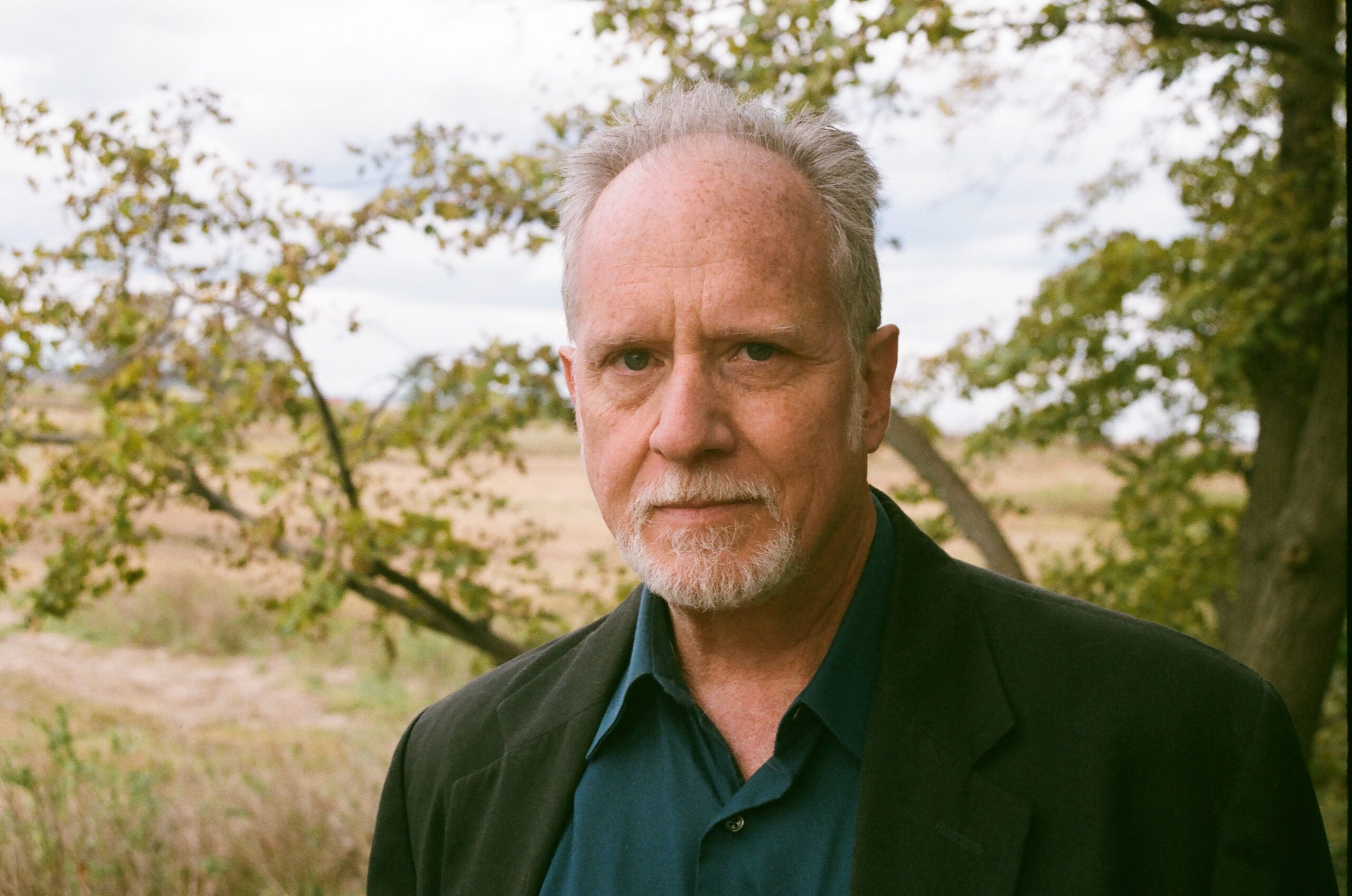
Aleksandar Hemon and Stefan Bindley-Taylor's headshot

Aleksandar Hemon (left) and Stefan Bindley-Taylor (right)


Snipers
By Aleksandar Hemon

Do you ever walk down an empty street
stopping, looking up and around to see
what position would a smart sniper pick?

Do you notice plants and pane refractions,
curler-haired ladies leaning out on the sills,
watching for what will surely come to pass?

Do you ever scan a room full of good people,
read their faces and elaborate frowns to guess
who among them thinks you ought to be shot?

Do you ever have a sense this is never ending
until all that is destructible is finally perished,
and you depart armed with the long memories

of yourself strolling down an empty street to look
up at the silver-haired ladies leaned on the sills,
waving to tell you your new life will be splendid? 


Naming the Wind
By Stefan Bindley-Taylor

And it was then that it came, that thing without a name, a quick caress across the check, careening from the nothing and back into the nothing it went. Whipping, I thought, but no that would never do, for whipping is a word that describes a real hell, not an imagined one, and one that I know somewhere in my blood is imprinted; though, I am so far from it as to be genuinely embarrassed.

So how to describe it then? Sight? Useless! For it was the color of air, which sounds like the title of a movie that would gain enough accolades to make it revolting to me. Is there then, the element of smell to turn to? But this too fails,  if only because I do not possess a strong sense of smell. I never have. My tongue was still too sopped in dessert wine to taste anything else, and all I could hear was that cork somewhere in the sea, floating or sinking, floating or sinking. In fact, I’m not sure I am led by my senses much at all, only by the gears in my head, so flat and mechanical, grinding everything into a thick paste.

And now that you are gone, I am sure I will never get a name for the thing, the memory of which still sits at a peculiar tilt in my chest, in a way that feels different than when I think of my birthday, or my father coming home. It is the feeling that reminds you that there is unconditional love in the world, and it is all yours if you want.

The world, in its unconditional love, has already given it so many names. Yet these are imperfect to me, like a chipped moon. The Solano for example, feels like something that goes on the sandwich. The Bora sounds like an uncontacted people, the Squall like an undiscovered sea beast, the Sirocco like a flavored vodka, and for god’s sake, The Haboob.  Not to mention the spin-off adjectives, psithurism, susurration, all experimental, all horrific.

Still, for a long time, this lack of name, the thing unnamed—not the thing itself but the unnamedness of the thing—has haunted me, and I have occupied myself trying to conjure it forth like a friendly specter. I want to pull an ancient monument from the sand, to stand before it, Herculean, to say this is your name, take it, take it and dance. Sometimes, at night, the crinkles of the pillow case comes close to naming it, scratching out a blurb a few syllables, maddeningly short, a long dash through some mysterious missing diphthong that should slot in just right, but is somewhere out there eluding, misshaping itself, deforming itself as to never return to where it belongs, or where others would have it belong. Though perhaps all I really want, if I think about it, which I try not to, is to ask you to name it. A task made impossible, and that is why it is the only task left that is worth anything. For I know that if you said it, somewhere from wherever you are, I’m sure I could hear, could feel, could touch, could, could see it, again, and I would think yes, that is it, that is the perfect one.


At our first house
By Stefan Bindley-Taylor

I came home to find your wings
could not fit under the bed.
So you had no choice
but to open the roof.

It was better that way.
When rain slicked the floor,
I picked bushels of mint that rose
beneath our bedsheets.

You threshed flowers to make
them go down easy.
But I wanted the dirt, the stems, the stone.
I brought my teeth to the edge of a field
and I chewed

until things became silent. At night
you pointed to the hole
above us, towards the stars you navigated so well.

I knew then nothing
could feel like your touch.
I fell silent and things became
still, like a comet or a current.
I said it.

And things became.
I say it again.
To see if they remain so.


Stefan Bindley-Taylor is a Trinidadian-American author, musician, and educator born and raised in Maryland. His stories balance absurdist humor with real emotion to showcase characters from the Caribbean diaspora through a nuanced, humorous, and humane lens. His recent and forthcoming work can be found in several outlets including Chautauqua, Adda, Brooklyn Rail, and NY Carib News. He is the winner of the 2025 Chautauqua Janus prize, the 2025 DISQUIET Flowers fellowship, a 2025 Kimbilio Fellowship, the 2024 Brooklyn Caribbean Literary Festival Prize, a short-lister for the 2024 Commonwealth Foundation Short Story Prize, and a finalist for the PEN 2023 Emerging Voices Fellowship. Outside of writing, Stefan has been a performing musician for over a decade. He writes and performs in a punk project called FISHLORD and an alternative hip-hop project called Nafets. He has amassed over 8 million streams worldwide between the two projects and landed sync placements with Netflix, HBO, Hulu, BET+, The CW, and more. He currently splits his time between New York City and Virginia and is pursuing his M.F.A at the University of Virginia.

Aleksandar Hemon’s poem is from his forthcoming collection, Godspotting, which includes work published in The New Yorker, The Yale Review, Harvard Review, and The Common. He is the author of The World and All That It Holds, The Lazarus Project, which was a finalist for the 2008 National Book Award and the National Book Critics Circle Award, and three books of short stories: The Question of Bruno; Nowhere Man, which was also a finalist for the National Book Critics Circle Award; and Love and Obstacles. He was the recipient of a 2003 Guggenheim Fellowship and a “genius grant” from the MacArthur Foundation, and the 2020 Dos Passos Prize. As a screenwriter he has worked on the Netflix show Sense8 and Lana Wachowski’sThe Matrix Resurrections. He produces music and DJs as Cielo Hemon, and Godspotting has a sonic equivalent as an album of the same name, already released: https://tidal.com/album/449872410/u. He has been Professor of Creative Writing at Princeton University since 2018.

January Poetry Feature #2: Words and Music(ians)
Read more...

January 2026 Poetry Feature #1: U-topias

By JILL PEARLMAN

I
Wondrous, the emptiness so close, close to an absent sea,
only sea-fields, wheat-fields, golden stubble,
though we were walking together on a path to find the sea.

Wandering together under a wide horizon. 
On a road called Pas de l’Assassin.

January 2026 Poetry Feature #1: U-topias
Read more...

December 2025 Poetry Feature #2: Lauren Delapenha, Aimee Nezhukumatathil, Robert Cording, and Rachel Hadas

New Work from LAUREN DELAPENHA, AIMEE NEZHUKUMATATHIL, ROBERT CORDING, and RACHEL HADAS

Table of Contents:
—Lauren Delapenha, “Exodus”
—Aimee Nezhukumatathil, “What They Didn’t Tell Me about Motherhood”
—Robert Cording, “A Sun”
—Rachel Hadas, “Matsinger Forest”


Headshot of Lauren Delapenha


Exodus
By Lauren Delapenha

The Times article is about the president’s mind
and Xerox-based enterprises like Kodak, Blockbuster, dead-end jobs, and marriages,

and I am so glad the article mentions marriages
given my recent apophatic commitment to romantic

ruination, because who among us hasn’t pressed a finger into the scab
for that foreign roughness, that delicious, needling shaft of sunk cost and thought

that anything is probable in the desert,
even Moses neatly halving an ocean for a nation

December 2025 Poetry Feature #2: Lauren Delapenha, Aimee Nezhukumatathil, Robert Cording, and Rachel Hadas
Read more...

December 2025 Poetry Feature #1: Rodrigo Toscano, Olena Jennings, Ezza Ahmed, and Wyatt Townley

New work from RODRIGO TOSCANO, OLENA JENNINGS, EZZA AHMED, and WYATT TOWNLEY

Table of Contents:
—Rodrigo Toscano, “One Like”
—Olena Jennings, “The Pine”
—Ezza Ahmed, “The River That Was and Wasn’t”
—Wyatt Townley, “The Longest View” and “Christina’s World”

One Like
By Rodrigo Toscano 

“Couple Bach preludes, a binding ceasefire,
One Dickenson poem, and we’re all set”
That was the post, like a gleaming beach pier
Charming half way out, torn up at the tip
Battered by statecraft, departmental verse.

December 2025 Poetry Feature #1: Rodrigo Toscano, Olena Jennings, Ezza Ahmed, and Wyatt Townley
Read more...

November 2025 Poetry Feature: My Wallonia: Welcoming Dylan Carpenter

By DYLAN CARPENTER

This month we bring you work by Dylan Carpenter, a poet new to our pages. Dylan also has poetry in an upcoming print issue of The Common.


Let me, for a little longer, ponder that familiar place
I remember but would not, could not, and had refused to face

Wholly as a place unto itself, instead of an idea
That concealed a recherché emotion: My Wallonia.

How do I begin? The place that I endeavor to portray
Languishes, a somnolent geography, and slips away.

November 2025 Poetry Feature: My Wallonia: Welcoming Dylan Carpenter
Read more...

Two Poems by Ahmed Bouanani, translated by Lisa Mullenneaux

By AHMED BOUANANI

Translated by LISA MULLENNEAUX

Portrait of person smiling and holding up their hand. Turned to the right.

Photo courtesy of Archives Bouanani

This country

My country is this horizon with blank pages
where I see skeletons of broken children
wandering, begging for the light of thin wisps
of stories that might finally appease them

In hands the color of amaranth magic
they hold hippogriffs like dogs
a talisman to protect themselves from the lover
with hair braided into black shapes

Two Poems by Ahmed Bouanani, translated by Lisa Mullenneaux
Read more...

Lawrence Joseph: New Poems

By LAWRENCE JOSEPH

Ontologies

The love the love that massively seizes me,

                                 the typewriter’s
ribbon needs replacing,

                                 the great imperial
power game the price of oil,

a call, a response, I know you know
how precious to care is, the voice on the record on

the turntable is singing.

Lawrence Joseph: New Poems
Read more...

Late Orison

By REBECCA FOUST

Let ours be the most boring of love stories, the happy-ending kind,
the obnoxiously-spooning-in-public kind,

the kind with a long denouement, tedious for everyone not actually
living it. This time around, let the only fireworks

Late Orison
Read more...

Waiting for the Call I Am

By WYATT TOWNLEY

Not the girl
            after the party
waiting for boy wonder

            Not the couple
after the test
           awaiting word

Not the actor
            after the callback
for the job that changes everything

            Not the mother
on the floor
            whose son has gone missing       

I am the beloved
and you are the beloved

            We’re all beside ourselves
            as the phone is beside ourselves

One hand grips the menu
the other covers the eyes

            Now the phone rings
            it is singing on the table

To the dog across the room
to the waitress who is waiting

            To the cat on the carpet
            to the couple in the next booth

But the heart is in the cupboard
breaking the dishes


[Purchase Issue 30 here.]


Wyatt Townley is poet laureate emerita of Kansas and has published six books. Her work has been read on NPR and has appeared in journals from Newsweek to The Paris Review, and Yoga Journal to Scientific American. Commissioned poems hang in libraries including the Space Telescope Science Institute, home of the Hubble.

Waiting for the Call I Am
Read more...