The Nature of a Hedge

By PAULA BOHINCE


The nature of a hedge is to be

high. To obscure. Look,

berries have appeared overnight, like

arson, a smolder of nest

rests in the ivy like a rowboat

gone over some falls.


I was wary, too wary,

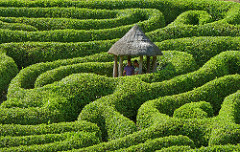
of the Tuileries’ mazes, man-

made spirals where boys and girls

disappear, wound

to the circular middle, lying upright

on branches to kiss.


The mouth opens, O

to be pressed against a breathing

wall, touched by a stranger

with such urgency, leaves hissing

encouragement, to be publicly

loved, to be privately. . . .


Give us a season of rest

from marriage. Recover us, as we

appear ill from the outside. Hide us

awhile, landscape wild and uncaring,

though it’s true the new bud

is choked by the dying.


Paula Bohince is the author of two poetry collections, both from Sarabande Books: Incident at the Edge of Bayonet Woods (2008) and The Children (2012).

Listen to Paula Bohince and Joshua Mehigan discuss “The Nature of a Hedge” on our podcast, Contributors in Conversation.

[Purchase your copy of Issue 06 here]

From the beginning, The Common has brought you transportive writing and exciting new voices. We are committed to supporting writers and maintaining free, unrestricted access to our website, but we can’t do it without you. Become an integral part of our global community of readers and writers by donating today. No amount is too small. Thank you!

The Nature of a Hedge

Related Posts

The Ground That Walks

ALAA ALQAISI
We stepped out with our eyes uncovered. / Gaza kept looking through them— / green tanks asleep on roofs, a stubborn gull, / water heavy with scales at dawn. // Nothing in us chose the hinges to slacken. / The latch turned without our hands. / Papers practiced the border’s breath.

A window on the side of a white building in Temple, New Hampshire

Dispatches from Søgne, Ditmas Park, and Temple

JULIA TORO
Sitting around the white painted wood and metal table / that hosted the best dinners of my childhood / my uncle is sharing / his many theories of the world / the complexities of his thoughts are / reserved for Norwegian, with some words here and there / to keep his English-speaking audience engaged