
This month, we’re pleased to bring you poems by contributors NATALIE BAVAR, PETER COOLEY, GARY J. WHITEHEAD, ANNA LENA PHILLIPS BELL, and JEFFREY HARRISON.
Table of Contents
- Natalie Bavar, “Summer’s Second Sign”
- Peter Cooley, “Proem”
- Gary J. Whitehead, “Elegy for Evan”
- Anna Lena Phillips Bell, “Glass”
- Jeffrey Harrison, “Abroad”

Top, left to right: Natalie Bavar and Peter Cooley. Bottom, left to right: Jeffrey Harrison, Gary J. Whitehead, and Anna Lena Phillips Bell.
SUMMER’S SECOND SIGN
By: Natalie Bavar
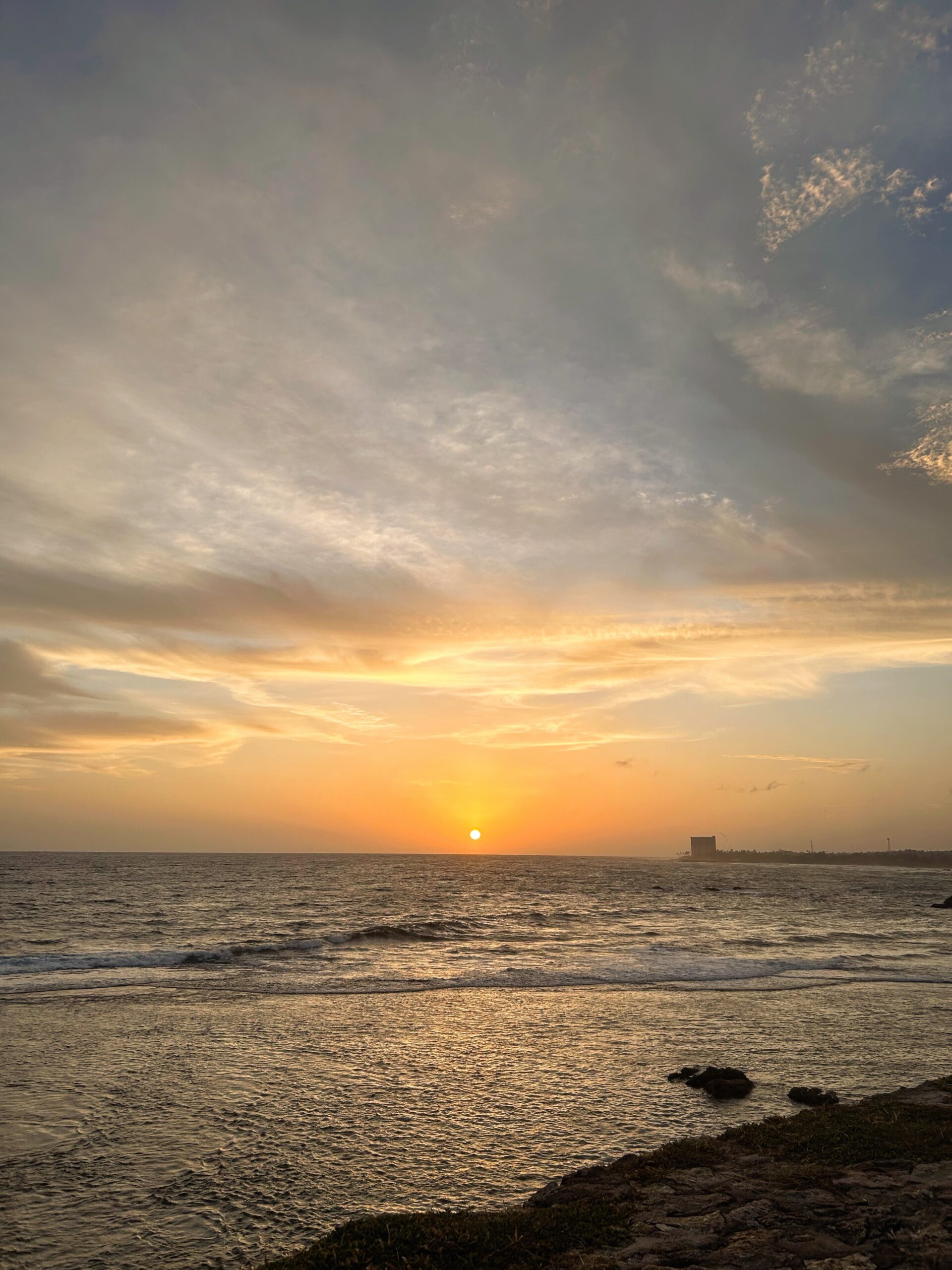
The scent of freshly mown grass cuts
through the brine of the receding tide
baking in the June sun. Whichever ocean
secrets remain at low tide will be revealed
by the methodology of the gulls.
They await in the wings anxious
to scoop up their hard-earned morsels,
dash them to the stones repeatedly—
these loud, airborne waves.
I squint and hope that the bird-shaped
smudges on the horizon are the buffleheads
I’ve been awaiting. These are summer’s
true criers.
Along the bend of the cove, where Great
Egrets have yet to wade, a goose searches
its mirror image then waddles
onto shore. It has no way (or need)
to know that it’s on private property.
I admire the dogwood at the edge
of the construction site and think
of the tree that adorned the window
of my childhood bedroom.
Further along the bend, I pass by
a discarded pair of winter boots
and savor this impossible but real
touch of heavy-handed symbolism.
I cradle the jaw of the cove
in my mind and try to move on
as if I could ignore the forceful
caress of this heat.
PROEM
By: Peter Cooley
Often I have to eat the afterbirth after one of my reborn mornings.
Called down,
Called up,
Called diagonally,
It’s always the same
Long calling to god’s God,
God’s gods,
First birds
Celebrate this morning.
The same
Clouds part
To bifurcate the sun,
And if my answer’s slight
Well, I’m a small man,
Standing millimeters
Taller
In my answers, tremulous—
Elegy for Evan
By: Gary J. Whitehead
I didn’t know you but I knew your peers.
They began their senior year carrying books
and notebooks and the weight of betrayal.
They had lived that long with only living.
Your name on my roster was two words
I kept rereading, was a cliff in Alaska,
was a boy with a ponytail, a photo on a locker
scrawled with notes in permanent marker,
since permanence was what they needed.
Those warm September mornings
your friends seemed wrinkled in their grief,
and they wanted me to read to them—
“Anthem for Doomed Youth,”
“The Charge of the Light Brigade.”
Then, by late October, the leaves falling
and the first snow jacketing the courtyard statue,
it seemed the wound had festered
into bitterness at the world, and even at me
and the things I made them read.
Passing your locker, with its withered flowers
and, in February, its paper hearts and candy,
I sometimes thought of your parents
and the accident, that summer trapped inside
them now like a creature inside a glacier,
their flying your body back, their Tenafly home,
your room. O, Evan, I came to hate
your locker and your name. Forgive me.
Forgive your friends, who graduated and live still.
Forgive the relief I felt the following fall
when, at the start of school, your locker
had been painted blue like every other.
Glass
By: Anna Lena Phillips Bell
All material is suspect
once a human’s touched it.
Even sand: carted away
from where it was, made molten,
blown into a shape
by someone who wanted to
or didn’t. Tempered, cooled,
staying clear so you
can see the air it’s in.
Fill it to see the water,
clear, too, if you’re lucky.
You have to drink.
The lip, made, by someone,
as smooth as your own lips,
makes any water sweeter.
Abroad
By: Jeffrey Harrison
“…people do not die for us immediately, but remain bathed in a sort of aura…
through which they continue to occupy our thoughts in the same way as when
they were alive. It is as though they were traveling abroad.”
—Marcel Proust
“Asking him the way
Bent and washing radishes
‘Walk on, East or West’”
—Mark Lanier
When I emailed you about getting together,
you wrote back saying, “I am on the road.”
So I was already imagining you elsewhere—
maybe New Orleans or San Francisco—
when, the following week, I got the news
that you had killed yourself.
It turned out you’d been home the whole time.
And then I couldn’t imagine you anywhere
but there, in your cluttered house: river stones
and piles of books going all the way up the stairs,
the dining room table covered with magazines
and newspapers (the salmon-colored Financial Times).
But you were dead, and I could only picture you
in final postures I didn’t want to imagine.
So it was a blessing when, a few months later,
I came across that passage from Proust.
It helped me to think of you traveling
in some of your favorite places: Amsterdam,
smoking a joint at a coffee shop, or Kyoto,
wandering the narrow streets of the geisha district,
or outside Shugakuin Imperial Villa, where you
once met a farmer washing radishes in a tub:
“Twisting and scrubbing. Turning and washing.
Their skin becoming a shiny white. The beginning
of luster,” you wrote when you sent me your haiku.
If only I could send this poem to you,
and you could pick it up at American Express
the way, in 1989, I picked up your letter
at their office near the Spanish Steps
a few doors from the house where Keats died.
In it, you describe your newborn son.
“Everyone thinks he looks like me—
what bald, round, chubby face wouldn’t?”…
Birth and death, east or west, what direction
are you heading next, what marvels
are you discovering along the way?
Natalie Bavar is a poet based in Salem, MA. Her work engages with the complexity and confusion of her mixed identity (Brazilian, Iranian, American) and the arresting power of mundanity. She holds an MFA from Boston University, and her poetry has appeared in the South Dakota Review, RockPaperPoem, and more.
Anna Lena Phillips Bell is the author of Might Could, forthcoming from Waywiser Books, Ornament, winner of the Vassar Miller Prize, and the chapbook Smaller Songs, from St Brigid Press. She is the winner of the Winter Anthology Contest and the recipient of support from the Sewanee Writers’ Conference and Marble House Project. Bell teaches at UNC Wilmington, where she is the editor of Ecotone. She lives with her family near what’s now called the Cape Fear River.
Peter Cooley, the former poet laureate of Louisiana, has published twelve books of poems, most recently ACCOUNTING FOR THE DARK. He is a professor emeritus at Tulane University in New Orleans.
Jeffrey Harrison’s seventh book of poetry, Sightings, will be published by Four Way Books in fall 2027. Poems from the collection have appeared in Best American Poetry 2024, Best American Poetry 2025, The Threepenny Review, The Paris Review, The Hudson Review, Ploughshares, The Yale Review, Poem-a-Day, and elsewhere. His essay “The Story of a Box,” about Marcel Duchamp and his family, was published in The Common in 2023 and subsequently listed as a Notable Essay in Best American Essays 2024.
Gary J. Whitehead‘s fifth book of poems, Seeing Double, will be published this spring by Terrapin Books. His poems have appeared in The New Yorker, Ploughshares, Parnassus, and The New Criterion, and a previous collection, A Glossary of Chickens, was chosen for the Princeton Series of Contemporary Poets and published by Princeton University Press. He has been the recipient of a New York Foundation for the Arts Fellowship in Poetry and the Anne Halley Poetry Prize from The Massachusetts Review.