You Might Have Been My Brother

By TANG DANHONG

Translated by STEPHEN HAVEN and LI YONGYI
You might have been my brother, especially at dawn
Milky vapors rise into the sky,
That white adolescence wafting into my lungs.

But I woo that white air,
Let it grow wings of a peacock,
Naïve and overwhelmed with joy.

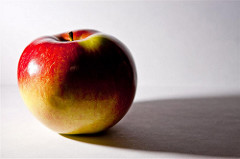
You might have been my apple, especially today,
But the mashed pulp soured,
Like a tuft of hair bleached in time.

Only the Adam’s apple allowed me to breathe,
To marry my feathers to your rooted tree,
But you saw through all this.

You might have been my ghost, especially tonight,
A shy corner of my ballet,
A painting, a flower, asking an exact identity.

How could I know she was there all the time,
A magnolia blooming in schizophrenia,
The vulva of an angel roving the sky
Crushing anyone who dared to stare.

Forgive the shout of the peacock’s tail.
Mercy to my lungs blowing white gales,
Always the anxious prisoner.

 
Tang Danhong was born in Chengdu in 1965. She is widely regarded as an avant-garde feminist poet and innovative filmmaker, drawing critical attention with her presentation of female sexuality and her culturally charged documentaries on Tibet. She was awarded the prestigious Liu Li’an Poetry Prize in 1995. Her most recent collection of poems appeared in 2012, The X-ray, Sweet Nights.

Stephen Haven is the author of The Last Sacred Place in North America (2012, winner of the New American Press Poetry Prize). He has published two previous collections of poetry, Dust and Bread (2008, for which he was named Ohio Poet of the Year), and The Long Silence of the Mohawk Carpet Smokestack (2004). He directs the MFA Program in Creative Writing at Ashland University, in Ohio. He was twice a Fulbright Professor of American literature at universities in Beijing.

Li Yongyi is Professor of English at Chongqing University, in Chongqing, China. He was a 2012–2013 Fulbright Scholar in Residence at the University of Washington. His major fields of scholarship include Anglo-American modern poetry, classical Roman poetry, and classical Chinese poetry. He has translated fourteen books into Chinese from English, French and Latin. His translation of Carmina was the first Chinese translation of the entire body of Catullus’s poetry. He is the author on one collection of his own poems, Swordsman Poet Phantom.
[Purchase your copy of Issue 10 here.]

From the beginning, The Common has brought you transportive writing and exciting new voices. We are committed to supporting writers and maintaining free, unrestricted access to our website, but we can’t do it without you. Become an integral part of our global community of readers and writers by donating today. No amount is too small. Thank you!

You Might Have Been My Brother

Related Posts

Mountain, Stone

LENA KHALAF TUFFAHA
Do not name your daughters Shaymaa, / courage will march them / into the bullet path of dictators. / Do not name them Sundus, / the garden of paradise calls out to its marigolds, / gathers its green leaves up in its embrace. / Do not name your children Malak or Raneem, / angels want the companionship

Book cover of suddenly we

Poems from suddenly we by Evie Shockley

EVIE SHOCKLEY
one vote begets another / if you make a habit of it. / my mother started taking me / to the polls with her when i / was seven :: small, thrilled / to step in the booth, pull / the drab curtain hush-shut / behind us, & flip the levers / beside each name she pointed / to, the Xs clicking into view. / there, she called the shots / make some noise.

Map

DANIEL CARDEN NEMO
If I see the ocean / I think that’s where / my soul should be, / otherwise the sheet of its marble / would make no waves. // There are of course other blank slates / on my body such as the thoughts / and events ahead. // Along with the senses, / the seven continents describe / two movements every day