 Why Teach The Common?
Teach The Common in your classroom and receive discounted subscriptions, a free desk copy, and lesson plans.
A classroom subscription includes two issues for every student, and a virtual class visit from Editor in Chief Jennifer Acker or a participating author.
Learn more about teaching The Common or contact us for more options.
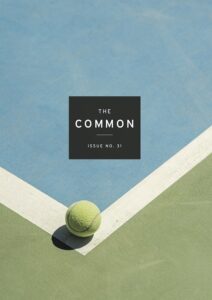
Supplementary materials for teaching Issue 31 are listed below.
Lesson plans for Issue 31: Download materials here.
Developed by Mary Shaver, an instructor at the University of South Florida. Detailed lessons for poetry, fiction, and nonfiction.
For further exploration, here and elsewhere
Sindya Bhanoo writes about corruption in the Indian government in her short story “Dead Man’s Association,” set in the state of Tamil Nadu. Students interested in more of Bhanoo’s reporting about India can listen to a podcast about the country’s coal industry here (via PRX).
Students who enjoyed DéLana R. A. Dameron’s “Pal O Mine,” an excerpt from her forthcoming posthumous novel Fairfield County, can learn more about her career writing the Black South in prose and poetry in this remembrance from The New York Times.
In “Ex Situ” by Liz DeWolf, the protagonist learns about Byzantine-era ships found under a construction site for Istanbul’s new metro station. To learn more about the real-life discovery and view photos, click here (Institute of Nautical Archaeology).
Students eager to hear more from Lauren Acampora about her work can read an interview with The New England Review about another of her short stories, this one set in India.
Natalie Linh Bolderston’s essay explores the author’s fascination with her mother’s storytelling abilities. Students can read Vietnamese folktales here and learn about the country’s centuries-long history of imperialism through this brief video.
Ro Skelton’s essay “Naow’s Boutique” takes place in Dakar, the capital of Senegal. Language and linguistic diversity is a recurring element in the essay, and students interested in learning more about Senegal’s diversity can read this brief article (via Howard University).
L. S. Klatt has been a frequent contributor to The Common over the past decade and a half. Students who’d like to explore more of Klatt’s work can read his poem “The Lifesaver” or listen to his podcast conversation with poet Oliver de la Paz.
Deaccessioning describes the formal process of removing an artwork or object from a museum or archive’s collection. Two of the artists mentioned by Hadas include James Rosenquist and Robert Rauschenberg. The Guggenheim Museum offers outlines for discussions and classroom activities based on Rosenquist’s collages here. View some of Rauschenberg’s prints courtesy of MoMA here.
For more context for “Leaving Lviv” by Olena Jennings, read about the war in Ukraine and its developments here and watch a video of what Lviv looks like during wartime.
Ezza Ahmed’s work frequently concerns itself with water. In her poem “In Place of River I’ll Use [God]” she writes about monsoon season, which often has a deeper cultural symbolism for many regions of the world. Read more about the cause of monsoons here, and another water-centered poem from Ahmed published with Adi Magazine here.
Stefan Bindley-Taylor’s prose poem “Jesus’ Body Found Outside Ice Cream Parlor in Black Suburb” feels as much like fiction as it does poetry. Students interested in reading more of Bindley-Taylor’s fiction can read his story “The Trouble with the Dog” (The Brooklyn Rail) and “Wrinkle Release” (Adda).
Ru Freeman’s poem “Ponder Heart” bounces between Paris, the Amalfi Coast, Ireland, and America. For more commentary from Freeman on the importance of a global approach to literature, read her essay in Lit Hub.
Kashmir is a region long-contested between India and Pakistan that has experienced decades of fighting since the partition of India in 1947. Read about book banning and the South Asian conflict here (via The New York Times).
In Boris Dralyuk’s “Legion,” he writes about a memorial on Catalina Island for C.H. Krumm, who died in World War I. Students can learn more about the intriguing history of Catalina Island and view historic photos from the LA County Library here.
To hear more from Nina Fuller about her work photographing farm animals, watch a short video about her work here (via Portland Art Gallery).
See all of Issue 31.
Don’t miss: Genre-based Anthologies | Participating Authors | Lesson Plans | FREE Sample Issue | What Teachers Are Saying