I rode a slow bus out of blackness.
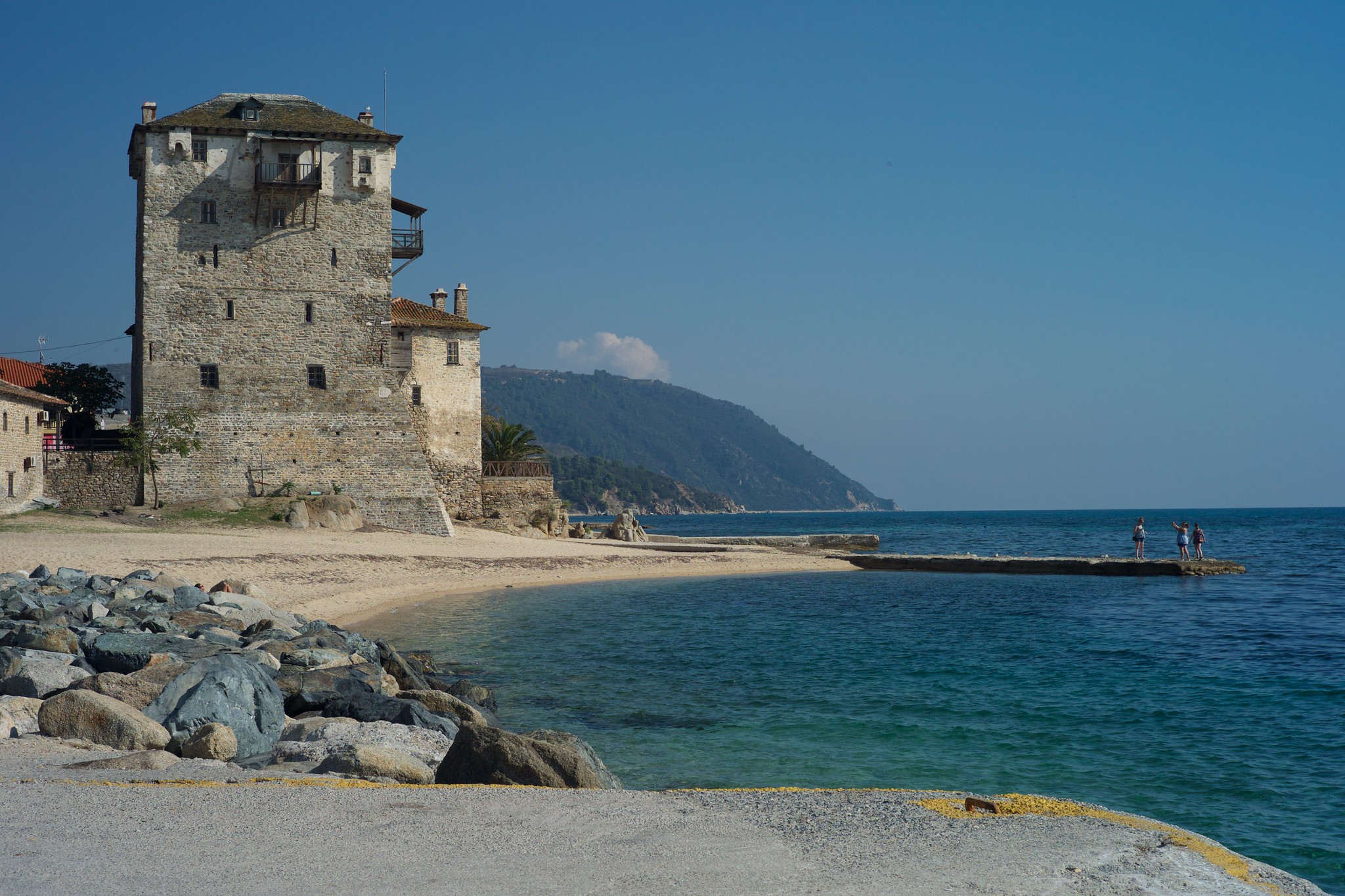
Five a.m. in northern Greece.
The language, blurry and mumbled.
I paid pastel money for a bus
ticket to Ouranopolis whose name
means “City of Heaven.”
The port window, chilled against
my leaning head. The darker black
of a mountain range, the same side.
The bus journey, a pilgrimage
silently into myself. Light thinning
by my sleepy passage. How I love
to live in this deepest blueness.
The pale sun rose for moments,
only to be lowered again
by the ascending mountain-slope.
A second sunrise two miles further.
Then, the higher, final crags of stone
back into darkness. A third
sunrise finally firming the world
into morning. All I could do was
cover my worn youth and settle
into my new adulthood, traveling
alone to find my place, some
answers, rising slowly into light.
Nicholas Samaras is from Patmos, Greece (“Island of the Apocalypse”) and, at the time of the military dictatorship, ended up living in Asia Minor, England, Wales, Brussels, Switzerland, Italy, Austria, Germany, Yugoslavia, Jerusalem, and thirteen states in America, and subsequently writes from a place of permanent exile. Author of Hands of the Saddlemaker and American Psalm, World Psalm, he is currently writing a manuscript on his time as a runaway.