By LANDA WO
“Grief is never more than a house being rebuilt.”
Ntolle Mbuyi1
Little Cabindan history
All the Cabindan strategies were there
To mount the portrait of a free Cabinda.
The historic chief discoursed on education
The Cabindan earth sketched a faint smile.
The old lion of the FLEC2
Brought the discussion round to multi-partyism
The Cabindan earth moved its sarong.
The archbishop in his dress of light
Evoked Christian values with his sweet voice
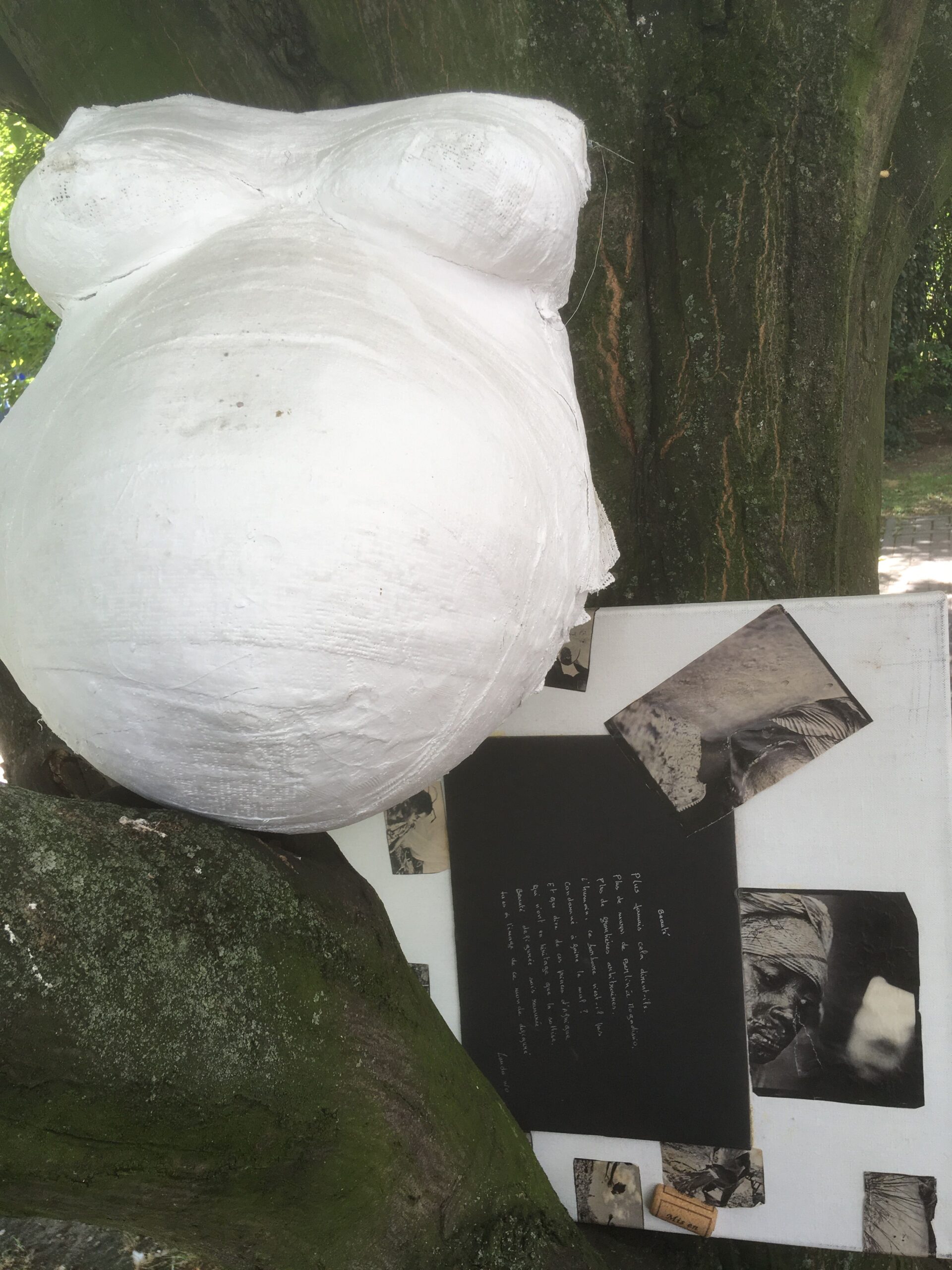
the Cabindan earth discovered a heavy breast
To feed the last child
The Cabindan earth represented a dumb woman
Who knew how to read beyond the fine words.
These men all dreamt of evenings in Talatona.
The Cabindan earth knew how to discern the clever eye
That dreamt of the casinos of Sun City.
The Cabindan earth a little sad recognised that they would go
All of them one day to dine in the Torre Ambiente in Luanda.
The Cabindan woman remained dumb.
What good talking to men without ears?
She placed the thin child on the ground
And left the house watched by the men.
The design of the hips of the Cabindan woman
Recalled the men to their instincts.
The rebellious flesh of the archbishop stirred.
The archbishop looked into the void.
The Cabindan woman went towards the ocean.
She lay down on the beach and offered herself to the waves.
Océano3 came to join her.
They made love offshore
They disappeared under FPSO Pazflor.
Four misshapen daughters were born of this union
Perpétua the beautiful
Hortensia the prude
Zinia the religious
Acacia the vicious
The archbishop kissed the foreheads of the newcomers
The Cabindan earth opened its arms.
The Cabindan earth put its sarong back on.
The spirits of Tchiowa went back to sleep.
From these four new stomachs
A rain of combatants was born.
From the shadow of a calabash came the murmur of Essungo4:
“To fight for one’s liberty without knowing
What to do with one’s liberty is a vain struggle.”
Landa wo’s poetry has appeared in a variety of publications, including Bellingham Review, Black Warrior Review online, Cultura—Jornal Angolano de Artes e Letras, Michigan Quarterly Review, Nashville Review, Poetry New Zealand, Raleigh Review, Salt Hill, Spillway, Tule Review, The Cape Rock, and elsewhere. His work has been anthologized in Landing Places: Immigrant Poets in Ireland and Writing Home: The “New Irish” Poets. With roots in Angola and Cabinda, Landa wo is an Afro-French poet. Politically engaged, his work deals with prominent issues of social justice, discrimination, and cultural strife. He can be found on Twitter @wo_landa.
Footnotes
1He who gives out vices (Angola/Cabinda)
2Front for the Liberation of the Cabindan Enclave
3Painter of the depths (Angola/Cabinda). He paints the portraits of all those drowned for millennia.
4The Cabindan fishmonger whose one eye serves as weighing-scales and purse at the same time.