Friendship Park (San Diego–Tijuana)
New poems by Nathan McClain, Sara Elkamel, and Brian Simoneau
NATHAN MCCLAIN | The Flowers
| At the Park, a Boy’s Birthday
SARA ELKAMEL | Instructions for getting around a desert
BRIAN SIMONEAU | Each morning I get up I die a little
NATHAN MCCLAIN
The flowers
in the greenhouse
now flowers
in the supermarket
rubber-bound
clipped
from wherever
they seemed almost
to nod
their agreement with what
the breeze once said
now flowers
in some glass vase
on the dining room table
where no one eats
What race they are
doesn’t matter nor if
their stems are thorny
you see
They’re just flowers
They die
You walk by
them all the time
hardly thinking
twice about their names
At the Park, a Boy’s Birthday Party
No surprises here, really.
Not the plastic,
white cutlery
or the fancy glass bowl,
cubes of pineapple
and Bosc pear
floating in punch
(naturally red)
that no one
(thank the Lord)
has thought yet to spike.
Each boy, blindfolded,
spun in place, and shoved
down the piñata’s path
with a bat
he can barely lift,
the piñata star-shaped,
tasseled pink at its ends,
seems accurate.
At this age,
their limbs
inarticulate as the smoke
of catfish or pork ribs
that hiss on the park grill.
They hardly notice
the sun’s descent.
It’s getting late, I think
to say as someone’s father
knots the blindfold
over my eyes. Fits the bat
into my hands. In my ear,
the boys shriek, and there—
the star,
snagged in the oak
of my mind, the rope,
swaying
almost gently. How,
even dizzied,
do I step towards it?
SARA ELKAMEL
Instructions for getting around a desert
The bride is seeing ghosts today.
She stands expertly with unease
as subtle as a sweet surprise
dissolved under a cloud.
There is nothing around
to quiver. Just our unkindness
pouring out our hands
like sand.
When they describe sugar
they say it looks
like salt. Feels the same when
bitten. For its gentleness,
ideal as a cure for dryness,
acidity, soreness, even weak
eyesight. But when she sees
the same dream twice, the bride
self-medicates: dissolves elsewhere
in gentle hot earth. Fills
her palms with salt, but
are these the kinds of gifts
you give at the end?
How red is a red infinity
if you give it your back,
your head like a rosefinch
caught in the horizon.
How infinite?
BRIAN SIMONEAU
Each morning I get up I die a little
A truck rumbles the day to life, lifts with robotic arm our bin
and sets it softly down. We are living in the future
and the future brought pain to ankles, to knees, my temples
rendered gray. So today I don a fraying t-shirt, silk-screened
logo faded the way our favorite mix-tape songs now slip
from digital lives. What’s come won’t come undone, summer
hungover, and the slang we sang unstrung, each year a little
harder to believe. I walk the girls to school over squares
of cement cracked by frost and passing to nowhere, corners
with no corner stores, even gas stations an indecent drive
away, past bedroom after bedroom, two-car garages hiding
if people are home or not. Kids on the street wait for the day
to begin with vinyl seats and backpacks on laps, their task
what it is for us all: remake themselves to the minute at hand.
Unshaven, unshowered, a baseball cap tugged into place,
I flip-flop down the block, stop to watch a helicopter
overhead. I will hop and skip. I will not step on a crack.
Nathan McClain is the author of Scale(Four Way Books, 2017), the recipient of fellowships from Sewanee Writers’ Conference, The Frost Place, the Bread Loaf Writers’ Conference, and a graduate of Warren Wilson’s MFA Program for Writers. His poems and prose have recently appeared or are forthcoming in Poem-a-Day, The Baffler, West Branch Wired, upstreet, and Foundry. He teaches at Hampshire College.
Sara Elkamel is a journalist and poet, living between Cairo and New York City. She holds an M.A. in arts and culture journalism from Columbia University. Her writing has appeared in The Guardian, The Huffington Post, Guernica, The Common, Winter Tangerine, American Chordata and elsewhere.
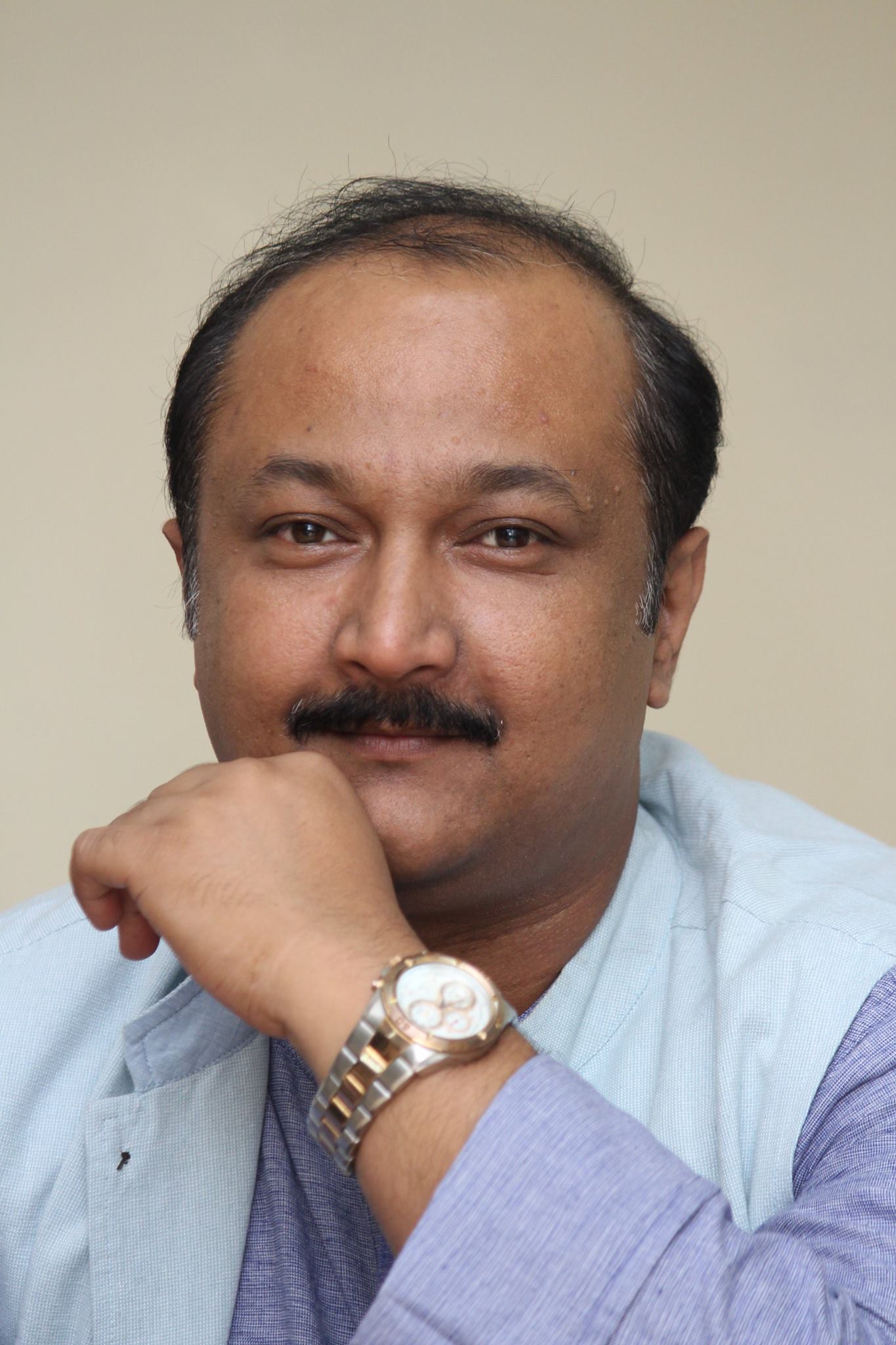
Brian Simoneau is the author of the poetry collection River Bound (C&R Press, 2014). His poems have appeared in Boston Review, Cincinnati Review, Colorado Review, Crazyhorse, The Georgia Review, Mid-American Review, Southern Indiana Review, Third Coast, and other journals. Originally from Lowell, Massachusetts, he lives near Boston with his family.
We arrive at night, landing at West Palm International, still wearing jeans and fleece jackets as we step into the Florida night and walk to the taxi stand through air softened by warmth and humidity. Fifteen minutes later my sister and I stumble over the tiny brick path that leads from the edge of the cul-de-sac to the front door, swatting at mosquitos while my dad punches in the security code, everybody exhausted but excited to finally be back. It’s always like this, in all my memories of the place – an evening flight out of Boston landing us in West Palm sometime between ten and midnight, the night always clear, the air a humid 73.
The house belonged to my grandparents. Every February while I was in elementary school, my family would stay there for a week, a brief respite from the New England winter. My grandparents purchased the house as an eventual retirement home, but my grandfather had still not retired, and so the house occupied a strange sort of limbo, going entirely un-lived-in over the summer, and seeing only nine or ten weeks of use in the rest of the year. We returned each year to a sterile, static domicile that was clearly nobody’s home, greeted by the same immaculate white carpets, spotless tabletops, and barren kitchen. The house felt like a blank canvas over which our vacations were painted; it functioned simply as a base of operations. And this was the role my parents wanted it to play, because they were always desperate to get out of the house, to not let their week off go to waste. But for me, the house, and the similarly sterile neighborhood around it became the consummate vacation setting. February vacation came to be synonymous with Florida, the days 80 degrees and sunny, the blacktop so hot that wiffleball games couldn’t be played barefoot, the nights cool and humid and echoing with the hooting, melancholy whistle of the night train that passed along the outskirts of the gated community just after my nine-thirty bedtime.
Three weeks ago, my 11-year-old Indian American cousin woke me up with a series of heartbreaking text messages. Didi you up? Mom dad and everyone else can’t stop watching the news. Theyre thrilled. Kashmir sounds like kishmish. Whats the lime of control btw? Why do hindus dislike muslims? I had not yet gotten out of bed in my small, sleepy university town in Western Massachusetts. But my aunt and uncle were up early in the morning as friends and neighbors, fellow upper-caste pajama-clad Indian Americans with unbrushed teeth and undemocratic hearts, had gathered in their New Jersey apartment to watch the Home Minister of India officially and unilaterally revoke the special status of Jammu and Kashmir, live from the parliament.
Part of what makes Jammu and Kashmir special is what makes India special. As a kid, I used to mug up from my school textbooks that India is the land of festivals, colors, dances, languages, religions, so on and so forth, but I was unable to appreciate the water in which I was a fish. Now when I go for months without hearing words that I don’t understand, as every cashier in every store asks me to ‘have a good one’ in the exact same tone and pitch, I have to listen to a Rajasthani or a Tamil song just to reorient myself. I need to know that there will always be so much that I don’t know. Therefore, I must constantly remember India, much of which is sort of me but not quite me, because it makes me feel bigger than myself.
Curated by SARAH WHELAN
The Common is a proud recipient of a Whiting Literary Magazine Prize, and our staff are ready to celebrate! In conjunction with the Brooklyn Book Festival, you’re invited to join Whiting Prize winners The Common, Black Warrior Review, American Short Fiction, The Margins (Asian American Writers Workshop), and The Offing for an evening of literary merriment at LIC Bar in Long Island City. Event details can be found here.
If you’re already as excited as we are, please enjoy this month’s Friday Reads as a special treat – featuring reviews from editors at all the winning publications.
Recommendations: When You Learn The Alphabet by Kendra Allen; Two Lives: A Memoir by Vikram Seth; The Year of Blue Water by Yanyi; Shade It Black: Death and After in Iraq by Jess Goodell; A Feather on the Breath of God by Sigrid Nunez.
Start small. Your brain created this mess; it can get you out. Right?
The key must be to think the right thoughts. Your elaborate rituals have so far kept the airplane from nose-dive and tailspin, but they don’t prevent that boulder of fear from implanting itself cozily in your gut weeks ahead of any flight. You first notice its presence the year your annual life tally reaches nineteen, the year the solid base of your adolescent invincibility begins to erode under waves of ontological dread—like this whole time it was just made out of stale bread, not stone at all, and now it’s sogging apart.

Gloria
After the rain, we get slices
of the grey and yellow world
which slip through the earnest bunches of acorns
in sheets of diffuse, papery light.
Book by MARIA TERRONE
Review by SUSAN TACENT

Maria Terrone’s grandparents were among the estimated nine million people who emigrated from Italy between 1881 and 1927. While her parents were born in the United States, her connection to Italy is deep, informing her identity and experiences as much as being a lifelong New Yorker has.
Essay by HISHAM BUSTANI
English translation by ROBIN MOGER
Essay appears in the original Arabic here.
An introductory essay to Stories from Syria, a portfolio published in English by The Common and in Arabic by Akhbar Al Adab (Egypt).
Today, in the second installment of a transatlantic literary collaboration which I hope will last for many years to come, Akhbar Al Adab publishes the original Arabic texts of stories by Syrian writers whose English translations appear in a special portfolio in Issue 17 of The Common, a literary magazine based at Amherst College. The first portfolio in the series contained stories by Jordanian writers and was published in Issue 15 of The Common, which followed the collaboration’s inaugural project: an issue of the magazine (Issue 11, Spring 2016) entirely dedicated to contemporary Arabic literature in translation entitled Tajdeed (Renewal), in which editor-in-chief Jennifer Acker and I selected stories and artworks by twenty-six writers and five artists from fifteen Arabic-speaking countries, with eighteen translators bringing the work into English.

The Common is an award-winning literary magazine. Beautifully designed with French flaps, reader-friendly fonts, and full-color image galleries, each issue features writing from all over the world—and a print subscription costs less than a tank of gas. Subscribe today to explore the world with The Common.