All posts tagged: Palestine

The Ground That Walks

By ALAA ALQAISI


Gaza, Palestine

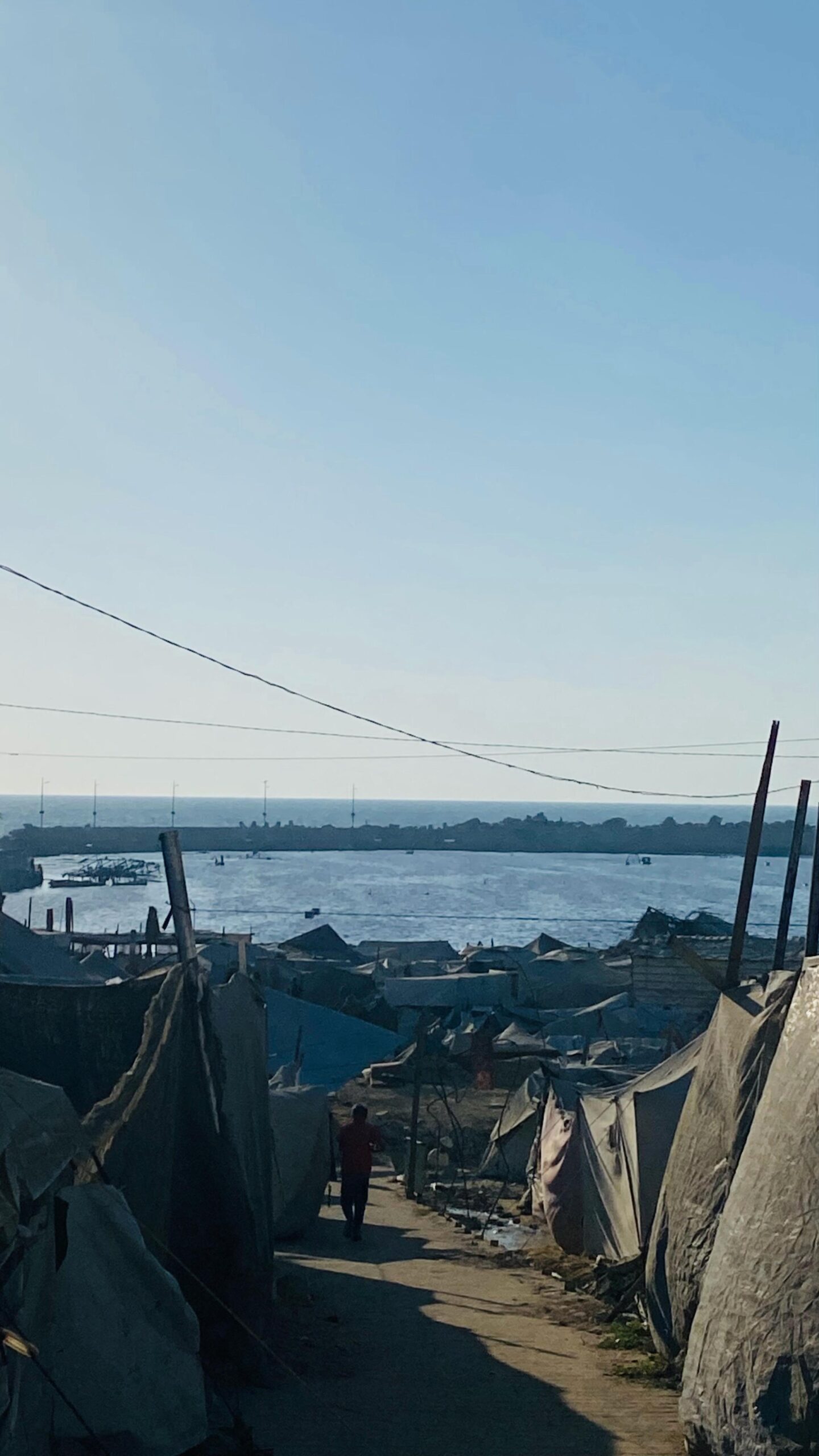
We stepped out with our eyes uncovered.
Gaza kept looking through them—
green tanks asleep on roofs, a stubborn gull,
water heavy with scales at dawn.

Nothing in us chose the hinges to slacken.
The latch turned without our hands.
Papers practiced the border’s breath.
On the bus, the glass held us—
a pond that would not name who stays.
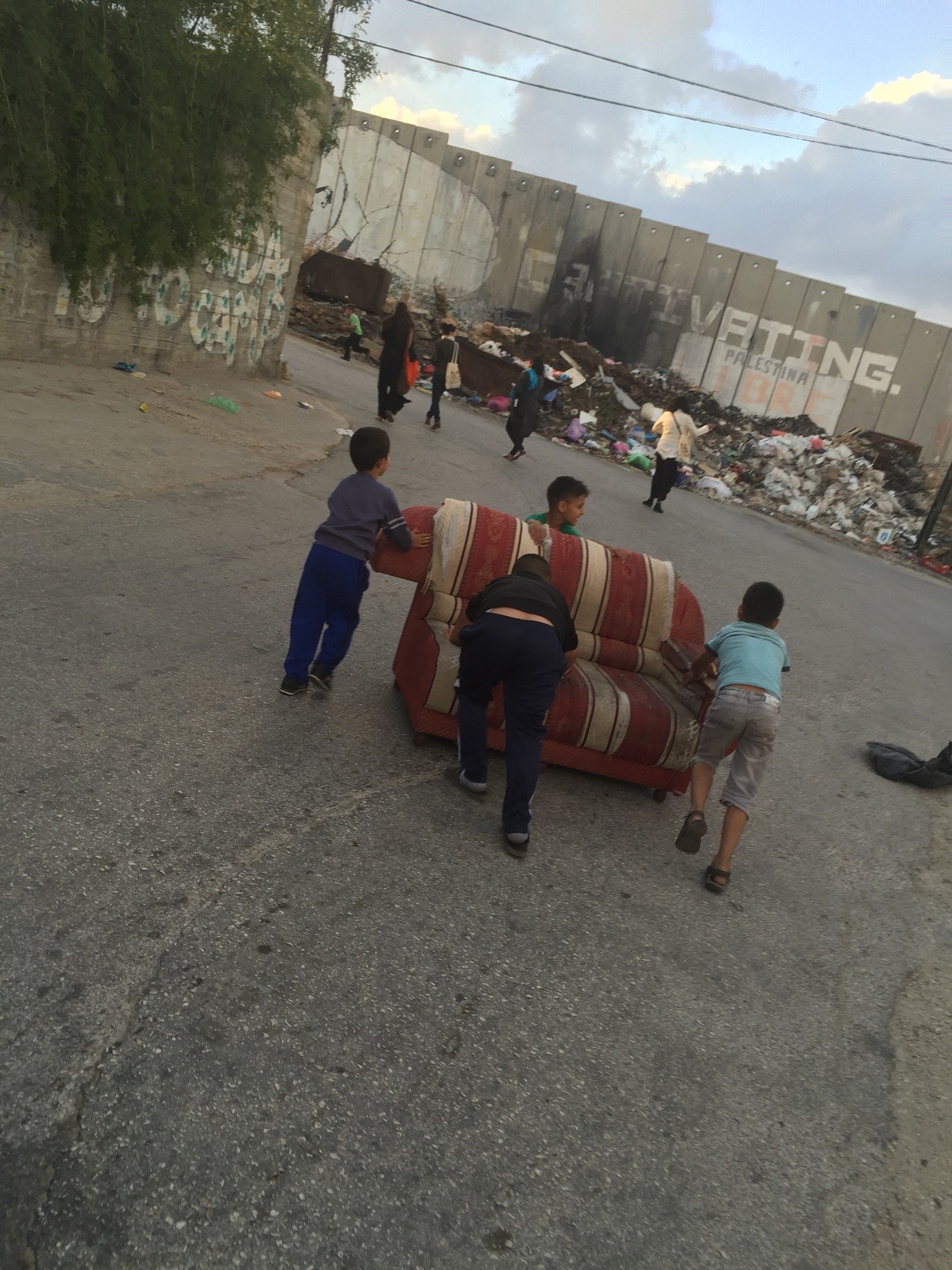
We packed what the skin remembers:
jasmine bruised on the balcony,
a chipped tea glass,
the stairwell’s rain-smell,
a key cold against the tooth.

Soil under our nails would not wash;
we washed around it like a wound.
My mother’s cup cooled where she left it.
My father’s shoes faced the prayer rug, waiting.

An olive taught refusal—
roots clasping dark without asking.
We whispered that lesson and kept failing it,
step after step, leaf after leaf.

Streets rehearsed our names and went hoarse.
The school bell rang with no teacher to answer.
One window lifted its curtain all night,
watching the path we couldn’t return by.

If you meet our eyes, don’t move them.
Witness is a key left warm in the lock,
so the door won’t lie about what doors do.

We are not turning away.
We are leaving the way ground learns a step,
and the step keeps listening for that ground—
the sea keeping our outline in its light.


Alaa Alqaisi is a Palestinian translator, writer, and researcher from Gaza, and a PhD candidate at Trinity College Dublin. Holding an MA in Translation Studies, she explores how literature and storytelling bridge cultures and bear witness to lived realities. Her work appears in ArabLit, Literary Hub, Adi Magazine, and others.

The Ground That Walks
Read more...

Podcast: Suhail Matar on “Granada”

Apple Podcasts logo

Listen on Apple Podcasts.

Listen on Google Podcasts.Google Podcast logo

Spotify Logo Green

Listen on Spotify.

Transcript: Suhail Matar Podcast.

Palestinian writer Suhail Matar speaks to managing editor Emily Everett about his story “Granada,” translated by Amika Fendi. The story appears in The Common’s new spring issue, in a special portfolio of Arabic fiction from Palestine. Suhail talks about the inspiration and process behind the story, which explores the complex ways in which Palestinians connect when they meet and interact abroad. Suhail also discusses the difficulties of translation, the history and modern realities of Palestinians living within Israel’s current borders, and his PhD work exploring how the brain processes and reacts to language.

Suhail Matar and ISSUE 23

Podcast: Suhail Matar on “Granada”
Read more...

Words We Use to Talk About Home: An Interview with Abeer Khshiboon, author of “The Stranger”

ABEER KHSHIBOON interviewed by NASHWA GOWANLOCK


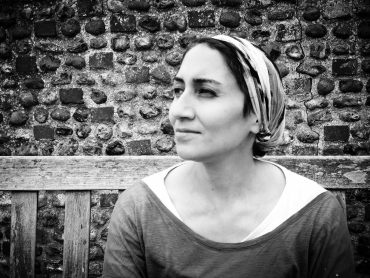
headshot of Abeer Kshiboon

Abeer Khshiboon’s short story, “The Stranger” is featured in Issue 23’s portfolio of stories from Palestine. Here, Abeer and translator Nashwa Gowanlock discuss the story’s inspiration and the context in which its events unfold.

Words We Use to Talk About Home: An Interview with Abeer Khshiboon, author of “The Stranger”
Read more...

Day Trip

By IZZAT AL-GHAZZAWI

Translated by NARIMAN YOUSSEF

The village had many corners, of which the far western side, leading to the bus terminal, was the bleakest. Om Saber sat on the clean plastic bench installed by the village’s youth committee and waited for the first microbus to take her to the city. With an anxious movement, she reached into her bra to check on the piece of paper she had placed there. Abu Hosny, the old taxi driver, had written down for her all the instructions that she needed to get to her destination: Shatta Prison, where the sweetest part of her now resided, which made distance and time nothing but an illusion. A large cat rubbed its dewy fur on the hem of her black dress. Om Saber smiled and tried to stay still so as not to disturb the cat. She smiled again when she found the paper in its fold.

Day Trip
Read more...

The Stranger

By ABEER KHSHIBOON

Translated by NASHWA GOWANLOCK


Farah was struggling to keep her balance in the heaving crowd near the locked gate. Despite how long she would have to wait to get into the hall at Amman University—where she’d already been standing for more than an hour—she remained both calm and cheerful. She was even humming a song—the last one she’d listened to on the way from the border crossing to a modest hotel in the Jordanian capital where she was sharing a room with the university friend joining her for the Fairouz concert.

The Stranger
Read more...

Who Drew the Curtains?

By SHEIKHA HUSSEIN HELAWY

Translated by NARIMAN YOUSSEF


The pores of life are clogged in this room. Making it difficult to breathe. There’s a hanging smell of death that’s impossible to miss. Visitors are unnerved by it. Except those visitors whose nerves have been hardened by the tedium of their dutiful weekly visits to the woman at the far end of the room: boredom and emptiness compressed into no more than half an hour.

Who Drew the Curtains?
Read more...

Oh, My Nana

By SUHEIR ABU OKSA DAOUD

Translated by NASHWA GOWANLOCK 


It was raining nonstop, and the flowing stream of rainwater collected anything it met along the dirt track. As if this apocalyptic scene weren’t savage enough for God, the rain brought with it thunderstorms and gales that threatened to uproot the streetlamp and thin cypress trees dotting the neighborhood.

It was freezing cold, and my grandmother crouched in a corner of the house near the dakhoon, which no one had lit, shivering under her black woollen shawl. From time to time, she muttered, “Oh, Mary, mother of Jesus, protect us!” 

Oh, My Nana
Read more...

Well-Lit Garden

By ZIAD KHADDASH

Translated by AMIKA FENDI


Well-Lit Garden

I was leaving El Rafidayn supermarket in Ramallah. I had bought coffee, wet wipes, and two cans of tuna. One of the Israeli occupation’s patrols was parked at El Rafidayn roundabout. I was alone in the area, and the hour was approaching midnight. The patrol blew its impudent horn. I ignored it and kept my course due home. But a soldier opened the window and called out, “Come over here, monkey.” 

Well-Lit Garden
Read more...