All posts tagged: Poetry Feature

January Poetry Feature #2: Words and Music(ians)

New poems by ALEKSANDAR HEMON and STEFAN BINDLEY-TAYLOR

This month we bring you new work by writers who also have careers in music.

 Table of Contents: 
—Aleksandar Hemon, “Snipers”
—Stefan Bindley-Taylor, “Naming the Wind” and “At our first house”


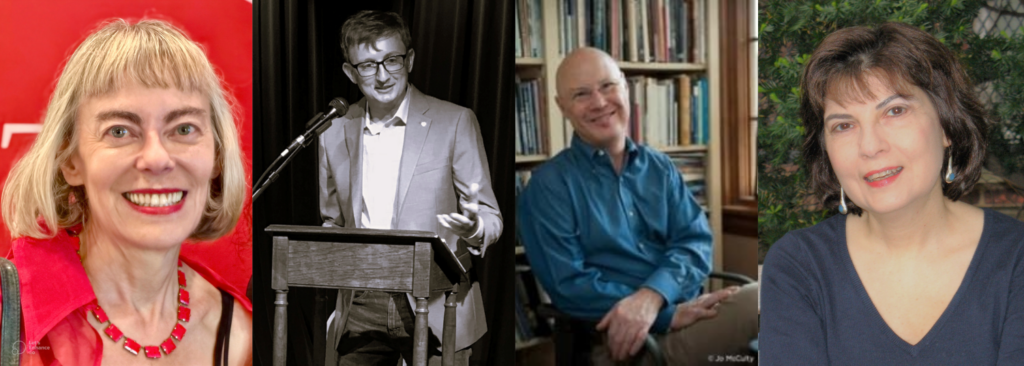
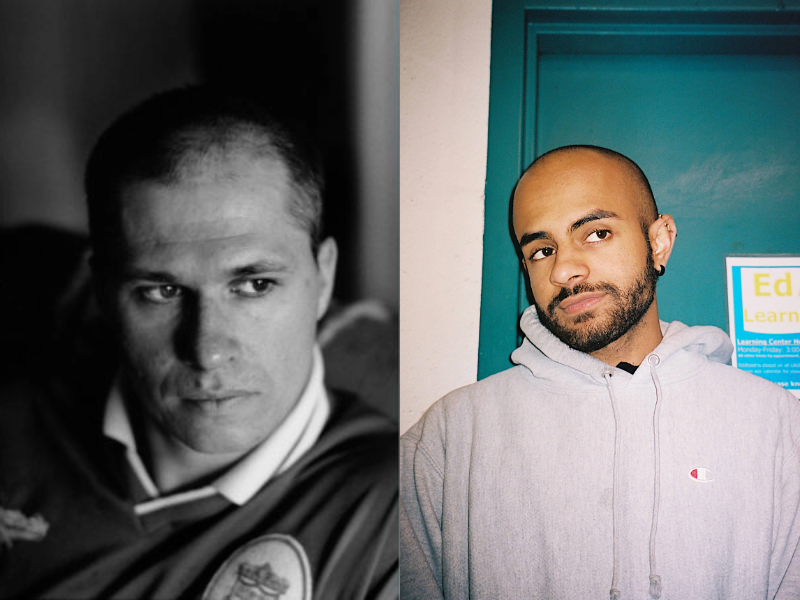
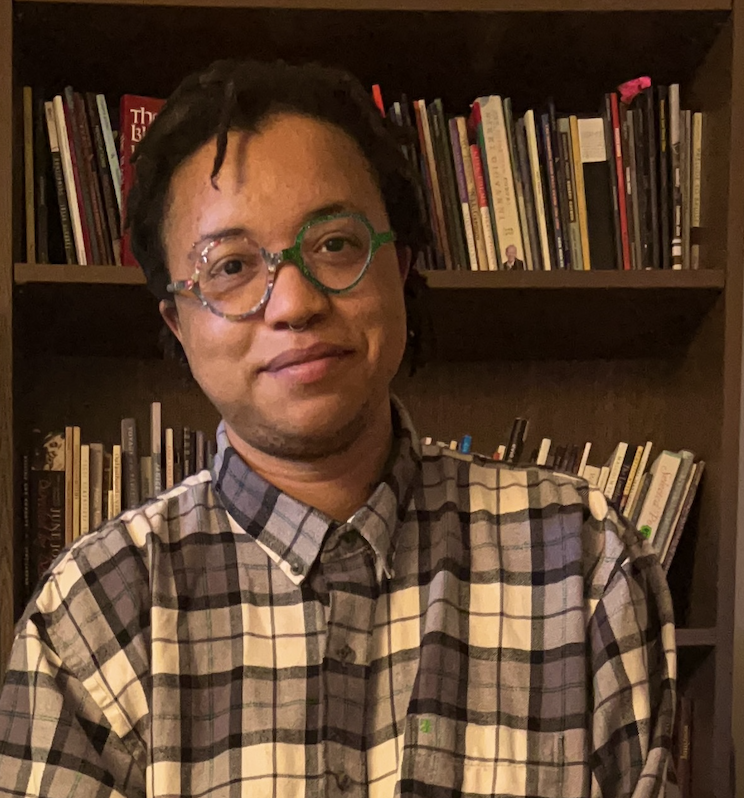
Aleksandar Hemon and Stefan Bindley-Taylor's headshot

Aleksandar Hemon (left) and Stefan Bindley-Taylor (right)


Snipers
By Aleksandar Hemon

Do you ever walk down an empty street
stopping, looking up and around to see
what position would a smart sniper pick?

Do you notice plants and pane refractions,
curler-haired ladies leaning out on the sills,
watching for what will surely come to pass?

Do you ever scan a room full of good people,
read their faces and elaborate frowns to guess
who among them thinks you ought to be shot?

Do you ever have a sense this is never ending
until all that is destructible is finally perished,
and you depart armed with the long memories

of yourself strolling down an empty street to look
up at the silver-haired ladies leaned on the sills,
waving to tell you your new life will be splendid? 


Naming the Wind
By Stefan Bindley-Taylor

And it was then that it came, that thing without a name, a quick caress across the check, careening from the nothing and back into the nothing it went. Whipping, I thought, but no that would never do, for whipping is a word that describes a real hell, not an imagined one, and one that I know somewhere in my blood is imprinted; though, I am so far from it as to be genuinely embarrassed.

So how to describe it then? Sight? Useless! For it was the color of air, which sounds like the title of a movie that would gain enough accolades to make it revolting to me. Is there then, the element of smell to turn to? But this too fails,  if only because I do not possess a strong sense of smell. I never have. My tongue was still too sopped in dessert wine to taste anything else, and all I could hear was that cork somewhere in the sea, floating or sinking, floating or sinking. In fact, I’m not sure I am led by my senses much at all, only by the gears in my head, so flat and mechanical, grinding everything into a thick paste.

And now that you are gone, I am sure I will never get a name for the thing, the memory of which still sits at a peculiar tilt in my chest, in a way that feels different than when I think of my birthday, or my father coming home. It is the feeling that reminds you that there is unconditional love in the world, and it is all yours if you want.

The world, in its unconditional love, has already given it so many names. Yet these are imperfect to me, like a chipped moon. The Solano for example, feels like something that goes on the sandwich. The Bora sounds like an uncontacted people, the Squall like an undiscovered sea beast, the Sirocco like a flavored vodka, and for god’s sake, The Haboob.  Not to mention the spin-off adjectives, psithurism, susurration, all experimental, all horrific.

Still, for a long time, this lack of name, the thing unnamed—not the thing itself but the unnamedness of the thing—has haunted me, and I have occupied myself trying to conjure it forth like a friendly specter. I want to pull an ancient monument from the sand, to stand before it, Herculean, to say this is your name, take it, take it and dance. Sometimes, at night, the crinkles of the pillow case comes close to naming it, scratching out a blurb a few syllables, maddeningly short, a long dash through some mysterious missing diphthong that should slot in just right, but is somewhere out there eluding, misshaping itself, deforming itself as to never return to where it belongs, or where others would have it belong. Though perhaps all I really want, if I think about it, which I try not to, is to ask you to name it. A task made impossible, and that is why it is the only task left that is worth anything. For I know that if you said it, somewhere from wherever you are, I’m sure I could hear, could feel, could touch, could, could see it, again, and I would think yes, that is it, that is the perfect one.


At our first house
By Stefan Bindley-Taylor

I came home to find your wings
could not fit under the bed.
So you had no choice
but to open the roof.

It was better that way.
When rain slicked the floor,
I picked bushels of mint that rose
beneath our bedsheets.

You threshed flowers to make
them go down easy.
But I wanted the dirt, the stems, the stone.
I brought my teeth to the edge of a field
and I chewed

until things became silent. At night
you pointed to the hole
above us, towards the stars you navigated so well.

I knew then nothing
could feel like your touch.
I fell silent and things became
still, like a comet or a current.
I said it.

And things became.
I say it again.
To see if they remain so.


Stefan Bindley-Taylor is a Trinidadian-American author, musician, and educator born and raised in Maryland. His stories balance absurdist humor with real emotion to showcase characters from the Caribbean diaspora through a nuanced, humorous, and humane lens. His recent and forthcoming work can be found in several outlets including Chautauqua, Adda, Brooklyn Rail, and NY Carib News. He is the winner of the 2025 Chautauqua Janus prize, the 2025 DISQUIET Flowers fellowship, a 2025 Kimbilio Fellowship, the 2024 Brooklyn Caribbean Literary Festival Prize, a short-lister for the 2024 Commonwealth Foundation Short Story Prize, and a finalist for the PEN 2023 Emerging Voices Fellowship. Outside of writing, Stefan has been a performing musician for over a decade. He writes and performs in a punk project called FISHLORD and an alternative hip-hop project called Nafets. He has amassed over 8 million streams worldwide between the two projects and landed sync placements with Netflix, HBO, Hulu, BET+, The CW, and more. He currently splits his time between New York City and Virginia and is pursuing his M.F.A at the University of Virginia.

Aleksandar Hemon’s poem is from his forthcoming collection, Godspotting, which includes work published in The New Yorker, The Yale Review, Harvard Review, and The Common. He is the author of The World and All That It Holds, The Lazarus Project, which was a finalist for the 2008 National Book Award and the National Book Critics Circle Award, and three books of short stories: The Question of Bruno; Nowhere Man, which was also a finalist for the National Book Critics Circle Award; and Love and Obstacles. He was the recipient of a 2003 Guggenheim Fellowship and a “genius grant” from the MacArthur Foundation, and the 2020 Dos Passos Prize. As a screenwriter he has worked on the Netflix show Sense8 and Lana Wachowski’sThe Matrix Resurrections. He produces music and DJs as Cielo Hemon, and Godspotting has a sonic equivalent as an album of the same name, already released: https://tidal.com/album/449872410/u. He has been Professor of Creative Writing at Princeton University since 2018.

January Poetry Feature #2: Words and Music(ians)
Read more...

January 2026 Poetry Feature #1: U-topias

By JILL PEARLMAN

I
Wondrous, the emptiness so close, close to an absent sea,
only sea-fields, wheat-fields, golden stubble,
though we were walking together on a path to find the sea.

Wandering together under a wide horizon. 
On a road called Pas de l’Assassin.

January 2026 Poetry Feature #1: U-topias
Read more...

December 2025 Poetry Feature #1: Rodrigo Toscano, Olena Jennings, Ezza Ahmed, and Wyatt Townley

New work from RODRIGO TOSCANO, OLENA JENNINGS, EZZA AHMED, and WYATT TOWNLEY

Table of Contents:
—Rodrigo Toscano, “One Like”
—Olena Jennings, “The Pine”
—Ezza Ahmed, “The River That Was and Wasn’t”
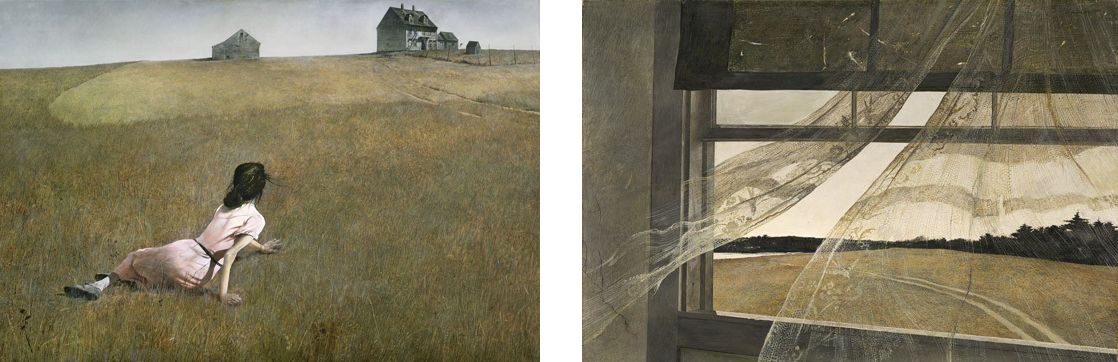
—Wyatt Townley, “The Longest View” and “Christina’s World”

One Like
By Rodrigo Toscano 

“Couple Bach preludes, a binding ceasefire,
One Dickenson poem, and we’re all set”
That was the post, like a gleaming beach pier
Charming half way out, torn up at the tip
Battered by statecraft, departmental verse.

December 2025 Poetry Feature #1: Rodrigo Toscano, Olena Jennings, Ezza Ahmed, and Wyatt Townley
Read more...

September 2025 Poetry Feature: Earth Water Fire Poems, a Conversation

Poems and sculptures by LISA ASAGI

This is a conversation with whales, clay, and poetry.  

A wonderment with whales began in a childhood alivened by the early days of the Save the Whales movement and stories from my father of mysterious encounters on overnight boating trips.  This fascination resurfaced seven years ago when I found myself working with my hands—clay sculpture and stand-up paddling led to long overdue reconnections with both earth and sea. Research deepened my curiosity: before the centuries of whaling, very different kinds of relationships existed between whales and humans. Here in the 21st century, what’s possible? These pieces are part of an ongoing series of rememberings, imaginings, longings, and offerings.

— Lisa Asagi 

September 2025 Poetry Feature: Earth Water Fire Poems, a Conversation
Read more...

August 2025 Poetry Feature: Anna Malihon, translated by Olena Jennings

By ANNA MALIHON

Translated from the Ukrainian by OLENA JENNINGS

From Girl with a Bullet, forthcoming October 2025


Presented in Olena Jennings’ seamless translation, Anna Malihon’s new collection, Girl with a Bullet, is one of the most important books of the year for those with an interest in the fate of Ukraine, a gift to Anglophone readers.

                                                                        —John Hennessy, poetry editor


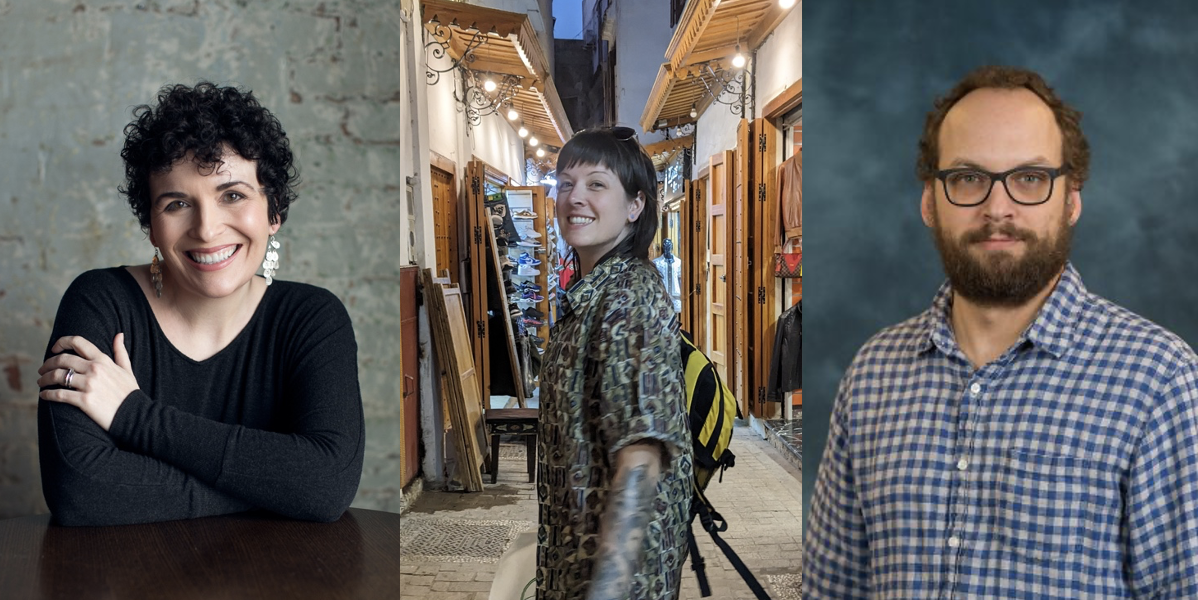
Anna Malihot and Olena Jenning's headshots


Table of Contents:

[The girl with a bullet in her stomach]

[Don’t go into that home]

[Now the only thing that you can do for her, Christ,]

[Unfold and dive into me, to my very bone,]


August 2025 Poetry Feature: Anna Malihon, translated by Olena Jennings
Read more...

June 2025 Poetry Feature: New Poems from Pedro Poitevin, Aiden Heung, and Ellie Black

This month we’re pleased to bring you poems by PEDRO POITEVIN translated from Spanish by PHILIP NIKOLAYEV and new work by 2025 Disquiet Prize finalists AIDEN HEUNG and ELLIE BLACK.

Table of Contents:

  • Pedro Poitevin (trans. Philip Nikolayev), “Sonnet from the water before dawn” and “Self-Portrait as a Dog”
  • Ellie Black, “The Confessional” and “Revelator”
  • Aiden Heung, “The Theory of Evolution”
June 2025 Poetry Feature: New Poems from Pedro Poitevin, Aiden Heung, and Ellie Black
Read more...

May 2025 Poetry Feature: Dante Alighieri, translated by Mary Jo Bang

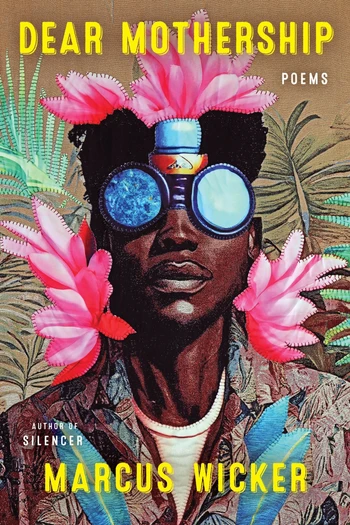
This month we’re honored to bring our readers an excerpt from MARY JO BANG’s new translation of Dante’s Paradiso, out soon from Graywolf Press.


cover of paradiso


From Paradiso: Canto XI

The first eighteen lines of this canto are Dante’s elaboration of human difference, his lament over the failure of some humans to realize their gifts, and an exultation for the opportunity he’s been given—which is to enter Heaven before he has died.

Thomas Aquinas’s clarification of “where they fatten up” begins at line 22 and continues without interruption until the end of the canto. In lines 124 to 126, Thomas complains that Saint Dominic’s flock, the Dominican friars, are showing signs of ambition and greed, seeking honors and offices. They are wandering away from the tenets of the order, which are to live a life of humility and self-sacrifice. In lines 137 to 139, he says, “You’ll see what has splintered the tree, / And how the remedy for that can be deduced from // ‘Where they fatten up, if they don’t lose their way.’” The tree is the Dominican order, and it has been scheggia (“splintered” or “chipped away at”) because so many of the sheep have strayed. If the monks and clergy remain true to the principles set out by Saint Dominic, they will be enriched with the “milk” of spiritual nourishment and “fatten up” the way sheep are meant to. 

Throughout the Divine Comedy, Dante is concerned with the ways in which selfishness destroys the social fabric. He details how people pay for that selfishness in Hell or by having to trudge up the seven terraces of Mount Purgatory. But Dante isn’t only interested in what happens after death, he is also talking about how we live while on earth. His life was destroyed by the petty grudges of partisan politics. As an exile, he was under constant threat of death. He takes great risks in writing his poem because he hopes that by addressing the greed and megalomania that is destroying Italy, he can help put a stop to it. He also knows that this is not a time-limited problem but a timeless one, which is why he wrote the poem in the vernacular—so that, unlike poems written in literary Latin, it would change over time. He said he was also writing his poem in the vernacular so that it could be read by everyone. That is why I translated the poem into the American vernacular. 

—Mary Jo Bang

May 2025 Poetry Feature: Dante Alighieri, translated by Mary Jo Bang
Read more...

March 2025 Poetry Feature: Catherine-Esther Cowie’s Heirloom

Poems by CATHERINE-ESTHER COWIE

Having made both poetry and fiction contributions to TC, the multitalented Catherine-Esther Cowie returns to us this month with highlights from her debut poetry collection Heirloom, forthcoming from Carcanet Press on April 24, 2025.

cover of HEIRLOOM

Publisher’s Note

Moving from colonial to post-colonial St. Lucia, this debut collection brings to light the inheritances of four generations of women, developing monologues, lyrics, and narrative poems which enable us to see how past dysfunction, tyranny, and terror structure the shapes of women’s lives, and what they hand down to one another.

Uneasy inheritances are just the starting point for this debut’s remarkable meditations: Should the stories of the past be told? Do they bring redemption or ruin? What are the costs of saying what happened? Beguiling and cathartic, Catherine-Esther Cowie’s powerful, formally inventive poems reckon with the past even as they elegize and celebrate her subjects. 

March 2025 Poetry Feature: Catherine-Esther Cowie’s Heirloom
Read more...