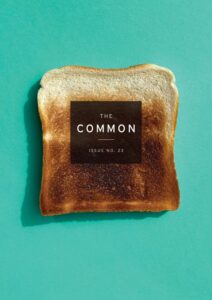
If You Are Learning English

By LAUREN DELAPENHA

consider articulation, both speech  
and the assembly of a joint,  
the cooperation of bones and 
marijuana; English: Mary Jane:
shoe, or the talentless friend you  
secretly love who is also the pretty,  
skirted woman in Spiderman who
keeps getting suspended, screaming,  
from skyscrapers, and there, dangling, you  
will begin to apprehend English, 
which is both to fear and to understand  
the difficult smallness of the words  
getting errands done beneath you,  
oblivious to the 42 definitions  
of the word get, including  
to leave immediately and to understand  
the politician in a long red tie  
giving an address beside the collapsed  
building: building as noun, 
not verb: address,  
both the speech and the place  
you live, unless you live nowhere— 
then, you can live inside the speech. 


[Purchase Issue 31 here.]


Lauren Delapenha is a Jamaican poet and English teacher. Her work has received an Oxbelly Fellowship, a Poet Laureate of Jamaica and Helen Zell Young Writer’s Prize for Poetry, a Grindstone International Poetry Prize, and two Pushcart Prize nominations. She currently lives in Connecticut near a small river and some train tracks. 

From the beginning, The Common has brought you transportive writing and exciting new voices. We are committed to supporting writers and maintaining free, unrestricted access to our website, but we can’t do it without you. Become an integral part of our global community of readers and writers by donating today. No amount is too small. Thank you!

If You Are Learning English

Related Posts

Two Poems by Dalia Taha, translated by Sara Elkamel

DALIA TAHA
All we own are our lips / and the pupils of our eyes—the car / will plow into all of this. / And still, life is far too complex / for words like victory or defeat. // Life is Salma on the balcony / moving plants to bigger pots, in her eyes / the settlement’s lights. 

Book cover for Liberal Arts by David McGlynn

Review: Liberal Arts by David McGlynn

NICOLE SCHRAG
Liberal Arts isn’t a satire. Instead, the humor originates in situational ironies that arise from the bizarre juxtapositions that might be made possible in and around universities, where people who otherwise have no earthly reason to find themselves in the same room are brought together.

Book cover of What Remains by Brais Lamela

Review: What Remains by Brais Lamela

ZARA KARSCHAY
Translated into English from the original Galician by Jacob Rogers, Lamela’s novel foregrounds the Franco regime’s work in disappearing villages, displacing its inhabitants, and forcing hundreds of political prisoners to work on its new reservoirs and dams.